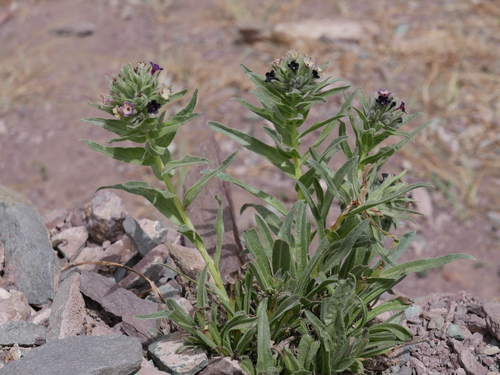
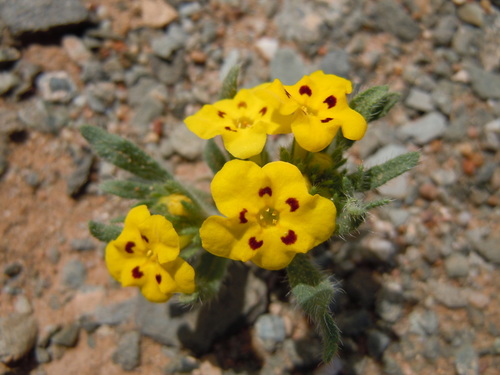
Cynoglossum grande
Douglas
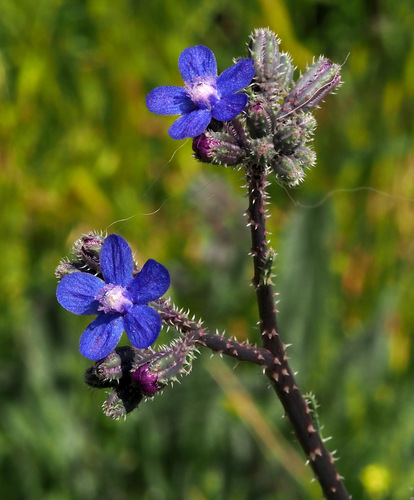
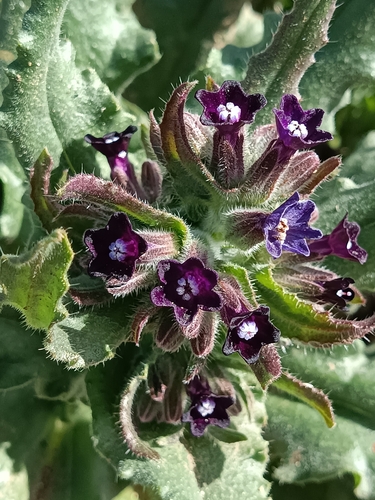
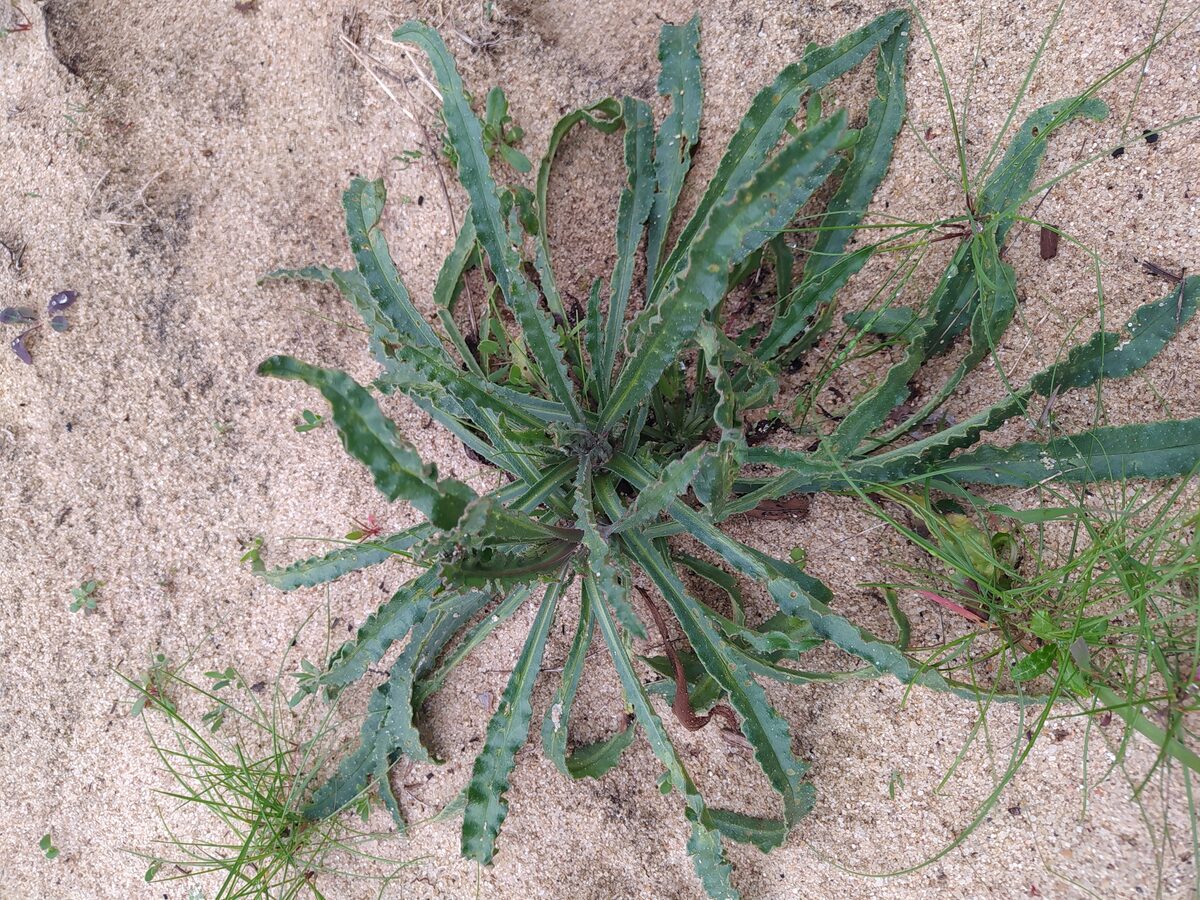
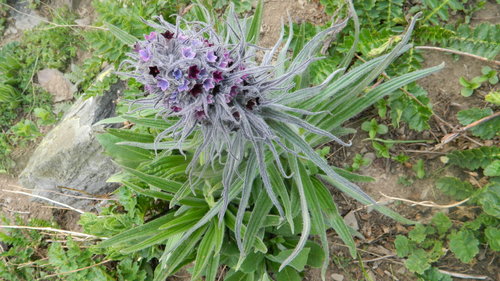
Pacific hound's tongue
iNaturalist· cc-by-nc
(c) Walter Fertig, some rights reserved (CC BY-NC)
iNaturalist· cc-by-nc-sa
(c) Gary Griffith, some rights reserved (CC BY-NC-SA)
iNaturalist· cc-by-nc
(c) manihern, some rights reserved (CC BY-NC)
Summary
Source: WikipediaA perennial herb reaching 0.8 m in height, hardy to UK zone 8. Flowers April to May. Hermaphroditic with insect pollination. Accommodates light sandy, medium loamy, and heavy clay soils with well-drained preference. Suitable for mildly acidic, neutral, and basic pH ranges. Can grow in semi-shade or light woodland conditions as well as full sun. Prefers moist soil.
Description
A small plant. It keeps growing from year to year. It grows 60-80 cm high and spreads 30-50 cm wide. The leaves are near the base and have long stems. The leaves are narrowly oval and covered with hairs underneath. The leaves are 15 cm long. The flowers are blue and in showy sprays. The fruit are burrs.
Edible Uses
The root is edible when cooked.
Medicinal Uses
The grated root has been used as a dressing on inflamed burns and scalds. The root has also been used internally to treat stomach aches and venereal diseases.
Distribution
It is best in light to medium well-drained soil. It needs an open sunny position. It is resistant to frost and drought. It suits hardiness zones 8-10.
Where It Grows
Australia, Canada, North America*, USA,
Cultivation
Prefers a deep fertile well-drained but moisture retentive soil. Succeeds in well-drained ordinary garden soil. Tolerates light dappled shade. This species is not hardy in the colder areas of the country, it tolerates temperatures down to between -5 and -10°c.
Propagation
Sow seed in autumn, late winter, or spring in a greenhouse; germination usually takes 1–3 weeks at 20°C. Plant out in mid-spring or in autumn. According to one report, the seed is best sown in situ.
Other Uses
None known.
Notes
There are about 55 Cynoglossum species. They are mostly temperate.
References (4)
- Beckstrom-Sternberg, Stephen M., and James A. Duke. "The Foodplant Database." http://probe.nalusda.gov:8300/cgi-bin/browse/foodplantdb.(ACEDB version 4.0 - data version July 1994)
- Bodkin, F., 1991, Encyclopedia Botanica. Cornstalk publishing, p 314
- Cundall, P., (ed.), 2004, Gardening Australia: flora: the gardener's bible. ABC Books. p 457
- Plants for a Future database, The Field, Penpol, Lostwithiel, Cornwall, PL22 0NG, UK. http://www.scs.leeds.ac.uk/pfaf/