Cynanchum virens
Steud.
iNaturalist· cc-by-nd
(c) Kyle Campbell, some rights reserved (CC BY-ND), uploaded by Kyle Campbell
Description
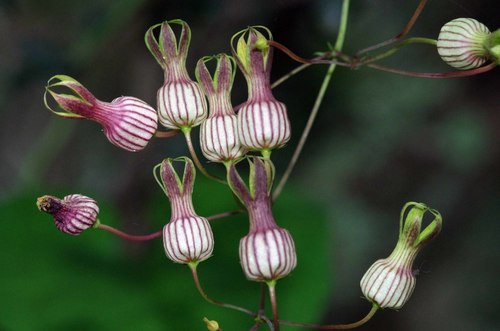
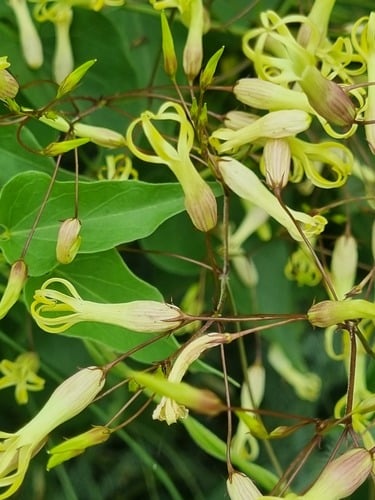
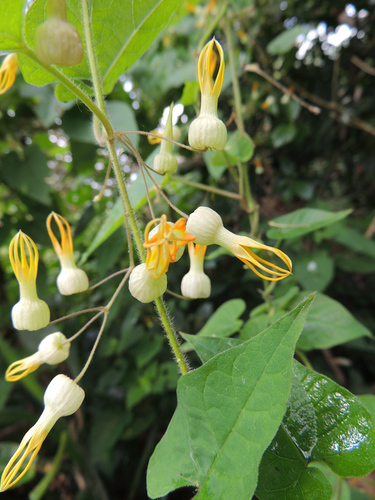
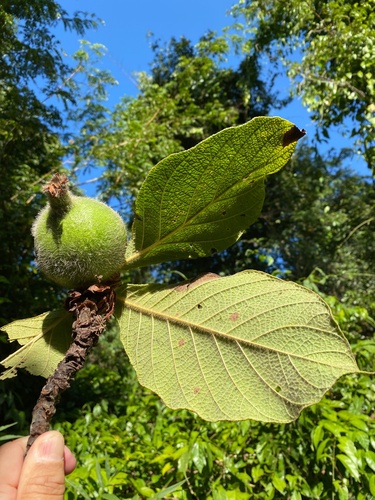
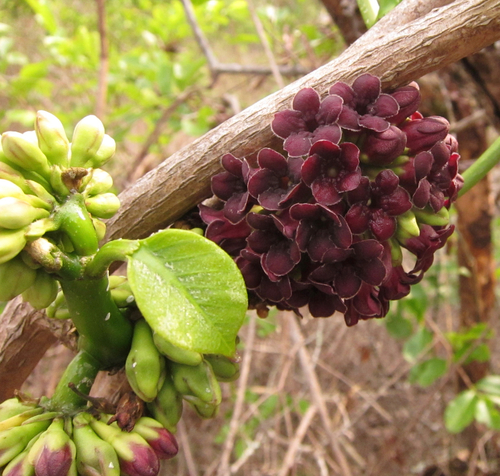
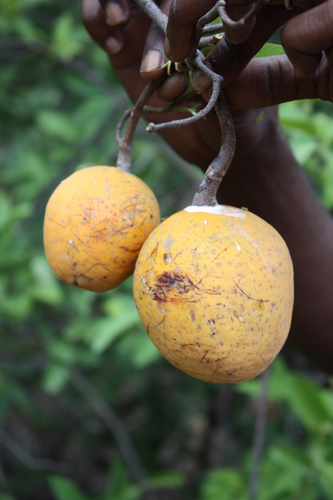
A tall slender climber. The stems are twining. The leaves have long stalks. The leaves are simple, opposite and heart shaped. They can have a few hairs. There are 3-15 flowers in a group in the axils of leaves. The flowers are small and 5 mm long. They are white. The fruit is a long smooth follicle that tapers into a beak.
Edible Uses
The roots are cooked and eaten, serving as a famine food. The leaves are cooked as a vegetable.
Traditional Uses
CAUTION: The roots are cooked and eaten. The leaves are cooked as a vegetable.
This uses section is brief — help expand it
Medicinal Uses
The roots have traditional food and medicinal applications.
Known Hazards
Caution advised when using roots and leaves.
Distribution
A subtropical plant.
Where It Grows
Africa, Lesotho, South Africa, Southern Africa,
Other Information
The roots are a famine food.
Notes
There are about 150 Cynanchum species.
Also Known As
Mololo
References (8)
- Fox, F. W. & Young, M. E. N., 1982, Food from the Veld. Delta Books. p 108
- Gillarmod, J., 1971,
- Grivetti, L. E., 1980, Agricultural development: present and potential role of edible wild plants. Part 2: Sub-Saharan Africa, Report to the Department of State Agency for International Development. p 65
- Jardin, C., 1970, List of Foods Used In Africa, FAO Nutrition Information Document Series No 2.p 73
- Martin, F.W. & Ruberte, R.M., 1979, Edible Leaves of the Tropics. Antillian College Press, Mayaguez, Puerto Rico. p 177
Show all 8 references Hide references
- Peters, C. R., O'Brien, E. M., and Drummond, R.B., 1992, Edible Wild plants of Sub-saharan Africa. Kew. p 63
- Ruiters-Welcome, A. K., 2019, Food plants of southern Africa. Ph.D. thesis. Univ. of Johannesburg p 23
- Welcome, A. K. & Van Wyk, B.-E., 2019, An inventory and analysis of the food plants of southern Africa. South African Journal of Botany 122 (2019) 136–179