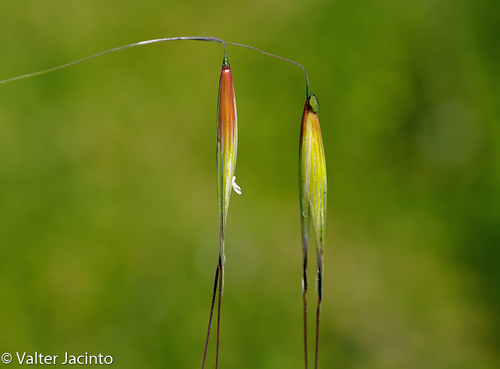
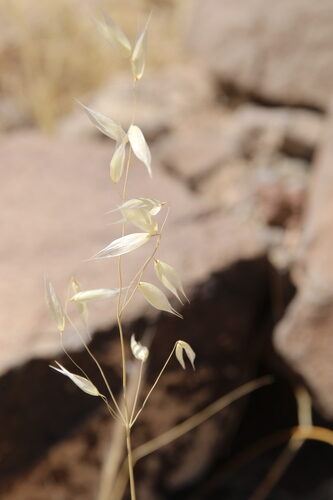
Cymbopogon citratus
(Nees) Stapf.
Lemon grass
iNaturalist· cc-by-nc
(c) Yantza Farm, Zamora-Chinchipe, Ecuador, some rights reserved (CC BY-NC), uploaded by Yantza Farm, Zamora-Chinchipe, Ecuador
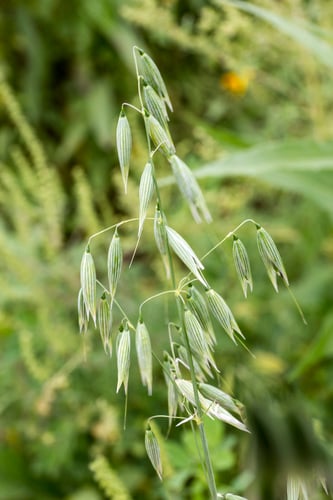
iNaturalist· cc-by-nc
(c) portuguesas2019, some rights reserved (CC BY-NC), uploaded by portuguesas2019
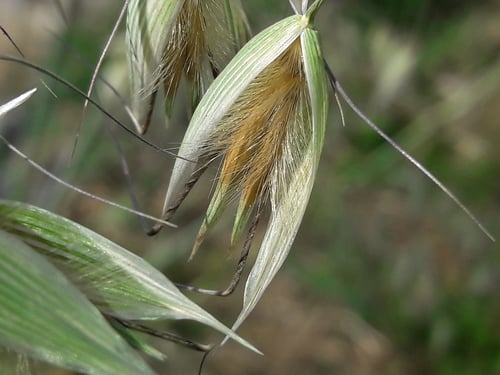
iNaturalist· cc-by-nc
(c) Daniel Hualpa, some rights reserved (CC BY-NC), uploaded by Daniel Hualpa
Summary
Source: WikipediaCymbopogon citratus, commonly known as West Indian lemon grass or simply lemon grass, is a tropical plant native to South Asia and Maritime Southeast Asia and introduced to many tropical regions. Cymbopogon citratus is often sold in stem form. While it can be grown in warmer temperate regions, it is not hardy to frost.
Description
A coarse clumpy grass about 1 m high. It forms dense tufts and clumps. The stems are hollow and cane like. The leaves have a rough edge and are about 1 m long by 1 cm wide. They curve over. They are pale blue-green. It very rarely produces flowers. When flowers are produced they are in a loose branched panicle. These are 5 cm long. It has a lemon smell when crushed.
Edible Uses
The heart of young shoots is eaten as a vegetable with rice. The basal portions of the leafy shoots have a delicious lemon-like aroma and are used to flavour soups, sauces, and curries. Older leaves can be cooked with other foods to impart their lemon flavour, then removed before serving. A refreshing tea can be brewed from the leaves, served hot or cold and sweetened with sugar if desired. The essential oil is also used as a flavouring in the food industry, including in soft drinks and various foods.
Traditional Uses
It is mostly used as a flavouring in lemon grass tea and stews. The leaves can be dried and stored for use in tea. The very young fleshy white bases of the shoots are used in Asian cooking. The outer layers are peeled off.
Medicinal Uses
Lemongrass was one of the herbs transported along the spice route from Asia to Europe. It is a bitter, aromatic, cooling herb that increases perspiration and relieves spasms. The essential oil is an effective antifungal and antibacterial, containing around 70% citral along with citronellal, both of which are markedly sedative. Internally, it is used mainly as a tea for digestive problems, relaxing the muscles of the stomach and gut to relieve cramping pains and flatulence. It is particularly useful for children, for whom it is also used to treat minor feverish illnesses. Externally, especially as the extracted essential oil, it treats conditions including athlete's foot, ringworm, lice, and scabies, and is applied to ease pain in arthritic joints.
Distribution
It is a tropical and subtropical plant. It occurs in coastal areas and up to at least 1400 m altitude. It is a good plant for borders and erosion control. They are frost tender. It needs a temperature above 10°C to grow. It needs good drainage. In Argentina it grows from sea level to 2,700 m above sea level. It suits hardiness zones 9-11. In Yunnan.
Where It Grows
Africa, Algeria, Angola, Argentina, Asia, Australia, Bahamas, Bangladesh, Belize, Benin, Bolivia, Botswana, Brazil, Cambodia, Cameroon, Cape Verde, Central Africa, Central African Republic, CAR, Central America, Chile, China, Colombia, Comoros, Congo DR, Cook Islands, Costa Rica, Cuba, Dominican Republic, East Africa, East Timor, Ecuador, Egypt, El Salvador, Equatorial Guinea, Ethiopia, Fiji, FSM, Gabon, Grenada, Guatemala, French Guiana, Guianas, Guinea, Guinée, Guinea-Bissau, Guyana, Haiti, Hawaii, Honduras, India, Indochina, Indonesia, Ivory Coast, Jamaica, Japan, Kenya, Kiribati, Kosrae, Laos, Liberia, Madagascar, Malaysia, Maldives, Mali, Marquesas, Mauritius, Mexico, Micronesia, Morocco, Mozambique, Myanmar, Nepal, New Caledonia, Nicaragua, Niger, North America, Northeastern India, Pacific, Palau, Panama, Papua New Guinea, PNG, Peru, Philippines, Pohnpei, Puerto Rico, Reunion, Rotuma, Rwanda, Sahel, Samoa, Sao Tome and Principe, SE Asia, Senegal, Seychelles, Sierra Leone, Singapore, Slovenia, Solomon Islands, South Africa, Southern Africa, South America, Sri Lanka, St. Kitts and Nevis, St Lucia, Suriname, Taiwan, Tanzania, Tasmania, Thailand, Timor-Leste, Tonga, Trinidad-Tobago,Tuvalu, Uganda, USA, Vanuatu, Vietnam, West Africa, West Indies, Zambia, Zimbabwe,
Cultivation
It is grown from portions of the clump. A spacing of about 1 m between clumps is needed. Plants can be easily grown by putting the stem end of a shoot in water until roots form then planting out. It can also be grown by seeds. Being very small they are mixed with ash or sand. They can be sown directly. They can also be put in a nursery and transplanted.
Propagation
Propagate by seed or by division of established clumps. Division is best done annually, as clumps that are left too long can become overcrowded and deteriorate.
Other Uses
Lemongrass can be used as a companion plant to deter pests and is useful for improving soil quality and preventing erosion due to its dense root system. It is a good soil conditioner on worn-out land, quickly producing bulk organic material that rots down, attracts worms and other beneficial creatures, and enriches the soil. A row of plants can act as a garden divider to contain more invasive plants such as sweet potato and to keep weeds out. The essential oil is used in perfumery, in scenting soaps, hair oils, and cosmetics, and as an insect repellent. It is also used in the synthesis of vitamin A. The oil is cytotoxic, with insecticidal, larvicidal, nematicidal, pro-oxidative, repellent, and vasorelaxant activity, which could potentially be exploited for pesticidal or chemotherapeutic applications. The plant's strong citrus scent can deter certain garden pests.
Production
It can be cut 4-8 months after planting and then every 3-4 months. Harvesting can continue to 3-4 years.
Other Information
It is sold in local markets. It is cultivated.
Notes
Lemon grass oil is used in perfumes and medicines. There are 56 Cymbopogon species. It has 2.3 mg per 100 g dry weight and 1.12 mg fresh weight of alpha-tocopherol (Vitamin E).
Nutrition
| Part | Moisture | kJ | kcal | Protein | Vit A | Vit C | Iron | Zinc |
|---|---|---|---|---|---|---|---|---|
| Leaves | 70.3 | 490 | 116 | 1.4 | 3 | 1.8 | 2.8 | 0.6 |
Synonyms
Also Known As
Agin ghas, Belgata, Bhustrina, Caboi, limon, Cana santa, Canita de Cedron, Capim-limao, Chirichri, Du'ut-morin, Enyait, Erva-cidreira, Fiji char, Gandhabena, Gandhatrina, Ge lao dang, Ghanda, Herva chaha, Herva chela, Heung masu tso, Hierba luisa, Hirua cha, Kaasinjee, Kagatighaans, Kagati ghas, Khawi, Lili cha, Limoncillo, Limonska trava, Liwisa, Mah keng, Majjigehullu, Mao xiang cao, Moegalo, Moejara, Nimmagaddi, Olecha, Pirheghaans, Po pi, Reh pwo mwahu, Remon gurasu, Remon-sou, Sabalin, Sa chanh, Saineroil, Sa kai, Sera, Serai, Sere, Sereh betul, Sereh makan, Sereh sayur, Sereh, Shahai, Shakai, Shishovi, Sinda, Sinda dimputu, Sinde, Slek krei sabu, Sok aphi, Sontol, Ta krai, Takrai, Tanglad, Tanlag, Thej sar, Vasanappillu, Vasanappulla, Veromanitra, West Indian lemongrass, Xa, Xiang mao coa, Yerba de limon, Zabalin, Zacate limon
References (92)
- Agea, J. G., et al 2011, Wild and Semi-wild Food Plants of Bunyoro-Kitara Kingdom of Uganda: etc. Environmental Research Journal 5(2) 74-86
- Alegado, A. M. & De Guzman, R. B., 2014, Indigenous food crops of the Aetas tribe in the Philippines and their traditional methods of food preparation. in Promotion of Underutilized Indigenous Food Resources for Food Security and Nutrition in Asia and Pacific. FAO. Bangkok p 160
- Ambasta, S.P. (Ed.), 2000, The Useful Plants of India. CSIR India. p 155
- Anderson, E. F., 1993, Plants and people of the Golden Triangle. Dioscorides Press. p 208
- Bernholt, H. et al, 2009, Plant species richness and diversity in urban and peri-urban gardens of Niamey, Niger. Agroforestry Systems 77:159-179
Show all 92 references Hide references
- Batet, K., Koil, U., and Hertel, H., 1998, Traditional Plant Use by the Didipa Clan, Baitabag, Papua New Guinea. GDS. p 27
- Bennett, B. C., 1990, Useful Plants of Amazonian Ecuador. US Agency for International Development. Fifth Progress Report. New York Botanical Gardens. p 39
- Borrell, O.W., 1989, An Annotated Checklist of the Flora of Kairiru Island, New Guinea. Marcellin College, Victoria Australia. p 22
- Bremness, L., 1994, Herbs. Collins Eyewitness Handbooks. Harper Collins. p 164
- Brickell, C. (Ed.), 1999, The Royal Horticultural Society A-Z Encyclopedia of Garden Plants. Convent Garden Books. p 331
- Brown, D., 2002, The Royal Horticultural Society encyclopedia of Herbs and their uses. DK Books. p 187
- Bull. Misc. Inform. Kew 1906:322, 357. 1906
- Burkill, H. M., 1985, The useful plants of west tropical Africa, Vol. 2. Kew.
- Burkill, I.H., 1966, A Dictionary of the Economic Products of the Malay Peninsula. Ministry of Agriculture and Cooperatives, Kuala Lumpur, Malaysia. Vol 1 (A-H) p 735
- Burnie, G & Fenton-Smith, J., 1999, A Grower's Guide to Herbs. Murdoch Books. p 45
- Caballero-Serrano, V., et al, 2019, Traditional ecological knowledge and medicinal plant diversity in Ecuadorian Amazon home gardens. Global Ecology and Conservation 17 (2019) e00524 p 12
- Cao, Y., et al, 2020, Ethnobotanical study on wild edible plants used by three trans-boundary ethnic groups in Jiangcheng County, Pu’er, Southwest China. Journal of Ethnobiology and Ethnomedicine (2020) 16:66
- Cheifetz, A., (ed), 1999, 500 popular vegetables, herbs, fruits and nuts for Australian Gardeners. Random House p 124
- Chin, H. F., 1999, Malaysian Vegetables in Colour. Tropical Press. p 85
- Ching, L. S. & Mohamed, S., 2001, Alpha-Tocopherol Content in 62 Edible Tropical Plants. J. Agric. Food Chem. 2001, 49, 3101−3105
- Cobley, L.S. (rev. Steele, W.M.) 2nd Ed., 1976, An Introduction to the Botany of Tropical Crops. Longmans. p 331
- Coe, F. G., and Anderson, G. J., 1996, Ethnobotany of the Garifuna of Eastern Nicaragua. Economic Botany 50(1) pp 71-107
- Coe, F. G. and Anderson, G. J., 1999, Ethnobotany of the Sumu (Ulwa) of Southeastern Nicaragua and Comparisons with Miskitu Plant Lore. Economic Botany Vol. 53. No. 4. pp. 363-386
- Creasy, R., 2000, The Edible Asian Garden. Periplus p 45
- Cundall, P., (ed.), 2004, Gardening Australia: flora: the gardener's bible. ABC Books. p 457
- Duarte, M. C., et al, 2022, Diversity of Useful Plants in Cabo Verde Islands: A Biogeographic and Conservation Perspective. Plants 2022, 11, 1313 p 15
- Ekman Herbarium records Haiti
- Facciola, S., 1998, Cornucopia 2: a Source Book of Edible Plants. Kampong Publications, p 174
- Foo, J.T.S.(ed), 1996, A Guide to Common Vegetables. Singapore Science Foundation. p 73
- Fowler, D. G., 2007, Zambian Plants: Their Vernacular Names and Uses. Kew. p 69
- French, B.R., 1986, Food Plants of Papua New Guinea, A Compendium. Asia Pacific Science Foundation p 340
- French, B.R., 2010, Food Plants of Solomon Islands. A Compendium. Food Plants International Inc. p 317
- Godfrey, J. et al, 2013, Harvesting, preparationand preservation of commonly consumed wild and semi-wild food plants in Bunyoro-Kitara Kingdom, Uganda. Int. J. Med. Arom. Plants. Vol.3 No.2 pp 262-282
- Grivetti, L. E., 1980, Agricultural development: present and potential role of edible wild plants. Part 2: Sub-Saharan Africa, Report to the Department of State Agency for International Development. p 30
- Hani Medicine of Xishuangbanna, 1999, p 551
- Hemphill, I, 2002, Spice Notes. Macmillan. p 221
- Hibbert, M., 2002, The Aussie Plant Finder 2002, Florilegium. p 79
- Hu, Shiu-ying, 2005, Food Plants of China. The Chinese University Press. p 287
- Hutton, W., 1997, Tropical Herbs and Spices of Indonesia. Periplus. p 38
- Kew Plants of the World Online
- Kiple, K.F. & Ornelas, K.C., (eds), 2000, The Cambridge World History of Food. CUP p 433, 1800
- Koni, J. & Bostoen, K., 2008, Noms et usages des plantes utiles chez les Nsong. (RD Congo, Bandundu, bantu B85F). University of Gothenburg.
- Larkcom, J., 1991, Oriental Vegetables, John Murray, London, p 127
- Latham, P., 2004, Useful Plants of Bas-Congo province. Salvation Army & DFID p 104
- Lautenschläger, T., et al, 2018, First large-scale ethnobotanical survey in the province of Uíge, northern Angola. Journal of Ethnobiology and Ethnomedicine (2018) 14:51
- Leal, M. L. et al, 2018, Knowledge, use, and disuse of unconventional food plants. Journal of Ethnobiology and Ethnomedicine (2018) 14:6
- Lentz, D. L., 1986, Ethnobotany of the Jicaque of Honduras. Economic Botany 40(2):210-219
- Li, D. et al, 2017, Ethnobotanical survey of herbal tea plants from the traditional markets in Chaoshan, China. Journal of Ethnopharmacology. 205 (2017) 195-206
- Marinelli, J. (Ed), 2004, Plant. DK. p 267
- Martin, F.W. & Ruberte, R.M., 1979, Edible Leaves of the Tropics. Antillian College Press, Mayaguez, Puerto Rico. p 194
- Maundu, P. et al, 1999, Traditional Food Plants of Kenya. National Museum of Kenya. 288p
- Medhi, P. & Borthakur, S. K., 2012, Phytoresources from North Cachur Hills of Assam -3: Edible plants sold at Hflong market. Indian Journal of Natural Products and Resources. 3(1) pp 84-109
- Miguel, E., et al, 1989, A checklist of the cultivated plants of Cuba. Kulturpflanze 37. 1989, 211-357
- Miya, M. S. & Gautum, D., 2021, Checklist of floral species at the Institute of Forestry, Pokhara Campus, Pokhara, Nepal. Journal of Institute of Forestry, Nepal 18 (2021) 133-177
- Molla, A., Ethiopian Plant Names. http://www.ethiopic.com/aplants.htm
- Mulherin, J., 1994, Spices and natural flavourings. Tiger Books, London. p 56
- Mutie, F. M., et al, 2023, Important Medicinal and Food Taxa (Orders and Families) in Kenya, Based on Three Quantitative Approaches. Plants 2023, 12, 1145
- Norrington, L., & Campbell, C., 2001, Tropical Food Gardens. Bloomings Books. p 67
- Ochse, J.J. et al, 1931, Vegetables of the Dutch East Indies. Asher reprint. p 299 (As Andropogon citratus)
- Ojelel, S. & Kakudidi, E. K., 2015, Wild edible plant species utilized by a subsistence farming community in the Obalanga sub-county, Amuria district, Uganda. Journal of Ethnobiology and Ethnomedicine. 11:7
- Owen, S., 1993, Indonesian Food and Cookery, INDIRA reprints. p 83
- Parham, B. E. V., 1972, Plants of Samoa. New Zealand Department of Scientific and Industrial Research. Information Series. No. 85 p 83
- Phon, P., 2000, Plants used in Cambodia. © Pauline Dy Phon, Phnom Penh, Cambodia. p 189
- Plants of Haiti Smithsonian Institute http://botany.si.edu/antilles/West Indies
- PROSEA handbook Volume 13 Spices. p 276
- Purseglove, J.W., 1972, Tropical Crops. Monocotyledons. Longmans p 136
- Rajendra, K.C., 2014. Prominent Non-Wood Forest Products of Te- rai and Siwalik Regions in Nepal. Food and Agriculture Organization, Kathmandu, Nepal. p 71
- Recher, P, 2001, Fruit Spirit Botanical Gardens Plant Index. www.nrg.com.au/~recher/ seedlist.html p 2
- Reis, S. V. and Lipp, F. L., 1982, New Plant Sources for Drugs and Foods from the New York Botanical Garden herbarium. Harvard. p 10
- Ruiters-Welcome, A. K., 2019, Food plants of southern Africa. Ph.D. thesis. Univ. of Johannesburg p 87
- Salako, V. K. et al, 2013, Home gardens: an assessment of their biodiversity and potential contribution to conservation of threatened species and crop wild relatives in Benin. Genet Resour Crop Evol
- Sang, D. T., & Mizoue, K. O. N., 2012, Use of Edible Forest Plants among Indigenous Ethnic Minorities in Cat Tien Biosphere Reserve, Vietnam. Asian Journal of Biodiversity Vol. 3 (1), p 23-49
- Seidemann J., 2005, World Spice Plants. Economic Usage, Botany, Taxonomy. Springer. p 129
- Soenarko, S., 1977, The Genus Cymbopogon Sprengel (Gramineae) Reinwardtia 9:225-375.
- Solomon, C., 2001, Encyclopedia of Asian Food. New Holland. p 218
- Staples, G.W. and Herbst, D.R., 2005, A tropical Garden Flora. Bishop Museum Press, Honolulu, Hawaii. p 745
- Sujanapal, P., & Sankaran, K. V., 2016, Common Plants of Maldives. FAO & Kerala FRI, p 100
- Sukenti, K., et al, 2016, Ethnobotanical study on local cuisine of the Sasak tribe in Lombok Island, Indonesia. Journal of Ethnic Foods. 3 (2016) 189-200 p 198
- Teron, R. & Borthakur, S. K., 2016, Edible Medicines: An Exploration of Medicinal Plants in Dietary Practices of Karbi Tribal Population of Assam, Northeast India. In Mondal, N. & Sen, J.(Ed.) Nutrition and Health among tribal populations of India. p 154
- Terra, G.J.A., 1973, Tropical Vegetables. Communication 54e Royal Tropical Institute, Amsterdam, p 43
- Thaman, R.R., 1976, The Tongan Agricultural System, University of the South Pacific, Suva, Fiji. p 394
- Thaman, R. R, 2016, The flora of Tuvalu. Atoll Research Bulletin No. 611. Smithsonian Institute p 52
- Torre, de la, L., et al, 2008, Enciclopedia de las Plantas Útiles del Ecuador. Herbario QCA. Pontificia Universidad Católica del Ecuador. p 510
- van Wyk, B., 2005, Food Plants of the World. An illustrated guide. Timber press. p 169
- Vickery, M.L. and Vickery, B., 1979, Plant Products of Tropical Africa, Macmillan. p 81
- Welcome, A. K. & Van Wyk, B.-E., 2019, An inventory and analysis of the food plants of southern Africa. South African Journal of Botany 122 (2019) 136–179
- Williams, C.N., Chew, W.Y., and Rajaratnam, J.A., 1989, Tree and Field Crops of the Wetter Regions of the Tropics. Longman, p 228
- Wiersema, J. H. & Leon, B., 2013, World Economic Plants. A Standard Reference CRC Press. 2nd Ed. p 224
- Woodward, P., 2000, Asian Herbs and Vegetables. Hyland House. p 64
- World Checklist of Useful Plant Species 2020. Royal Botanic Gardens, Kew
- Xu, You-Kai, et al, 2004, Wild Vegetable Resources and Market Survey in Xishuangbanna, Southwest China. Economic Botany. 58(4): 647-667.
- Zeven, A. C. & de West, J. M. J., 1982, Dictionary of cultivated plants and their regions of diversity. Wageningen. p 53