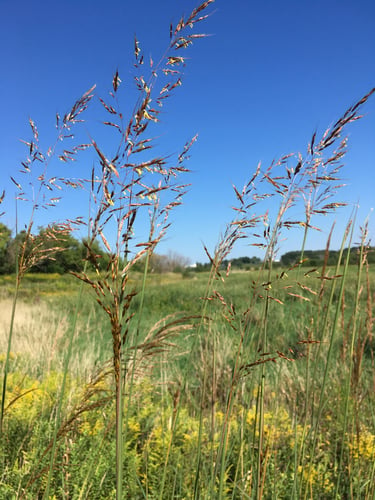
Bambusa arundinacea
(Retz.) Willd.
Thorny bamboo, Spiny bamboo
iNaturalist· cc-by-sa
(c) Dinesh Valke, some rights reserved (CC BY-SA)
iNaturalist· cc-by-sa
(c) Dinesh Valke, some rights reserved (CC BY-SA)
iNaturalist· cc-by-sa
(c) Dinesh Valke, some rights reserved (CC BY-SA)
Description
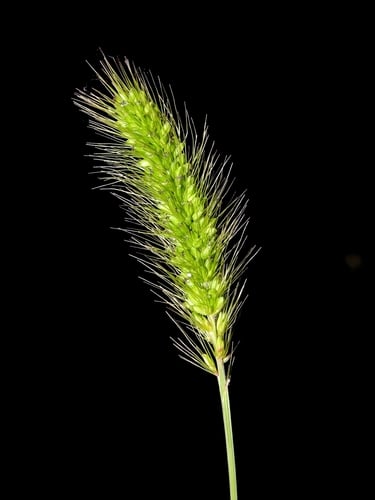
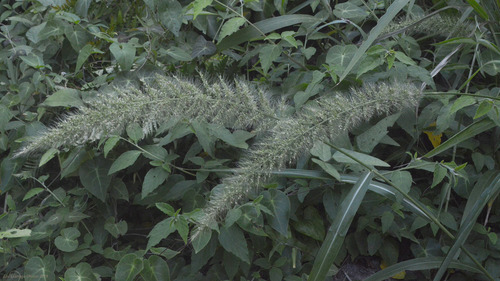
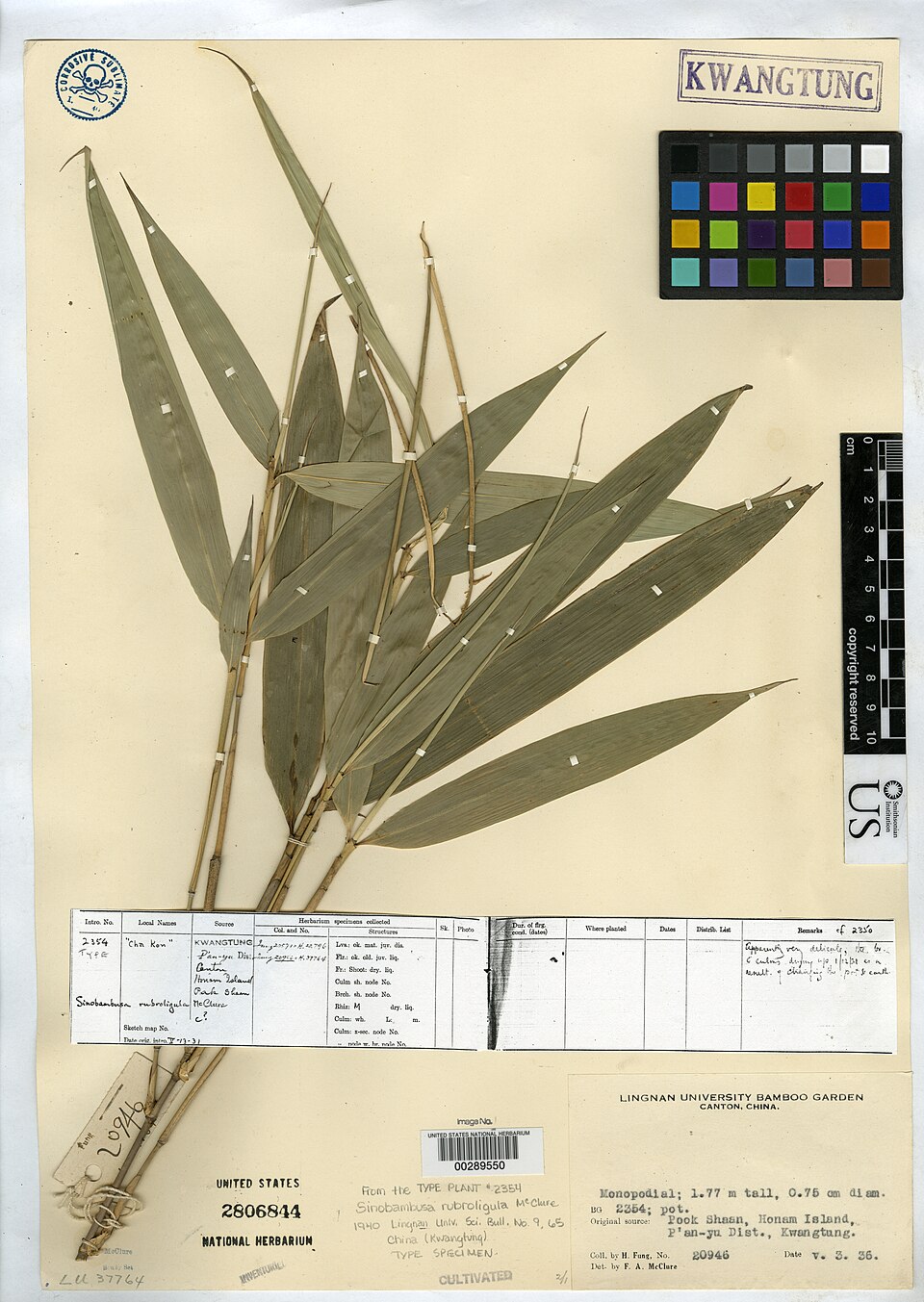
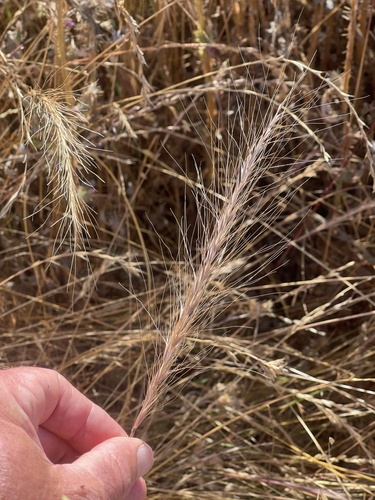
A tropical bamboo native to Asian forests, growing up to 2,000 m elevation, with characteristically crooked and knotty stalks. This cultivated species reaches significant height and is commonly found in markets throughout tropical regions.
Edible Uses
Young sprouted buds are eaten cooked (with water changes to remove bitterness) and can be pickled or dried for storage. A fermented vegetable product is made from the buds. Seeds are eaten as a rice substitute and are notably high in lysine (4.4–4.8%) compared to wheat and rice. The sugary sap is made into drinks.
Traditional Uses
Newly sprouted buds are eaten cooked. The water should be changed to remove the bitterness. A fermented vegetable product is also made. They can be dried for future use. The buds are used for vegetables. They can also be pickled. Seeds are eaten as a rice substitute. The sugary sap is made into drinks.
Medicinal Uses
Seeds show significant nutritional and growth-promoting properties equivalent to milk protein, with mean net protein utilisation of 73.6% and a protein efficiency ratio of 2.92%.
Known Hazards
Seeds have a tryptophan deficit of up to 50%.
Distribution
A tropical plant. It grows in forest. It grows up to 2,000 m above sea level.
Where It Grows
Asia, Australia, Cambodia, Himalayas, India, Indochina, Laos, Malaysia, Myanmar, Nepal, Northeastern India, Pakistan, SE Asia, Sikkim, Sri Lanka, Taiwan, Thailand, USA,
Other Information
The shoots are sold in markets. It is cultivated.
Notes
There are about 120 Bambusa species. They are tropical and subtropical in Asia. Chemical composition (seeds): Lysine content has been analysed at 4.4% to 4.8%, compared to such cereals as wheat and rice, which have lysine contents of ca. 2.5%. Tryptophan deficit is up to 50%. Cultivation as a crop is limited only by the long time taken for the plant to flower - a factor which might be rectified by selective breeding. Mean net protein utilisation (NPU) is 73.6%. Growth-promoting effect is equivalent to that of milk protein. Biological valence and digestive coefficient averages 78.2% to 94.1%. Protein efficiency ratio is 2.92% as compared to skim milk at 2.78%.
Nutrition
| Part | Moisture | kJ | kcal | Protein | Vit A | Vit C | Iron | Zinc |
|---|---|---|---|---|---|---|---|---|
| Shoots | 79 | — | — | 1.8 | — | 4 | 0.4 | — |
| Seeds | — | — | 7.5 | — | — | — | — | — |
| Sap | — | — | — | — | — | — | — | — |
Synonyms
Also Known As
Bamboo vaste, Bans, Bidiru kalale, Biduru, Bongu-veduru, Gokha, Gokhatuoi, Katraanji, Ketua, Kotoha, Kutuasi, Moongil, Mungil arisee, Mungil, Pente-veduru, Reussey prey, Saneibi, Vansh, Vans, Veduru, Washte
References (37)
- Ambasta S.P. (Ed.), 2000, The Useful Plants of India. CSIR India. p 66
- Anderson, E. F., 1993, Plants and people of the Golden Triangle. Dioscorides Press. p 203
- Bandyopadhyay, S. et al, 2009, Wild edible plants of Koch Bihar district, West Bengal. Natural Products Radiance 8(1) 64-72
- Bohra, N., et al, 2017, Ethnobotany of wild edible plants traditionally used by the local people in the Ramnagar regions from Nainital District, Uttarakhand, India. Biolife 5(1): 12-19
- Chauhan, S. H., et al, 2018, Consumption patterns of wild edibles by the Vasavas: a case study from Gujarat, India. Journal of Ethnobiology and Ethnomedicine (2018) 14:57
Show all 37 references Hide references
- Crouzet, I., Starosta, P., 1998, Bamboos. Evergreen. p 15
- Facciola, S., 1998, Cornucopia 2: a Source Book of Edible Plants. Kampong Publications, p 46
- Gangte, H. E., et al, 2013, Wild Edible Plants used by the Zou Tribe in Manipur, India. International Journal of Scientific and Research Publications, Volume 3, Issue 5
- Guite, C., 2016, A study of wild edible plants associated with the Paite tribe of Manipur, India, International Journal of Current Research. Vol. 8, Issue, 11, pp. 40927-40932
- GUPTA,
- Lord, E.E., & Willis, J.H., 1999, Shrubs and Trees for Australian gardens. Lothian. p 93
- Manju, S., and Sundriyal, R. C., 2001, Wild Edible Plants of the Sikkim Himalaya: Nutritive Values of Selected Species. Economic Botany 55(3): 377-390
- Martin, F.W. & Ruberte, R.M., 1979, Edible Leaves of the Tropics. Antillian College Press, Mayaguez, Puerto Rico. p 194
- Menninger, E.A., 1977, Edible Nuts of the World. Horticultural Books. Florida p 146
- Pradhan, R., et al, 2020, Potential Wild Edible Plants and its Significance in Livelihood of Indigenous People of Male Mahadeshwara Hills, Karnataka. Economic Affairs Vol. 64, No. 4 pp. 01-14
- Prafulla, S., 2017, Wild Food Diversity of Nawegaon-Nagzira Tiger Reserve in Gondia-Bhandara district of Maharashtra, India. Int. J. of Life Sciences, 2017, Vol. 5 (4): 620-626
- Prashanth Kumar, G.M. and Shiddamallayya, N., 2015, Ethnobotanical Study of Less Known Wild Edible Plants of Hakki Pikki Tribes of Angadihalli, Hassan District, Karnataka. Journal or Medicinal Plants Studies 3(5):80-85
- Ramachandran,V. S., & Udhayavani, C., 2013, Knowledge and uses of wild edible plants by Paniyas and Kurumbas of Western Nilgiris, Tamil Nadu. Indian Journal of Natural Products and Resources. 4(4) December 2013, pp 412-418
- RAO,
- Rao, M. L. S., et al, 2014, Indigenous Plant Foods which are commonly consumed by the tribal communities in Dumbriguda Area of Visakhapatnam District, Andhra Pradesh, India. Biolife. Vol 2, Issue 3
- Reddy, K. N. et al, 2007, Traditional knowledge on wild food plants in Andhra Pradesh. Indian Journal of Traditional Knowledge. Vol. 6(1): 223-229
- Saidulu, P. et al, 2015, Ethnobotanical Knowledge Studied in Pocharam Wildlife Sanctuary, Telangana, India. Not Sci Biol, 2015, 7(2):164 -170
- SAXENA;
- Setiya, A. V., et al, 2016, Exploration and documentation of some wild edible plants used by the aboriginals from Gadchiroli District (M.S.) India. International Advanced Research Journal in Science, Engineering and Technology. 3(7)
- SHANKARNARAYAN & SAXENA,
- SHORTT,
- Shrestha, S., 2021, Wild Edible Plants of Dhankuta, Eastern Nepal. Rupantaran : A Multidisciplinary Journal Vol. V : pp 100-109, September, 2021 p 102
- Singh, S.R. and Singh, N.I., 1985, A Preliminary Ethnobotanical studies on wild edible plants in the markets of Manipur - 1. J. Econ. Tax. Bot. Vol. 6 No. 3 pp 699-703
- Singh, V. and Singh, P., 1981, Edible Wild Plants of Eastern Rajasthan. J. Econ. Tax. Bot. Vol 2 pp 197-207
- Sp. pl. 2(1):245. 1799
- SRINAVAS et al.,
- Terra, G.J.A., 1973, Tropical Vegetables. Communication 54e Royal Tropical Institute, Amsterdam, p 27
- Uprety, Y., et al, 2010, Non-timber Forest Products in Bardiya District of Nepal: Indigenous use, Trade and Conservation. J. Hum. Ecol. 30(3): 143-158
- Uprety, Y., et al, 2012, Diversity of use and local knowledge of wild edible plant resources in Nepal. Journal of Ethnobotany and Ethnomedicine 8:16
- WATT
- Wild edible plants of Himachal Pradesh
- Zeven, A. C. & de West, J. M. J., 1982, Dictionary of cultivated plants and their regions of diversity. Wageningen. p 53, 73