Cydonia oblonga
Miller
Common Quince, Smyrna quince
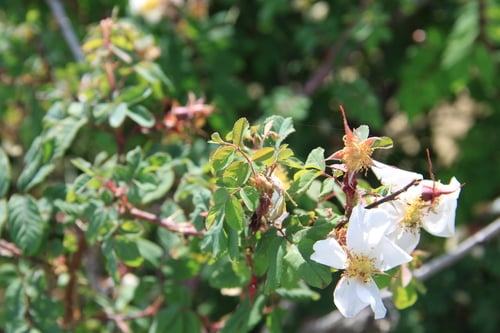
iNaturalist· cc-by-nc
(c) Nicolas Lagière, some rights reserved (CC BY-NC), uploaded by Nicolas Lagière
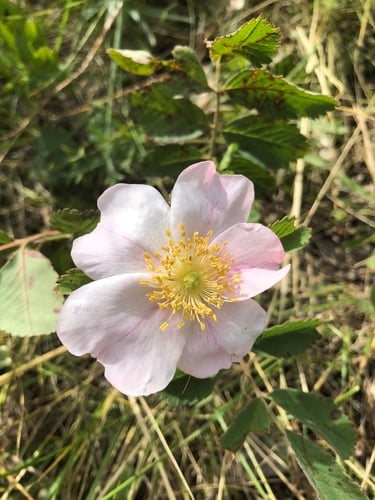
iNaturalist· cc0
no rights reserved, uploaded by flamelily
iNaturalist· cc0
no rights reserved, uploaded by Corinne Helmer
Summary
Source: WikipediaDeciduous tree reaching 7.5 m tall and 7 m wide, medium growth rate. Hermaphrodite flowers bloom May, seeds ripen November, insect-pollinated. Not self-fertile. Tolerates light sandy, medium loamy, and heavy clay soils in mildly acid to basic pH. Grows in full to semi-shade or full sun and prefers moist soil. Hardy to UK zone 4, not frost tender. Noted for attracting wildlife.
Description
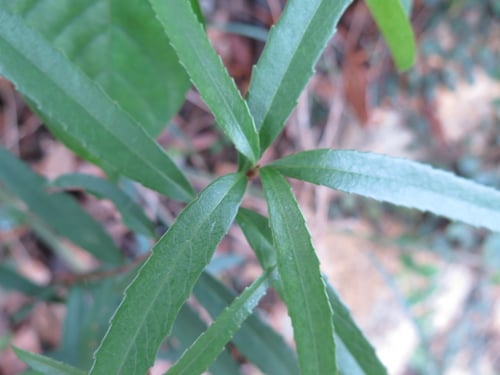
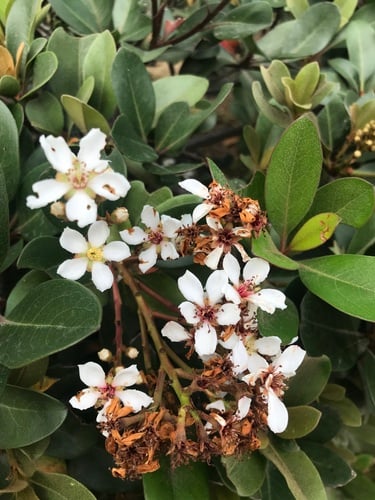
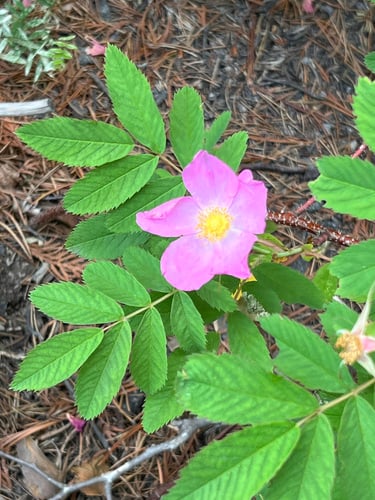
A spreading bushy tree. It grows up to 5-8 m high and spreads 3-6 m wide. It forks low down on the trunk into crooked limbs. The leaves are large, and deep green above and downy underneath. They occur on young twigs. It loses its leaves. The flowers can be 5 cm across and mostly pale pink. The fruit are pear shaped and 15 cm long with hard flesh. The fruit can be 1 kg in size. They are yellow when ripe. They are edible when cooked.
Edible Uses
The fruit can be eaten raw or cooked. In warm temperate or tropical climates it becomes soft and juicy enough to eat fresh, but in cooler climates such as Britain it stays hard and astringent and requires cooking first. It is well suited to jellies and preserves, and adds an excellent flavour when cooked with apples. The flesh is strongly aromatic, firm, and somewhat gritty. The fruit is rich in pectin and measures around 10cm long and 9cm wide, tapering toward the stalk. A drink can be made by adding dried crushed seed to water, simmering for 5 minutes, and sweetening to taste. Flowers are also listed as edible, though no further details are given. Nutritional composition per 100g dry weight (355 calories; 0% water): Protein 2.7g, Fat 1.2g, Carbohydrate 94g, Fibre 14g, Ash 2.5g; Calcium 55mg, Phosphorus 95mg, Iron 4.3mg, Sodium 25mg, Potassium 1216mg; Vitamin A 130mg, Thiamine (B1) 0.15mg, Riboflavin (B2) 0.18mg, Niacin 1.8mg, Vitamin C 95mg. Figures represent the median of a reported range.
Traditional Uses
The fruit are usually cooked. They are good for jelly and preserves. They are made into pies, candy and jams. The seeds are dried and crushed then simmered for 5 minutes in water and sweetened to taste to make a drink. The seeds also yield a gum used as a stabiliser for ice cream. The leaves are used as wrappings for dolmas. The leaves are used for sarma in Turkey. They are rolled around a filling of rice or minced meat. The flowers can be eaten.
Medicinal Uses
The stem bark is astringent and is used to treat ulcers. The seed is a mild but reliable laxative, astringent, and anti-inflammatory. When soaked in water it swells into a mucilaginous mass with a soothing, demulcent action that is taken internally for respiratory diseases, especially in children. The same mucilage can be applied externally to minor burns. The fruit is antivinous, astringent, cardiac, carminative, digestive, diuretic, emollient, expectorant, pectoral, peptic, refrigerant, restorative, stimulant, and tonic. Syrup made from unripe fruit is very astringent and used for diarrhoea, and is considered particularly safe for children. The fruit and its juice can be used as a mouthwash or gargle for mouth ulcers, gum problems, and sore throats. The leaves contain tannin, which acts as an astringent, and pectin, which benefits the circulatory system and helps reduce blood pressure.
Known Hazards
The seed is poisonous. Like many of the species in the family Rosaceae it contains hydrogen cyanide (this is the substance that gives almonds their characteristic flavour). In small quantities, hydrogen cyanide has been shown to stimulate respiration and improve digestion, it is also claimed to be of benefit in the treatment of cancer. In excess, however, it can cause respiratory failure and even death.
Distribution
It grows in Mediterranean and temperate climates. It can grow in the highlands in the tropics. It is native to C. and S.W. Asia. It often grows on limestone. The tree is frost hardy. It will grow in many types of soil. It does best with a pH of 6-7. It can grow in a hot dry climate. A quince needs 100-400 hours of chilling. It suits hardiness zones 4-9. Hobart Botanical Gardens. Arboretum Tasmania.
Where It Grows
Africa, Albania, Algeria, Armenia, Asia, Australia, Austria, Azerbaijan, Balkans, Bolivia, Brazil, Britain, Bulgaria, Canary Is., Cape Verde, Caucasus, Central Asia, Chile, China, Colombia, Crete, Cyprus, Czech Republic, East Africa, Ecuador, El Salvador, Eritrea, Ethiopia, Europe, France, Georgia, Germany, Greece, Guatemala, Hungary, India, Indochina, Iran, Iraq, Italy, Kazakhstan, Lebanon, Libya, Lithuania, Macedonia, Madagascar, Mediterranean, Mexico, Middle East, Moldova, Morocco, New Zealand, North Africa, North America, Pakistan, Portugal, Romania, SE Asia, Serbia, Slovenia, South Africa, Southern Africa, South America, Spain, Sri Lanka, Switzerland, Syria, Tajikistan, Tasmania, Tunisia, Turkey*, Türkiye, Turkmenistan, Ukraine, Uruguay, USA, Uzbekistan, Vietnam, Russian Federation - Ciscaucasia, Dagestan, Yugoslavia, Zimbabwe,
Cultivation
Succeeds in most soils but prefers a light moist fertile soil and a sunny position. Dislikes very dry or waterlogged soils. Succeeds in semi-shade but does not fruit so well in such a position. Plants also tolerate quite deep shade, though they will often not fruit at all in such a position. Plants are hardy to about -15°c, though the fruit seldom ripens in the north of Britain unless it is grown against a sunny wall. The quince has been cultivated for over two thousand years for its edible fruit and its seed, though it is not a widely grown crop. It is also much used as a dwarfing rootstock for pears and some other fruits. There are some named varieties. Plants require warm summers in order to fully ripen their fruit. The var. 'Maliformis' ripens well in cooler summers. Quince trees are not typically self-fertile and usually require cross-pollination with another quince or related species for optimal fruit production. Quince is generally harvested in late autumn when the fruit turns golden yellow. Quince trees generally flower in spring depending on the climate and local conditions. Quince trees have a moderate growth rate, reaching a height of 12 to 15 feet in about 3 to 5 years, but they may take longer to begin producing fruit, often around 4 to 6 years after planting.
Propagation
Seed is best sown in a cold frame as soon as it is ripe, or alternatively in February. Stratification is required: fresh seed needs 18 weeks of cold pre-chilling, while old seed requires 2 weeks of warm stratification followed by 18 weeks of cold treatment. Prick seedlings into individual pots once large enough to handle and grow on in a cold frame through at least their first winter. Plant out in late spring or early summer after the last expected frosts. Alternatively, take cuttings of mature wood in November in a cold frame, layer in spring (takes about 1 year), or remove suckers in spring.
Other Uses
Quince can be used as a companion plant in orchards to attract pollinators and beneficial insects, and is useful in hedgerows and for soil conservation due to its dense root system. A mucilage from the seed coat, which contains 20% mucilage and 15% fatty oils, is used as a gum arabic substitute to add gloss to material. The fruit is rich in pectin, which is said to protect the body against radiation. The leaves contain 11% tannin. Quince flowers produce nectar and pollen, attracting bees and other pollinators. The fruits provide food for birds and mammals, the dense foliage offers shelter, and the tree structure can be used for nesting and roosting. Rough bark and fallen leaf litter provide overwintering sites and shelter for beneficial invertebrates.
Production
Trees are slow growing. Trees bear in 3-4 years. Trees can live for 50 years.
Other Information
It is a cultivated food plant.
Nutrition
| Part | Moisture | kJ | kcal | Protein | Vit A | Vit C | Iron | Zinc |
|---|---|---|---|---|---|---|---|---|
| Fruit | 84.2 | 106 | 25 | 0.3 | 4 | 15 | 0.3 | 0.04 |
Synonyms
Also Known As
Amritphala, Ayva, Bai dana, Bam-tsuntu, Bamsutu, Bihi, Coines, Coing, Cotogna, Cydonian apple, Duna, Ftoi, utui, Ftoin, Kaontsy, K'omshi, Marmelo, Marumero, Melo cotogno, Membrillo, Mocqua, Mu gua, Navadna kutina, Quitte, Shimaimathala, Simadanimma, Simedalimbe, Voamerika, Wen po
References (64)
- Ambasta, S.P. (Ed.), 2000, The Useful Plants of India. CSIR India. p 154
- Beckstrom-Sternberg, Stephen M., and James A. Duke. "The Foodplant Database." http://probe.nalusda.gov:8300/cgi-bin/browse/foodplantdb.(ACEDB version 4.0 - data version July 1994)
- Bhatia, H., et al, 2018, Traditionally used wild edible plants of district Udhampur, J&K, India. Journal of Ethnobiology and Ethnomedicine (2018) 14:73
- Bianchini, F., Corbetta, F., and Pistoia, M., 1975, Fruits of the Earth. Cassell. p 134
- Bodkin, F., 1991, Encyclopedia Botanica. Cornstalk publishing, p 312
Show all 64 references Hide references
- Bodkin, F., 1991, Encyclopedia Botanica. Cornstalk publishing, p 312 (As Cydonia vulgaris) and p 858 (As Pyrus cydonia)
- Bremness, L., 1994, Herbs. Collins Eyewitness Handbooks. Harper Collins. p 51
- Brickell, C. (Ed.), 1999, The Royal Horticultural Society A-Z Encyclopedia of Garden Plants. Convent Garden Books. p 329
- Brouk, B., 1975, Plants Consumed by Man. Academic Press, London. p 197
- Bussman, R. W., et al, 2016, A comparative ethnobotany of Khevsureti, Samtskhe-Javakheti, Tusheti, Svaneti, and Racha-Lechkhumi, Republic of Georgia (Sakartvelo), Caucasus. Journal of Ethnobiology and Ethnomedicine.
- Bussman, R. W. et al, 2017, Ethnobotany of Samtskhe-Javakheti, Sakartvelo (Republic of Georgia), Caucasus. Indian Journal of Traditional Knowledge Vol. 16(1) pp 7-24
- Bussman, R. W., et al, 2021, Unity in diversity—food plants and fungi of Sakartvelo (Republic of Georgia), Caucasus. Journal of Ethnobiology and Ethnomedicine (2021) 17:72 p 14
- Cheifetz, A., (ed), 1999, 500 popular vegetables, herbs, fruits and nuts for Australian Gardeners. Random House p 187
- Coombes, A.J., 2000, Trees. Dorling Kindersley Handbooks. p 244
- Cruz, I. M., et al, 2015, Edible fruits and seeds in the State of Mexico. Revista Mexicana de Ciencias Agricolas. Vol. 6. Num. 2 pp 331-346
- Cundall, P., (ed.), 2004, Gardening Australia: flora: the gardener's bible. ABC Books. p 451
- Dobriyal, M. J. R. & Dobriyal, R., 2014, Non Wood Forest Produce an Option for Ethnic Food and Nutritional Security in India. Int. J. of Usuf. Mngt. 15(1):17-37
- Dogan, Y., et al, 2015, Of the importance of a leaf: the ethnobotany of sarma in Turkey and the Balkans. Journal of Ethnobiology and Ethnomedicine, 11:56
- Duarte, M. C., et al, 2022, Diversity of Useful Plants in Cabo Verde Islands: A Biogeographic and Conservation Perspective. Plants 2022, 11, 1313 p 15
- Etherington, K., & Imwold, D., (Eds), 2001, Botanica's Trees & Shrubs. The illustrated A-Z of over 8500 trees and shrubs. Random House, Australia. p 248
- Facciola, S., 1998, Cornucopia 2: a Source Book of Edible Plants. Kampong Publications, p 198
- Flora of China. www.eFloras.org Volume 9
- Flowerdew, B., 2000, Complete Fruit Book. Kyle Cathie Ltd., London. p 32
- Flowerdew, B., 2000, Complete Fruit Book. Kyle Cathie Ltd., London. p 32 (As Cydonia vulgaris)
- Gard. dict. ed. 8: Cydonia no. 1. 1768
- Glowinski, L., 1999, The Complete Book of Fruit Growing in Australia. Lothian. p 39
- Gouldstone, S., 1983, Growing your own Food-bearing Plants in Australia. Macmillan p 126
- Hedrick, U.P., 1919, (Ed.), Sturtevant's edible plants of the world. p 538 (As Pyrus cydonia)
- Hibbert, M., 2002, The Aussie Plant Finder 2002, Florilegium. p 79
- Hu, Shiu-ying, 2005, Food Plants of China. The Chinese University Press. p 431
- Huxley, A. (Ed.), 1977, The Encyclopedia of the Plant Kingdom. Chartweil Books. p 59 (As Cydonia vulgaris)
- Jardin, C., 1970, List of Foods Used In Africa, FAO Nutrition Information Document Series No 2.p 131
- John, L., & Stevenson, V., 1979, The Complete Book of Fruit. Angus & Robertson p 243
- Kargioglu, M., et al, 2008, An Ethnobotanical Survey of Inner-West Anatolia, Turkey. Human Ecology 36:763-777
- Kew Plants of the World Online
- Khan, D. & Shaukat, S.S., 2006, The Fruits of Pakistan: Diversity, Distribution, Trends of Production and Use. Int. J. Biol. Biotech., 3(3):463-499
- Kiple, K.F. & Ornelas, K.C., (eds), 2000, The Cambridge World History of Food. CUP p 1841
- Kizilarslan, C. & Ozhatay, N., 2012, An ethnobotanical study of the useful and edible plants of İzmit. Marmara Pharmaceutical Journal 16: 134-140, 2012.
- Lazarides, M. & Hince, B., 1993, Handbook of Economic Plants of Australia, CSIRO. p 71
- Lyle, S., 2006, Discovering fruit and nuts. Land Links. p 170
- Macmillan, H.F. (Revised Barlow, H.S., et al) 1991, Tropical Planting and Gardening. Sixth edition. Malayan Nature Society. Kuala Lumpur. p 314
- Martin, F. W., et al, 1987, Perennial Edible Fruits of the Tropics. USDA Handbook 642 p 53
- Pham-Hoang Ho, 1999, An Illustrated Flora of Vietnam. Nha Xuat Ban Tre. p 780
- Pieroni, A., 1999, Gathered wild food plants in the Upper Valley of the Serchio River (Garfagnana), Central Italy. Economic Botany 53(3) pp 327-341
- Pieroni, A., et al, 2005, Food for two seasons: Culinary uses of non-cultivated local vegetables and mushrooms in a south Italian village. International Journal of Food Sciences and Nutrition, 56(4): 245-272
- Pieroni, A., 2008, Local plant resources in the ethnobotany of Theth, a village in the Northern Albanian Alps. Genet Resour Crop Evol (2008) 55:1197–1214
- Pieroni, A., 2017, Traditional uses of wild food plants, medicinal plants, and domestic remedies in Albanian, Aromanian and Macedonian villages in South-Eastern Albania. Journal of Herbal Medicine Volume 9, September 2017, Pages 81-90
- Plants for a Future database, The Field, Penpol, Lostwithiel, Cornwall, PL22 0NG, UK. http://www.scs.leeds.ac.uk/pfaf/
- Polat, R., et al, 2017, Survey of wild food plants for human consumption in Bingol, (Turkey). Indian Journal of Traditional Knowledge. Vol. 16(3) July 2017, pp. 378-384
- Postman, J. D., et al, 2012, Recent NPGS Coordinated Expeditions in the Trans-Caucasus Region to Collect Wild Relatives of Temperate Fruit and Nut Crops. In Acta Horticulturae Number 948 p 191-198
- Rivera, C., et al, 2005, The Ethnobotanical Study of Local Mediterranean Food Plants as Medicinal Resources in Southern Spain. Journal of Physiologyand Pharmacology. 56, Suppl. 1, 97-114
- Roa, J. A. G. & Boada, D. S. G., 2018, Fundación para el Fortalecimiento de la Fruticultura y Plantas Alimenticias no Convencionales en Colombia.
- Ruiters-Welcome, A. K., 2019, Food plants of southern Africa. Ph.D. thesis. Univ. of Johannesburg p 94
- Segura, S., et al, 2018, The edible fruit species in Mexico. Genet Resour Crop Evol (2018) 65:1767–1793
- Smith, K., 1998. Growing Uncommon Fruits and Vegetables. New Holland. p 150
- Solomon, C., 2001, Encyclopedia of Asian Food. New Holland. p 303 (As Cydonia vulgaris)
- Sp. pl. 1:480. 1753 (As Pyrus cydonia)
- USDA, ARS, National Genetic Resources Program. Germplasm Resources Information Network - (GRIN). [Online Database] National Germplasm Resources Laboratory, Beltsville, Maryland. Available: www.ars-grin.gov/cgi-bin/npgs/html/econ.pl (10 April 2000)
- van Wyk, B., 2005, Food Plants of the World. An illustrated guide. Timber press. p 168
- Welcome, A. K. & Van Wyk, B.-E., 2019, An inventory and analysis of the food plants of southern Africa. South African Journal of Botany 122 (2019) 136–179
- Wiersema, J. H. & Leon, B., 2013, World Economic Plants. A Standard Reference CRC Press. 2nd Ed. p 223
- World Checklist of Useful Plant Species 2020. Royal Botanic Gardens, Kew
- Young, J., (Ed.), 2001, Botanica's Pocket Trees and Shrubs. Random House. p 302
- Zeven, A. C. & de West, J. M. J., 1982, Dictionary of cultivated plants and their regions of diversity. Wageningen. p 100