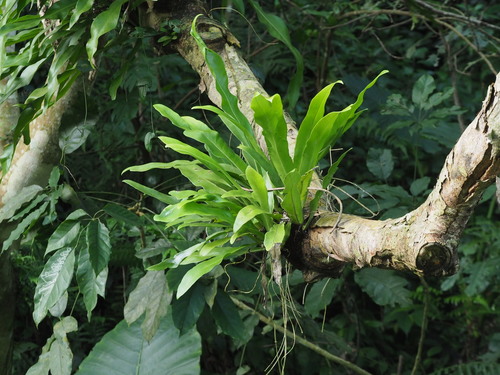
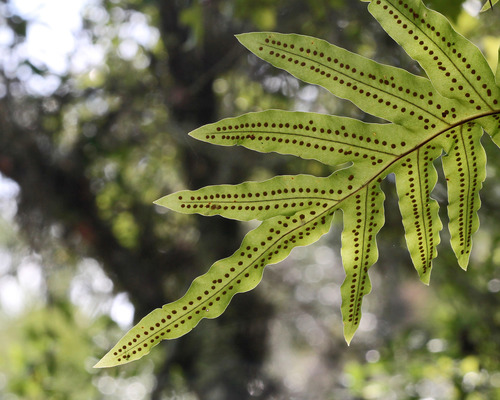
Leptochilus pteropus
(Blume) Fraser-Jenk
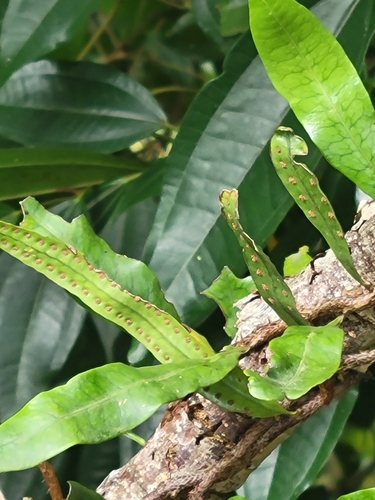
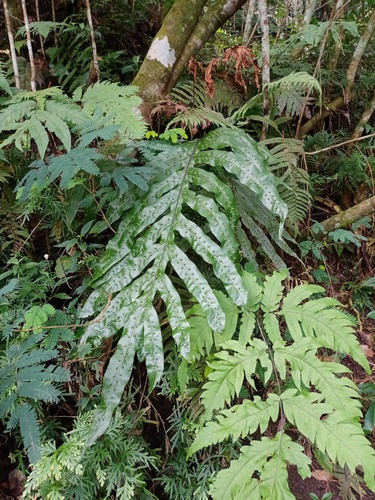
iNaturalist· cc-by
(c) Jacy Chen, some rights reserved (CC BY), uploaded by Jacy Chen
iNaturalist· cc-by-nc
(c) KOFANG, some rights reserved (CC BY-NC), uploaded by KOFANG
iNaturalist· cc-by-nc
(c) lecanorchis, some rights reserved (CC BY-NC)
Summary
Source: WikipediaLeptochilus pteropus (synonym Microsorum pteropus) is a species of aquatic or semi-aquatic fern, commonly known as Java fern (after the Indonesian island of Java). It is predominantly known from Malaysia, Thailand, Northeastern India and parts of South China. It is a highly variable plant, with several different geographic varieties and physical forms that vary in leaf size, texture and shape (such as the crested-leaved 'Windelov' or 'Trident' varieties). Found in its natural habitat growing attached to riparian roots and rocks, it can grow fully or partially submerged, provided its roots and rhizome remain wet. The plant will readily propagate asexually by producing small, adventitious plantlets from the leaf tips and margins of established, mature foliage. The small sprouts quickly develop roots of their own, and, if water currents facilitate it, may attach themselves to surrounding objects before the "mother" leaf expires. In the event that the mother leaf wilts or detaches prior to the plantlet establishing itself, the small fern will float on its own to a new location to start anew.
Description
A fern.
This description is brief — help expand it
Distribution
It is a tropical plant.
Where It Grows
Andamans, Asia, Bangladesh, China, Himalayas, India, Indonesia, Laos, Malaysia, Myanmar, Nepal, Papua New Guinea, PNG, Philippines, SE Asia, Sri Lanka, Taiwan, Thailand, Vietnam.
Synonyms
References (1)
- World Checklist of Useful Plant Species 2020. Royal Botanic Gardens, Kew