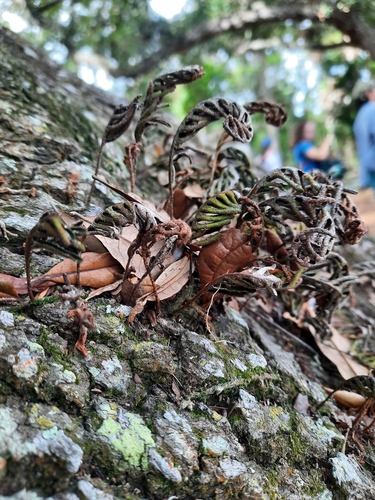
Matteuccia struthiopteris - (L.)Tod.
(L.)Tod.
Ostrich Fern
gbif· cc-by-nc
chris buelow
gbif· cc-by-nc
chris buelow
gbif· cc-by-nc
Aleksandr V. Lebedev
Description
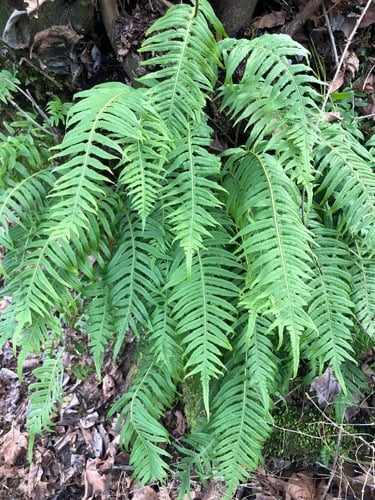
Matteuccia struthiopteris is a FERN growing to 1 m (3ft 3in) by 0.5 m (1ft 8in) at a medium rate. See above for USDA hardiness. It is hardy to UK zone 2. Suitable for: light (sandy), medium (loamy) and heavy (clay) soils and can grow in heavy clay soil. Suitable pH: mildly acid and neutral soils and can grow in very acid soils. It can grow in semi-shade (light woodland). It prefers moist soil.
Edible Uses
Young fronds - raw or cooked. Used before they fully unroll, they are thick and succulent. Sometimes sold in speciality markets, the flavour can be compared to asparagus. Another report says that they are a famine food that is only used in times of need in China. Rootstock - peeled and roasted.
Medicinal Uses
Birthing aid MiscellanyA decoction of the leaf stalk base from sterile fronds has been taken in the treatment of back pain and also to help speed up the expulsion of the afterbirth.
Known Hazards
Although we have found no reports of toxicity for this species, a number of ferns contain carcinogens so some caution is advisable. Many ferns also contain thiaminase, an enzyme that robs the body of its vitamin B complex. In small quantities this enzyme will do no harm to people eating an adequate diet that is rich in vitamin B, though large quantities can cause severe health problems. The enzyme is destroyed by heat or thorough drying, so cooking the plant will remove the thiaminase.
Distribution
N. Temperate zone. Occasionally naturalized in Britain.
Where It Grows
TEMPERATE ASIA: Aga Buryat, Amur, Armenia, Azerbaijan, Buryatia, China, Chita, Ciscaucasia, Dagestan, Gansu Sheng, Georgia, Gorno-Altay, Hebei Sheng, Heilongjiang Sheng, Henan Sheng, Hokkaidô, Honshu, Irkutsk, Japan, Jilin Sheng, Kamcatskij kraj, Korea, Krasnoyarsk, Kyushu, Liaoning Sheng, Primorye, Respublika, Russian Federation, Russian Federation, Russian Federation, Russian Federation-Ciscaucasia, Sakhalin, Shanxi Sheng, Shikoku, Sichuan Sheng, Tyumen, Tyva, Xinjiang Uygur Zizhiqu, Xizang Zizhiqu,Turkey. NORTHERN AMERICA: Canada, Northwest Territories (southwest), Yukon (southeast), Québec, Nova Scotia, Ontario, Prince Edward Island, New Brunswick, Newfoundland and Labrador, Saskatchewan, Alberta, Manitoba, British Columbia, United States, Alaska (s.-c.), Connecticut, Indiana, Maine, Massachusetts, Michigan, New Hampshire, New Jersey, New York, Ohio, Pennsylvania, Rhode Island, Vermont, West Virginia, Illinois, Iowa, Minnesota, Missouri, North Dakota, South Dakota, Wisconsin, Delaware, Maryland, Virginia, EUROPE: Denmark, Finland, Norway, Sweden, Austria, Belgium, Switzerland, Czech Republic, Germany, Hungary, Poland, Slovakia, Russian Federation-European part, European part, Belarus, Estonia, Lithuania, Latvia, Russian Federation, Karelia, Murmansk, Saratov, Volgogradskaja oblast, Ukraine, Bosnia and Herzegovina, Croatia, Italy, Romania, Serbia, Slovenia,
Cultivation
Requires a moist but well-drained position and light shade. Grows well in heavy clay soils. Dislikes full sun, the leaves turning yellow and burning in such a situation. Prefers a pH between 5 and 6.5. Dormant plants are hardy to at least -20°c. Members of this genus are rarely if ever troubled by browsing deer. A very ornamental plant, it establishes rapidly. It has a short rhizome but produces long stolons, by which it spreads rapidly once established, and it can be invasive. Fertile fronds are produced after the first flush of vegetative fronds and persist throughout the following winter. The spores are shed in mid-winter. Grown commercially for its decorative fronds. These fronds are also available as a food from speciality markets. Plants can be forced in the winter to provide an early supply of the young shoots.
Propagation
Spores - surface sow as soon as they are ripe in mid-winter and keep the soil moist. It is best to keep the pot in a sealed plastic bag to hold in the moisture. Pot up small clumps of the young plants as soon as they are large enough to handle and grow on in light shade until large enough to plant out. Division during the dormant season between October and March. Larger clumps can be replanted direct into their permanent positions, though it is best to pot up smaller clumps and grow them on in a cold frame until they are rooting well. Plant them out in the spring.
Other Uses
Miscellany. Plants make a good ground cover when spaced about 60cm apart each way. They spread slowly and the fronds tend to die off earlier in the autumn than most ferns.