Dracaena serrulata
Baker
iNaturalist· cc-by
(c) dhfischer, some rights reserved (CC BY), uploaded by dhfischer
iNaturalist· cc-by-nc
(c) James Bailey, some rights reserved (CC BY-NC)
iNaturalist· cc-by-nc
(c) James Bailey, some rights reserved (CC BY-NC)
Summary
Source: WikipediaDracaena serrulata, also called the Arabian or Yemen dragon tree, is a distinctive tree reaching around 5m tall with a single trunk. It is found in the dry escarpment mountains of southwestern Arabia in Oman, South Yemen and Saudi Arabia.
Description
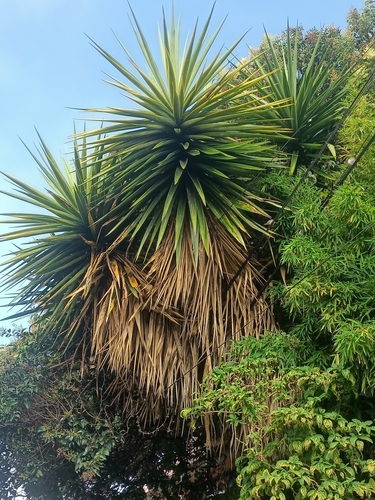
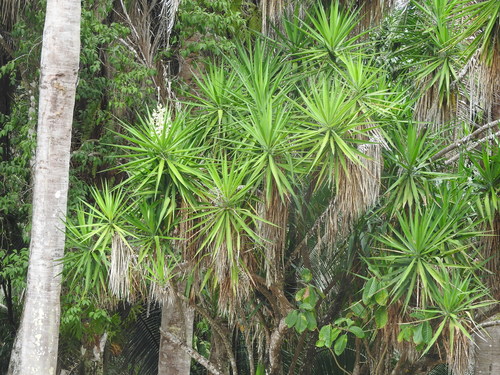
A tree. It grows 5 m tall. The trunk is forked. The leaves are congested at the tips of the branches. They are sword shaped with a broadened base. They are 50-100 cm long by 2-5 cm wide.
Edible Uses
The stiff leaves of the Dracaena serrulata were an important source of fibre and rope. The large, stiff and spike-tipped leaves were cut or pulled from the trunk, and beaten with heavy clubs to loosen and crack open the rigid outer casing of the leaf. Then the leaves were taken to water and left to soak in it for some weeks. Once thoroughly softened, the leaves were removed from the water and piled up in heaps on a hard, flat surface, and then beaten and thrashed with switches to loosen the fibre into separate strands. Once the separate fibres had been unravelled, they were twisted and rubbed on the thigh or between the fingers to produce threads, which could then be double or trebled, rolled and twisted again, or plaited according to the thickness of rope desired. These threads were traditionally said to make the strongest of all the cordage produced in Oman. The ropes made from the Dracaena serrulata were popularly used as camel tackle, baggage ropes and rope-pulleys used to lower the heavy sacks of frankincense down precipices or across areas where baggage camels had difficulty penetrating. Ropes from this plant were also used to make harnesses in which men were lowered down sheer cliff sides to gather wild honey. The threads of the Dracaena serrulata also had a certain 'give', which made them popular for use of sling shots and bow-strings. The heart of a group of leaves of the Dracaena serrulata could also be eaten. The wood of the Dracaena serrulata was also occasionally used to make drums. Sections of the trunk would be sliced across horizontally and hollowed out to make the drum, the wooden sides being pierced with small holes and the top and bottom percussive parts being made from leather, usually from goats.
Distribution
It is a Mediterranean climate plant. It grows in arid areas.
Where It Grows
Mediterranean, Middle East, Oman,
Cultivation
Dracaena serrulata is found in areas with seasonally arid climates where the average annual precipitation is 200 - 500mm and the mean annual temperature is 18 - 20°c. The climate is strongly influenced by a period o f3 - 4 months of dense cloud cover, where relative humidity reaches 90 - 97% and fog can penetrate up to 50 kilometres inland Plants are very slow-growing[1860. The trees are frequently felled because their hollowed-out trunks make excellent bee hives.
Other Uses
A fibre obtained from the leaves is used to make rope.
References (1)
- Miller, A. G., Morris, M. & Stuart-Smith, S., 1988, Plants of Dhofar. The Southern Region of Oman, Traditional, Economic and Medicinal Uses. Sultanate of Oman. p 16