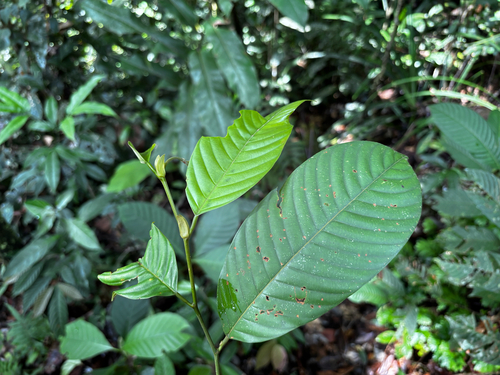
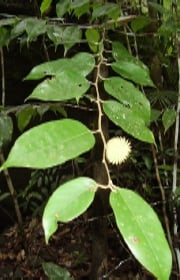
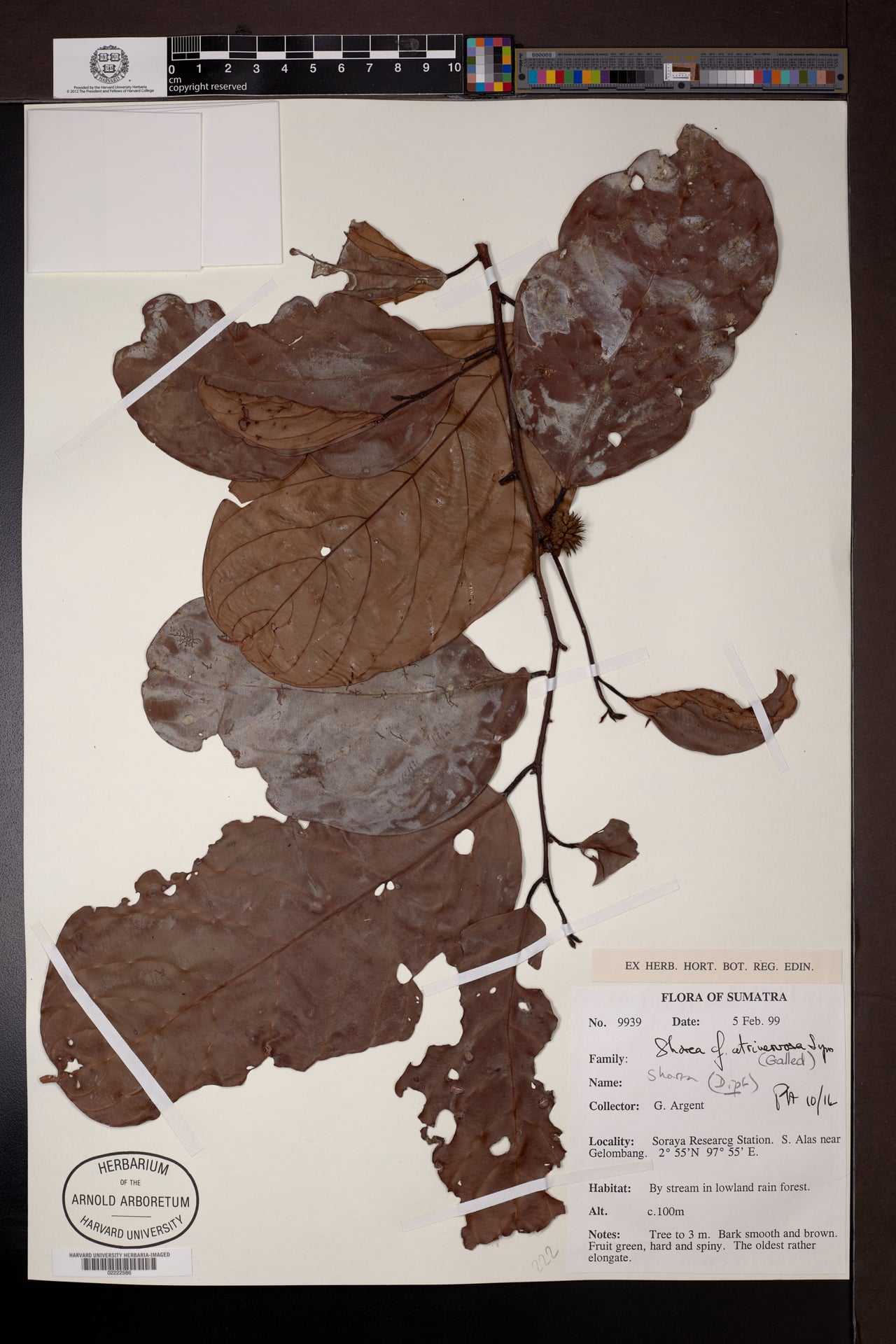
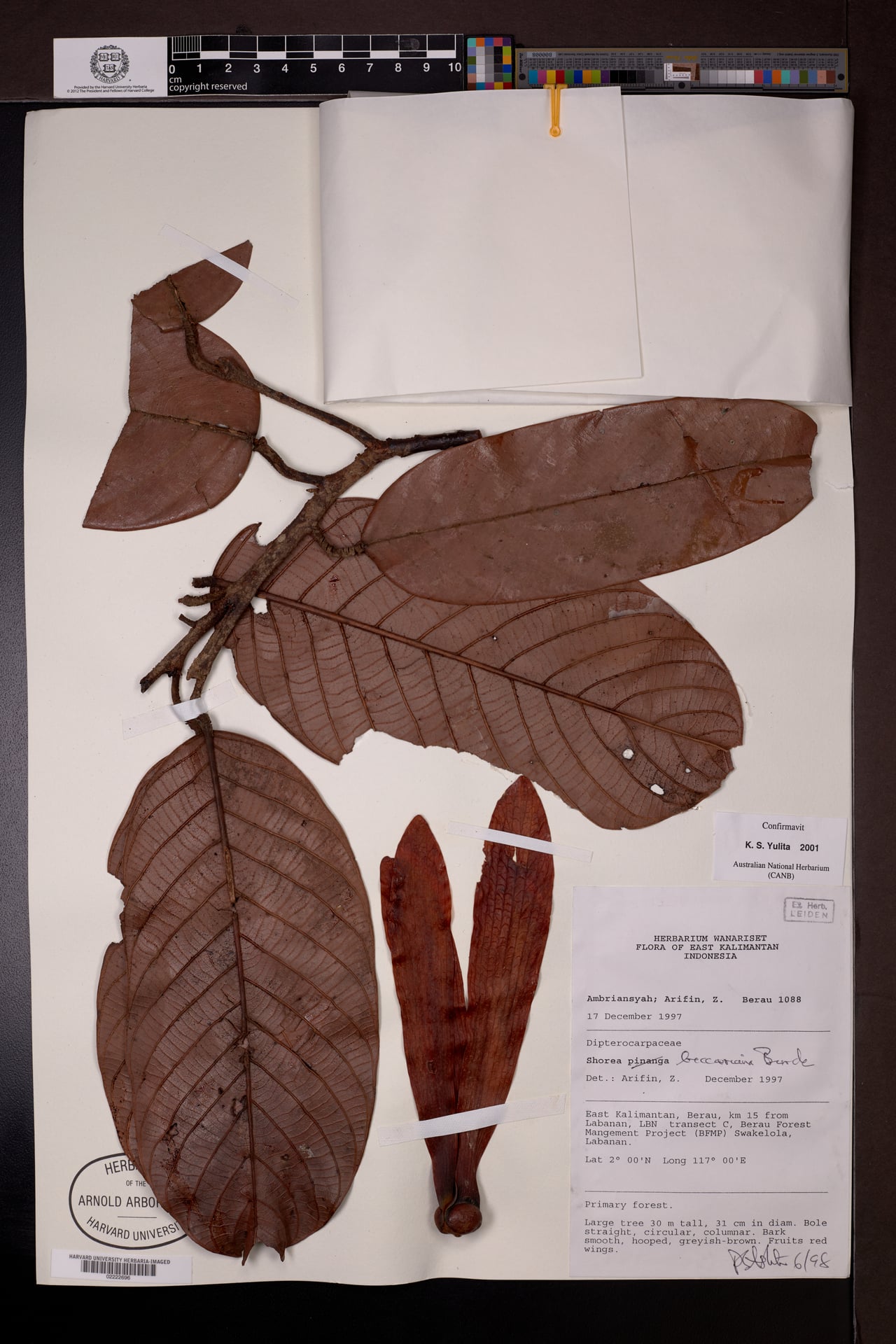
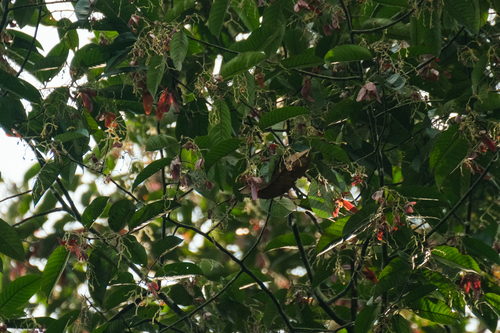
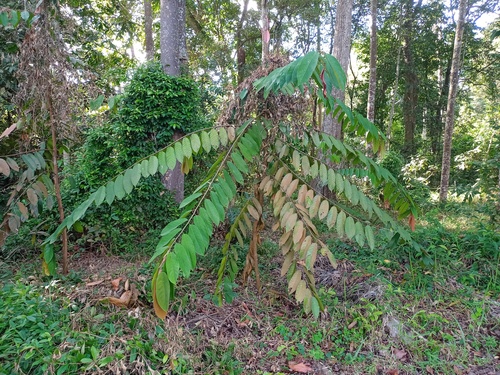
Shorea ovalis
(Korth.) Blume
Borneo tallow tree
iNaturalist· cc-by-nc
(c) Andre Ronaldo, some rights reserved (CC BY-NC)
iNaturalist· cc-by-nc
(c) Andre Ronaldo, some rights reserved (CC BY-NC)
iNaturalist· cc-by-nc
(c) Andre Ronaldo, some rights reserved (CC BY-NC)
Description
A large tropical tree in the Dipterocarpaceae family, native to Borneo, that can grow up to 60 meters tall.
This description is brief — help expand it
Edible Uses
The seeds are edible and contain fat.
Distribution
It is a tropical plant.
Where It Grows
Asia, Indonesia, Malaysia, SE Asia,
Cultivation
A plant of lowland areas in the moist tropics, where it is found at elevations up to 700 metres. The plant is found in the wild mostly on (coarse) sandy to clayey soils.
Propagation
We have no specific information for this species - the information below is a general guide for the genus. Seed - best sown as soon as possible. It does not require pre-treatment, but it is recommended to soak the seed for 12 hours prior to sowing. The seeds are sown in seedbeds, where they are covered with a mixture of sand and soil (1:1) or with a thin layer of sawdust. Germination of fresh seeds is usually good and rapid. About two weeks after germination, when the seedlings are 5 - 6cm tall, they are potted up into individual containers about 15 x 23cm with good drainage holes at their base. It is normally recommended to use a mixture of forest soil and sand (at a ratio of 3:1) as the potting medium in order to introduce the appropriate mycorrhiza to the roots. The seedlings are placed in 50 - 60% sunlight and watered twice daily. Seedlings can be planted out when 30 - 40cm tall - harden the seedlings off in full sunlight for one month prior to planting.
Other Uses
A dammar is obtained from the tree. It is used for candle making, soap manufacture and for illumination. Dammar is a hard resin, obtained from various trees of Southeast Asia. Traditionally, it is used for purposes such as caulking boats and baskets, as an adhesive, a medicine, as a fuel for torches and sometimes in foods. Dammar has many commercial applications, though many of these uses are less important nowadays due to the advent of synthetic materials. Commercially, it is an ingredient of inks, lacquers, oil paints, varnishes etc, and is used as a glazing agent in foods. Harvesting of the resin commences when the bole is around 25cm in diameter (approx 20 years old). Triangular cuts (becoming circular with age) are arranged in vertical rows around the trunk. The cuts are several centimetres wide at first, but become enlarged at every tapping and eventually become holes of 15 - 20cm in depth and width. The average number of holes for a tree about 30 metres tall and 60 - 80cm in diameter is 9 - 11 in each of 4 - 5 vertical rows. For the higher holes, the tapper climbs the tree supported by a rattan belt and using the lower holes as footholds. The exuded resin is allowed to dry on the tree before it is collected. The frequency with which the tree is visited to refreshen the cut varies from once a week to once a month, depending on how far the tree is from the village. Tapping can continue for 30 years. The bark is used in local houses for walls and floors and for temporary shelters. The timber is a source of 'light red meranti'. We do not have specific information for this species, but the general description of 'light red meranti' wood is as follows:- The heartwood is light red to pink or pink-brown, with white resin streaks; it is clearly demarcated from the 5 - 8cm wide band of sapwood. The texture is medium; the grain interlocked with a ribbon-like aspect; the surface is lustrous. The wood is light in weight, soft, moderately durable, being resistant to dry wood borers, somewhat resistant to fungi and susceptible to termites. The wood seasons well with a slight risk of checking or distortion; once dry it is stable to moderately stable in service. The wood works well with normal tools, though the tools need to be kept sharp because it has a tendency towards woolliness; it generally finishes fairly well, though filling is recommended; screwing and nailing are good; gluing is correct. The wood is used for several purposes including interior and exterior panelling and joinery, light carpentry, boxes and crates, veneer etc.
Synonyms
References (3)
- Burkill, I.H., 1966, A Dictionary of the Economic Products of the Malay Peninsula. Ministry of Agriculture and Cooperatives, Kuala Lumpur, Malaysia. Vol 1 (A-H) p 1208 (As Hopea aspera)
- Heywood, V.H., Brummitt, R.K., Culham, A., and Seberg, O., 2007, Flowering Plant Families of the World. Royal Botanical Gardens, Kew. p 314 (As Hopea aspera)
- World Checklist of Useful Plant Species 2020. Royal Botanic Gardens, Kew