Cyathea australis
(R. Br.) Domin
Rough tree fern
iNaturalist· cc-by-nc
(c) Paul Whitington, some rights reserved (CC BY-NC), uploaded by Paul Whitington
iNaturalist· cc-by
(c) yatesy, some rights reserved (CC BY), uploaded by yatesy
iNaturalist· cc-by-nc
(c) Lorraine Phelan, some rights reserved (CC BY-NC), uploaded by Lorraine Phelan
Description
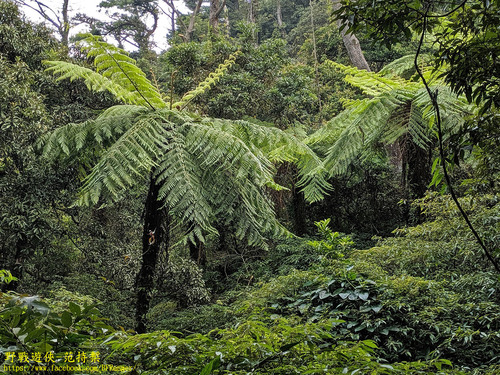
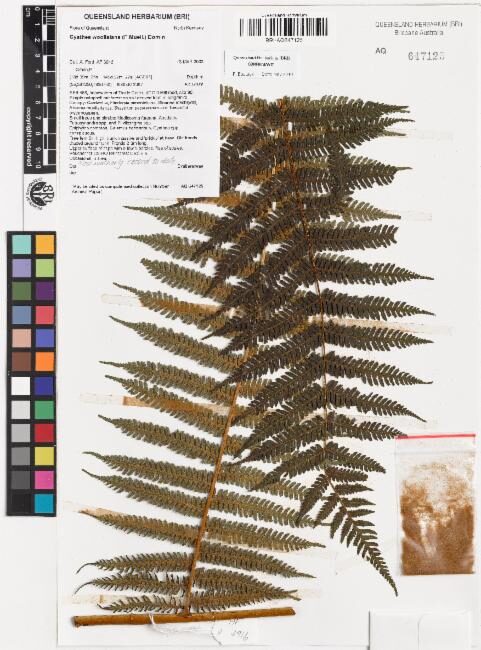
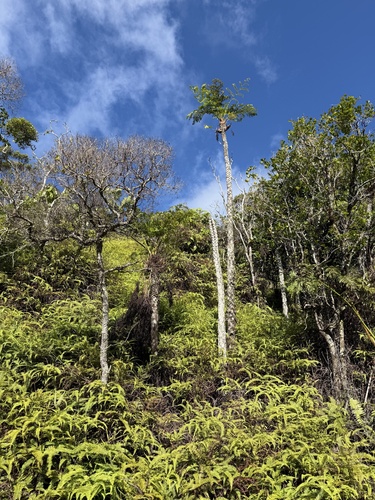
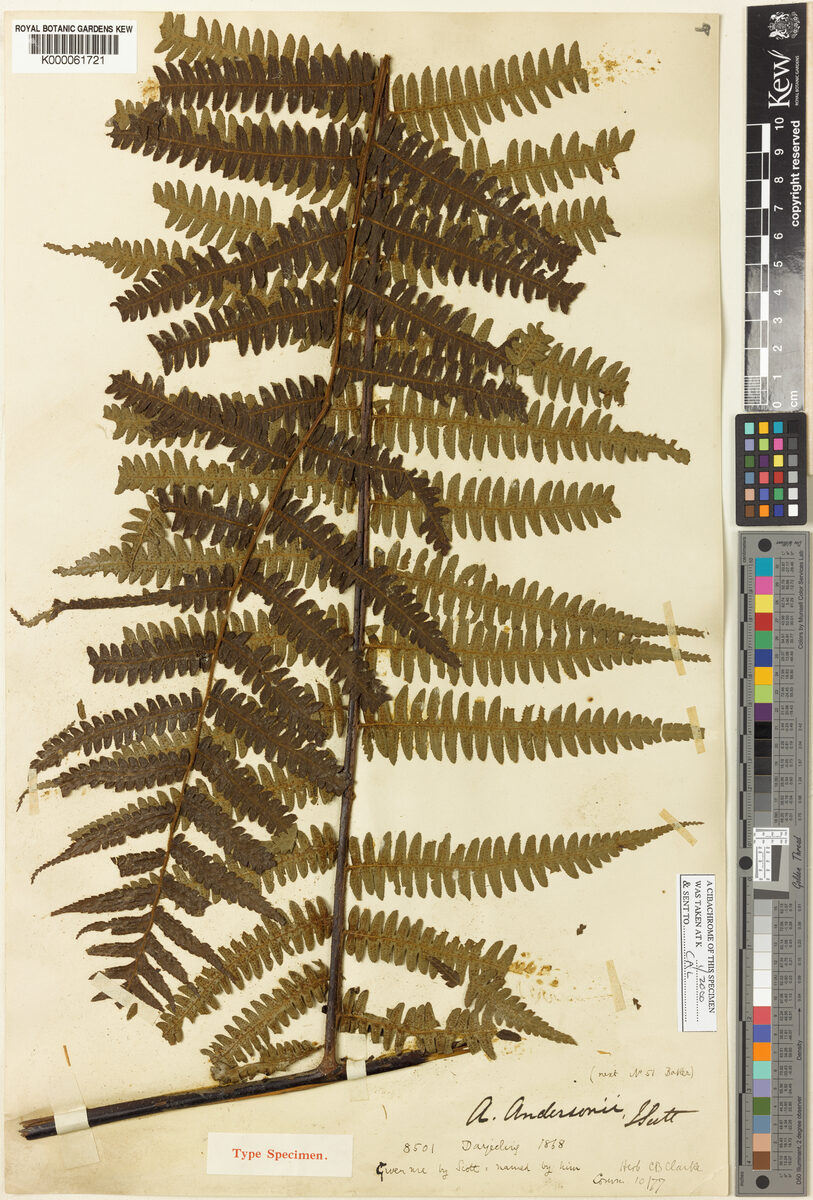
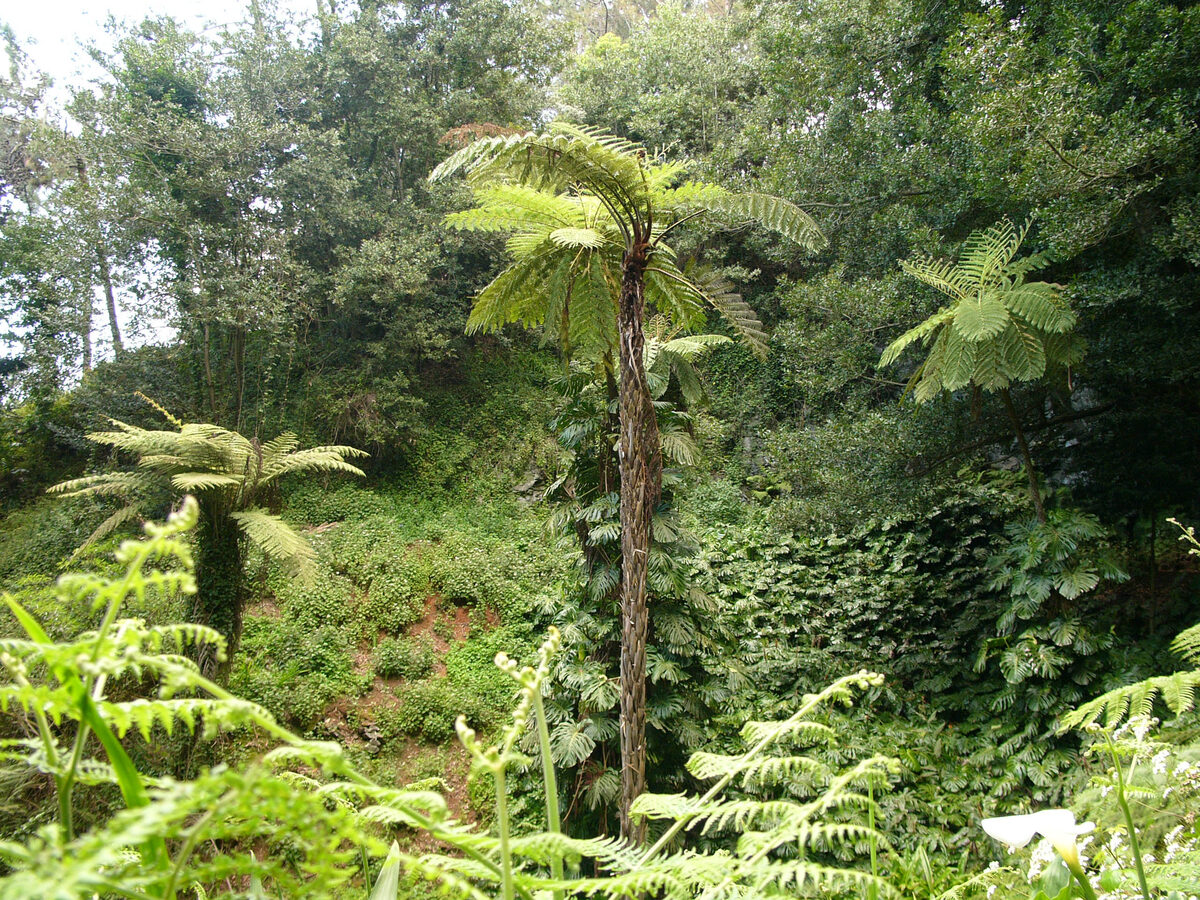
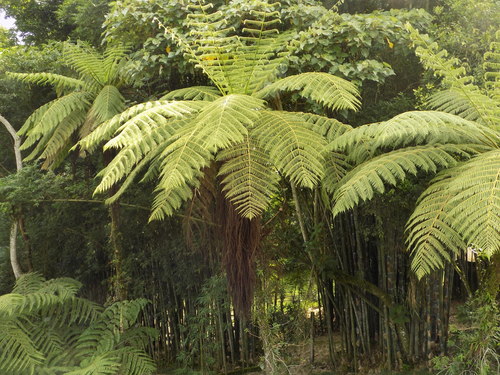
A large tree fern. It can grow 8-12 m high. It has a large woody trunk which can be 1 m across. It is dark and rough. The fronds are 4 m long and can be divided 2 or 3 times. The fronds curve over and are dark green. The underside of the fronds are pale green. The bases of the stipes are rough. It has shorter, finer fronds than Cyathea cooperi. The spore bodies or sori are located at the fork of the veins on the underside of the fronds. It does not have the dead fronds hanging around the trunk.
Edible Uses
The young fiddleheads or unfurled young leaves can be roasted or boiled and eaten. The terminal bud or heart of the fern can be eaten raw or cooked for its starch content, traditionally extracted from the core of the upper trunk.
Traditional Uses
The young fiddle heads or young leaves need to be used before they unroll. They can be roasted or boiled then eaten. The terminal bud or heart of the fern is eaten raw or cooked for its starch. It was the core of the upper trunks from which starch was extracted.
Known Hazards
Although we have found no reports of toxicity for this species, a number of ferns contain carcinogens so some caution is advisable. Many ferns also contain thiaminase, an enzyme that robs the body of its vitamin B complex. In small quantities this enzyme will do no harm to people eating an adequate diet that is rich in vitamin B, though large quantities can cause severe health problems. The enzyme is destroyed by heat or thorough drying, so cooking the plant will remove the thiaminase.
Distribution
It is a warm temperate to subtropical plant. It grows from central Queensland to Tasmania, in Australia. It is a hardy plant. It grows in rainforest and open dry forest. It needs sufficient moisture at the roots. It suits hardiness zones 8-11. Melbourne Botanical Gardens. Hobart Botanical Gardens. Tasmania Herbarium. Arboretum Tasmania.
Where It Grows
Australia*, Tasmania*,
Cultivation
Plants can be grown from spores.
Propagation
Spores - can be surface sown at any time of the year in a light position. Keep moist by standing the pot in shallow water or by enclosing it in a plastic bag. Germinates in 1 - 3 months at 25°c. Prick out patches of the young plants into small pots and stand the pots in shallow water until the plants are well established. Grow on in a shady position until large enough to plant out.
Other Uses
The hard part of the stem is made into walking sticks and fancy furniture.
Notes
There are about 800 Cyathea species.
Synonyms
References (31)
- Andrews, S.B., 1990, Ferns of Queensland. A handbook to the ferns and fern allies. Queensland DPI p 108
- Bodkin, F., 1991, Encyclopedia Botanica. Cornstalk publishing, p 310
- Caton, J.M. & Hardwick, R. J., 2016, Field Guide to Useful Native Plants from Temperate Australia. Harbour Publishing House. p 326
- Chaffey, C.H., 1999, Australian Ferns. Growing them successfully. Kangaroo Press. p 124
- Cherikoff V. & Isaacs, J., The Bush Food Handbook. How to gather, grow, process and cook Australian Wild Foods. Ti Tree Press, Australia p 194, 198
Show all 31 references Hide references
- Cronin, L., 1989, The Concise Australian Flora. Reed. p 285
- Cundall, P., (ed.), 2004, Gardening Australia: flora: the gardener's bible. ABC Books. p 447
- Elliot, W.R., & Jones, D.L., 1984, Encyclopedia of Australian Plants suitable for cultivation. Vol 3. Lothian. p 139
- Etherington, K., & Imwold, D., (Eds), 2001, Botanica's Trees & Shrubs. The illustrated A-Z of over 8500 trees and shrubs. Random House, Australia. p 247
- Gott, B & Conran, J., 1991, Victorian Koorie Plants. PO Box 666 Hamilton, Victoria 3300, Australia. p 40
- Goudey, C.J., 1988, A Handbook of Ferns for Australia and New Zealand. Lothian. p 81
- Greig, D., 1996, Flowering Natives for Home Gardens. Angus & Robertson. p 129
- Hardwick, R.J., 2000, Nature's Larder. A Field Guide to the Native Food Plants of the NSW South Coast. Homosapien Books. p 112
- Harris, S., Buchanan, A., Connolly, A., 2001, One Hundred Islands: The Flora of the Outer Furneaux. Tas Govt. p 144
- Hibbert, M., 2002, The Aussie Plant Finder 2002, Florilegium. p 78
- Hiddins, L., 1999, Explore Wild Australia with the Bush Tucker Man. Penguin Books/ABC Books. p 165
- Large, M.F., & Braggins, J.E., 2004, Tree Ferns. CSIRO Publishing, Melbourne, Australia. p 101 Plates 22, 23
- Lazarides, M. & Hince, B., 1993, Handbook of Economic Plants of Australia, CSIRO. p 71
- Lord, E.E., & Willis, J.H., 1999, Shrubs and Trees for Australian gardens. Lothian. p 95
- Low, T., 1991, Wild Food Plants of Australia. Australian Nature FieldGuide, Angus & Robertson. p 86
- Maiden, J. H., 1889, The Useful Native Plants of Australia (including Tasmania). The Technology Museum of NSW, Sydney. p 6 (As Alsophila australis)
- Marinelli, J. (Ed), 2004, Plant. DK. p 316
- Melzer, R., & Plumb, J., 2011, Plants of Capricornia. Belgamba, Rockhampton. p 28
- Minchin, R.F., Tasmanian Wildflowers. A Field Guide. Volume one. Regal Publications, Launceston p 120
- Nash, D., 2004, Aboriginal Plant Use in south-eastern Australia. Australian National Botanic Gardens. p 13
- Nicholson, N & H., 1996, Australian Rainforest Plants 3, Terania Rainforest Publishing. NSW. p 18
- Pteridophyta 262. 1929
- Ratcliffe D & P., 1987, Australian Native Plants for Indoors. Little Hills press. p 75
- Tasmanian Herbarium Vascular Plants list p 95
- Williams, J.B., Harden, G.J., and McDonald, W.J.F., 1984, Trees and shrubs in rainforests of New South Wales and Southern Queensland. Univ. of New England, Armidale. p 17
- Woolmore, E et al, 2002, King Island Flora: A Field Guide. p 113