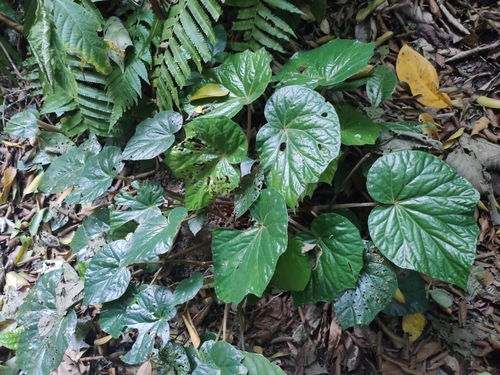
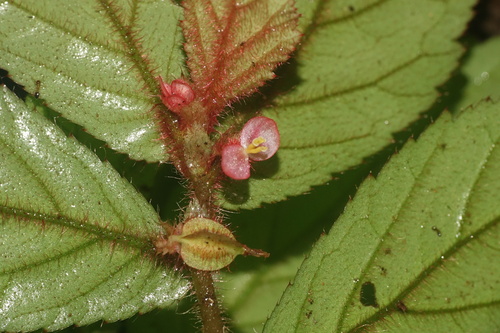
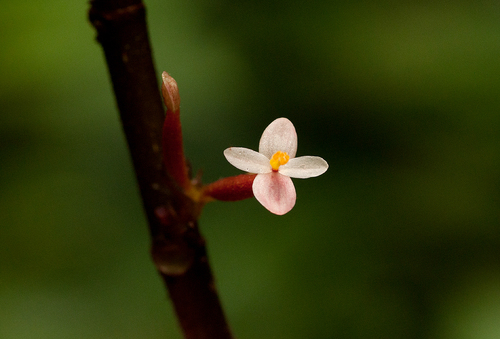
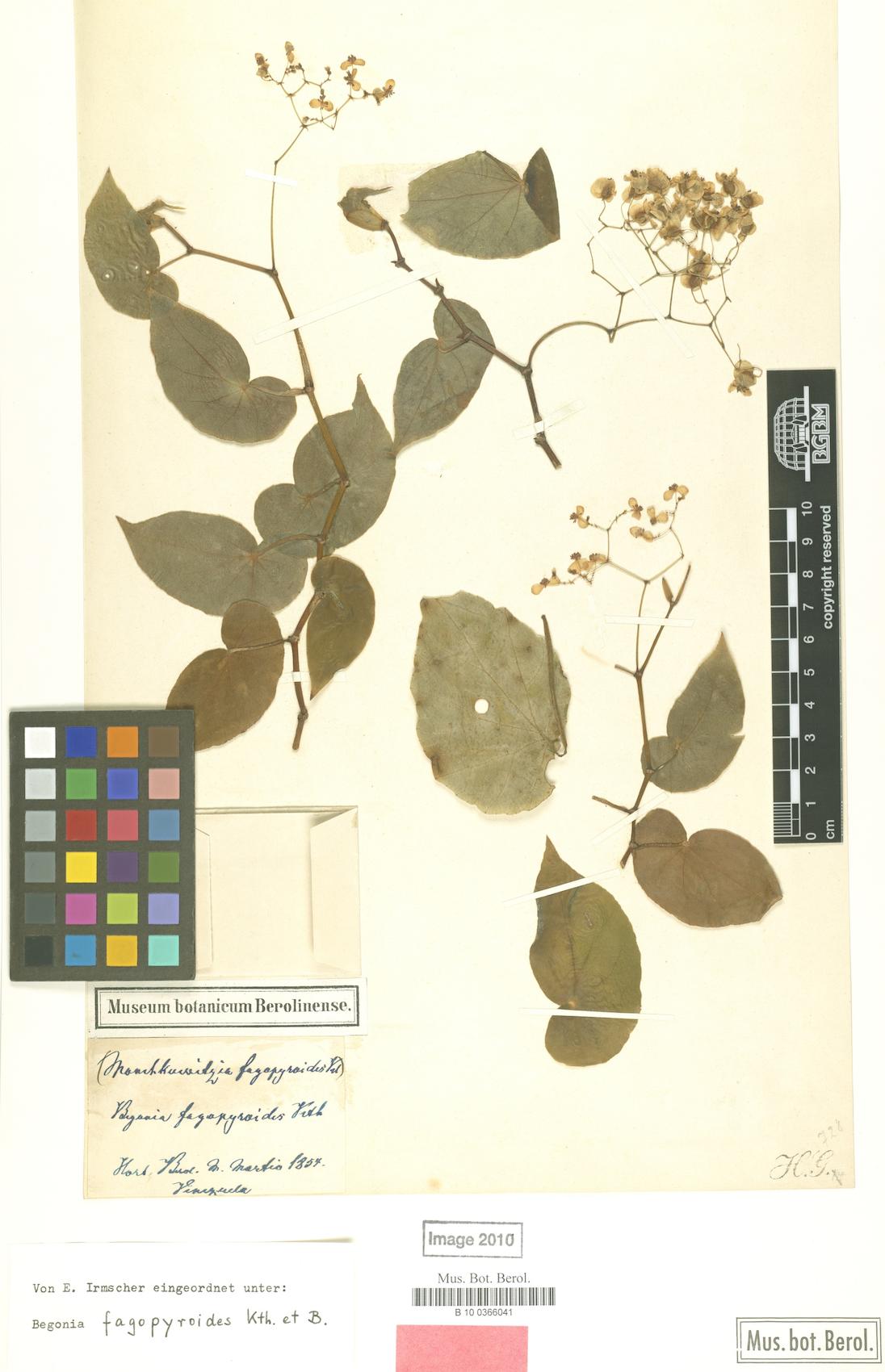
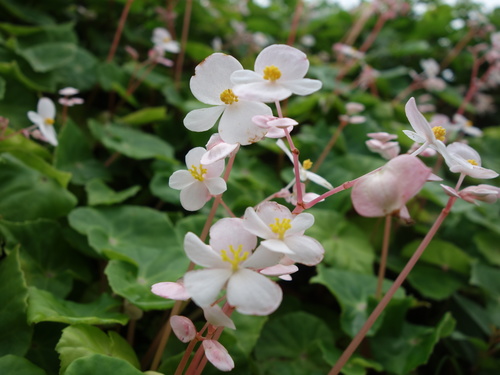
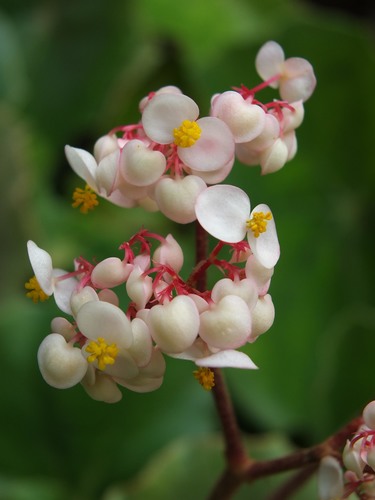
Begonia silletensis var. mengyangensis
Tebbitt & K. Y. Guan
iNaturalist· cc-by-nc
(c) 刘光裕 Liu Guangyu, some rights reserved (CC BY-NC), uploaded by 刘光裕 Liu Guangyu
iNaturalist· cc-by-nc
(c) ymr1230, some rights reserved (CC BY-NC)
Description
A herb. Plants are separately male and female. The underground stems or rhizomes are long and 3.6 cm across. The leaves are at the base and broadly oval. They are 13-53 cm long by 11-40 cm wide. The sides are unequal. The flowers have a scent. The fruit are like berries and hang down. They are 1.3 cm long by 1.8-1.9 cm wide.
Edible Uses
The leaves and young stems are used as a potherb and sour flavouring.
Traditional Uses
The leaves and young stems are used as a potherb and sour flavouring.
This uses section is brief — help expand it
Distribution
It is a subtropical plant. It grows in shady locations near streams. It grows between 500-800 m above sea level. In Yunnan.
Where It Grows
Asia, Bangladesh, China, India, Laos, Myanmar, Northeastern India, SE Asia, Thailand,
Also Known As
A ei lu, Hou bi qiu hai tang, Pa gan song, Yao me che ge
References (1)
- Cao, Y., et al, 2020, Ethnobotanical study on wild edible plants used by three trans-boundary ethnic groups in Jiangcheng County, Pu’er, Southwest China. Journal of Ethnobiology and Ethnomedicine (2020) 16:66