Wendlandia heynei
(Schult.) Santapau & Merchant
iNaturalist· cc0
no rights reserved, uploaded by S.MORE
iNaturalist· cc-by-nc
(c) nishantseth, some rights reserved (CC BY-NC)
Summary
Source: WikipediaWendlandia heynei (ukan pansara in Pakistan), (simtaaraa in Nepal) is an evergreen tree species in the family Rubiaceae.
Description
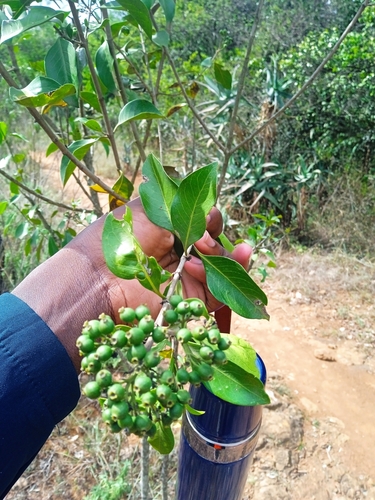
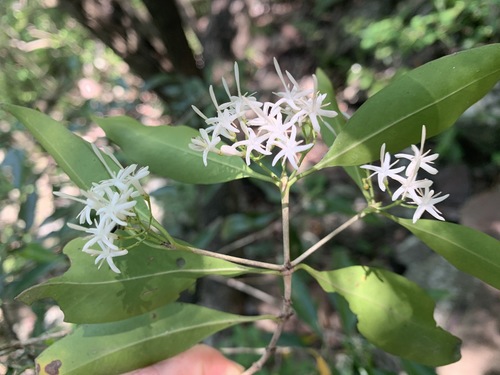
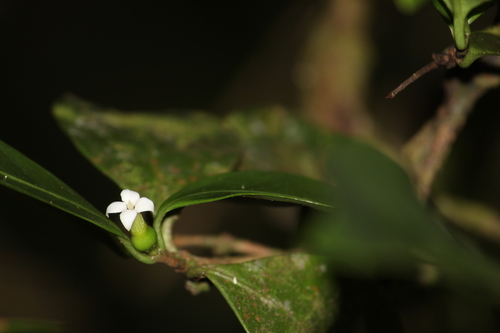
A shrub or small tree. The bark is reddish brown. The branches have a grey coating. The leaves are opposite and 6-20 cm long by 2-10 cm wide. The flowers are in a pyramid shaped group 15-25 cm long near the ends of branches. The flowers are white and have a scent. The fruit capsule is 2.5 mm long and has a grey coating.
Medicinal Uses
The leaves are used as medicine.
Distribution
It is a subtropical plant.
Where It Grows
Asia, India, Pakistan,
Cultivation
Species in this genus generally succeed in a sunny position and also in partial shade. They grpw best in a fertile, humus-rich soil. The plant can be gregarious in dense patches, to the exclusion of other trees.
Propagation
Seed - Cuttings of half-ripe wood
Other Uses
The wood is used for thatching. The reddish-brown wood is close-grained, extremely hard, strong. It is very durable and resistant to the attacks of white ants. Although small, it is used in construction and also to make handles for household and agricultural implements. The wood is used for fuel. Occurring naturally on sites of landslides, the plant is considered excellent for binding the soil and preventing erosion.
Notes
The leaves are used as medicine.
Synonyms
Also Known As
Tilai
References (1)
- Kumar, R. & Saikia, P., 2020, Wild edible plants of Jharkhand and their utilitarian perspectives. Indian Journal of Traditional Knowledge Vol 19 (2), April 2020, pp 237-250