Catophractes alexandri
D. Don
iNaturalist· cc-by-nc
(c) Alex Dreyer, some rights reserved (CC BY-NC), uploaded by Alex Dreyer
iNaturalist· cc-by-nc
(c) Riana Fourie, some rights reserved (CC BY-NC), uploaded by Riana Fourie
iNaturalist· cc-by-nc
(c) Campbell Scott, some rights reserved (CC BY-NC), uploaded by Campbell Scott
Description
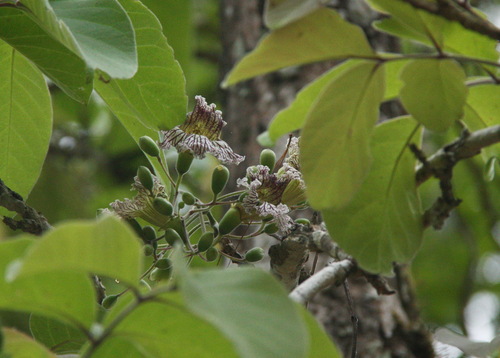
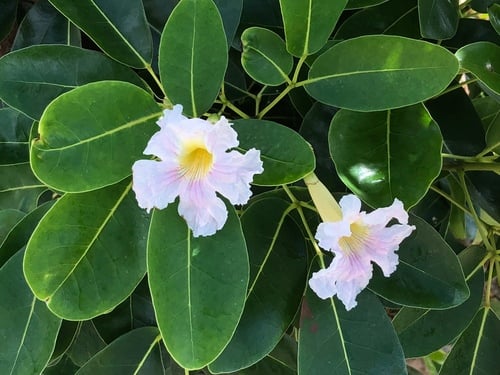
A spiny shrub. It grows 4 m tall. The branches are woolly when young. The leaves are 1-3.5 cm long and 0.5-1.7 cm wide. The flowers are white and in the axils of leaves. The fruit capsule is 3-6 cm long by 1-2.4 cm wide. It has a grey-green coating. The seeds are 1.5 cm long by 2.5 cm wide. They are brownish.
Medicinal Uses
The root is chewed for stomach complaints, and when added to the root of Polygala leptophylla Burch., is used as a decoction for abdominal pain, especially in children. Leaf, root and bark infusions and decoctions are used to treat colds and coughs.
Distribution
It is a subtropical plant. It grows on limestone ridges up to 1,200 m above sea level.
Where It Grows
Africa, Angola, Botswana, Namibia, South Africa, Southern Africa,
Synonyms
References (1)
- World Checklist of Useful Plant Species 2020. Royal Botanic Gardens, Kew