Strophanthus hispidus
DC.
Hispid strophanthus
iNaturalist· cc-by-nc
(c) dibungi_kalenda, some rights reserved (CC BY-NC)
iNaturalist· cc-by-nc
(c) hilyshao, some rights reserved (CC BY-NC)
Summary
Source: WikipediaStrophanthus hispidus, the hispid strophanthus, (family: Apocynaceae) is a liana or shrub that can grow up to 5 metres (16 ft) tall. Its flowers feature a yellow corolla and yellow corona lobes spotted with red, purple or brown. The seeds, like those of several other Strophanthus species, contain potent cardiac glycosides (notably strophanthin) absorbable through wounds - hence its use in African arrow poisons and later in modern medicine as a digitalis-like heart stimulant. Strophanthus hispidus is native from west tropical Africa east to Tanzania and south to Angola. It is naturalized in China.
Description
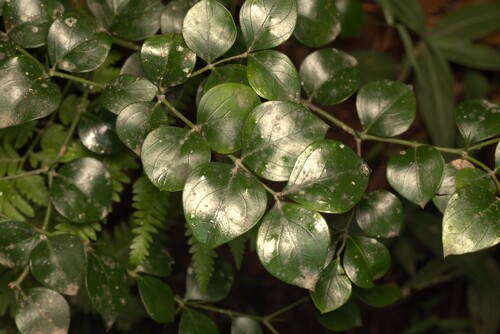
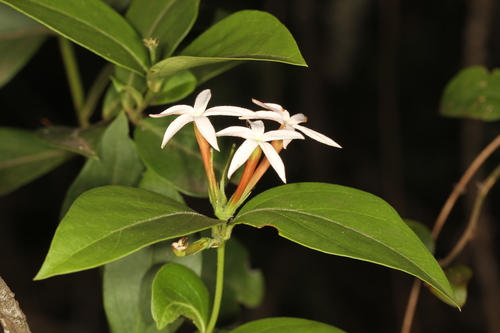
A shrub or creeper. It has runners or stolons. It can grow 5 m tall. The leaves are 3-22 cm long by 1.5-12 cm wide. The base is rounded or almost heart shaped. There are between 3-72 flowers in a group. They are yellow. The fruit is woody and 30-45 cm long and 1.3 cm wide.
Edible Uses
The young leaves are made into a tasty sauce, which is also restorative. Some caution is advised - see the notes above on toxicity.
Traditional Uses
Young leaves are used to make a sauce but it should be treated with caution.
This uses section is brief — help expand it
Medicinal Uses
Although poisonous, this plant has a long history of medical use in Africa. More recently, it has come to the attention of modern medicine as a source of cardio-active alkaloids which are extracted from the seeds and used as a heart stimulant and for their influence on blood circulation, especially in cases of chronic heart weakness. The seeds are cardiac and diuretic. The glycosides extracted from the seeds (‘Semen strophanthi’) are used in a number of modern medicines in several European countries, the United States, Argentina and Chile as a rapid cardiac and vascular stimulant. Decoctions of the roots, or sometimes of the pulped root bark, stem bark or leaves, are used internally to treat parasites, malaria, dysentery and gonorrhoea. A root decoction is taken to treat rheumatic afflictions. The root decoction is applied externally to treat skin diseases, leprosy and ulcers. A decoction of the bark or leaf sap is taken as an antidote against the effects of snakebites. A decoction of the bark is dripped into the eye to treat conjunctivitis. A leaf and stem decoction is taken as a laxative or to treat fever The sap from crushed leaves or young shoots is applied to kill head-lice and other parasites. The leaf and stem decoction is applied externally to sores. A large number of cardiac glycosides (cardenolides) have been isolated from the plant. These glycosides, collectively called strophanthins, are most abundant in the seed (which contain 4 - 8%), and are responsible for the activity in arrow poison as well as being cardiac and vascular stimulants. In comparison with Digitalis cardenolides, they are characterized by highly oxygenated aglycones. The sole official use of Strophanthus drugs in medicine is for their influence on the circulation, especially in cases of chronic heart weakness. As the action is similar to that of Digitalis glycosides, although more likely to cause digestive disturbances and diarrhoea, Strophanthus drugs are often useful as an alternative or adjuvant. Some believe that Strophanthus glycosides have a direct stimulating effect upon the kidney and are superior to Digitalis glycosides as a diuretic, but the evidence in favour of this view is far from convincing. While they possess some local anaesthetic powers, they are so highly irritant that it is not practical to use it for this effect. An aqueous leaf extract showed a dose-related delay of blood clotting due to the venom of the saw-scaled viper (Echis carinatus), thus inhibiting the effect of its bite. This venom causes rapid intra-arterial clotting of blood, resulting in death in small animals, while death in larger animals and in man occurs due to depletion of fibrinogen reserves and internal haemorrhage. Extracts of Strophanthus hispidus showed significant anti-inflammatory activity against acute inflammation. The extracts of both the roots and leaves showed in-vitro inhibition of the bacteria Escherichia coli, Klebsiella pneumoniae, Neisseria gonorrhoeae, Proteus mirabilis, Pseudomonas aeruginosa, Staphylococcus aureus and Streptococcus pyogenes. Strains of the pathogens with laboratory induced resistance against certain antibiotics were also sensitive to the aqueous and ethanolic extracts of Strophanthus hispidus.
Known Hazards
Although used medicinally, all parts of the plant are deadly poisonous. The juice is used as an arrow poison.
Distribution
It is a tropical plant.
Where It Grows
Africa, Angola, Asia, China, Gabon, Nigeria, Sierra Leone, Tanzania, West Africa,
Cultivation
If pruned regularly, rooted branches will develop in a few years into a thick shrub or small tree, producing more fruits than wild plants. In areas with distinct dry and rainy seasons, the plant flowers towards the end of the dry season and the beginning of the rainy season; fruits are mature in the dry season.
Propagation
Seed - Branches up to 1 metre long root quickly when they are stuck in the ground.
Other Uses
The stems stripped from their bark are used in Nigeria for the end pieces of reed screens, and for cotton-carding bows.
Synonyms
References (2)
- Ferns Useful Tropical Plants
- World Checklist of Useful Plant Species 2020. Royal Botanic Gardens, Kew
More from Apocynaceae
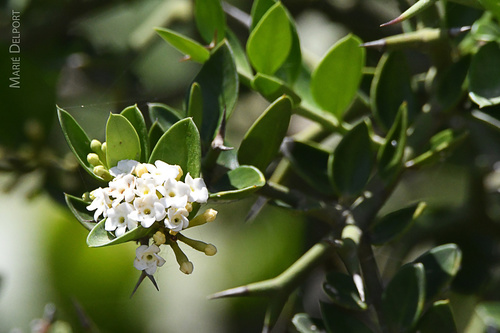
Carissa haematocarpa
Karoo num-num, Black num-num
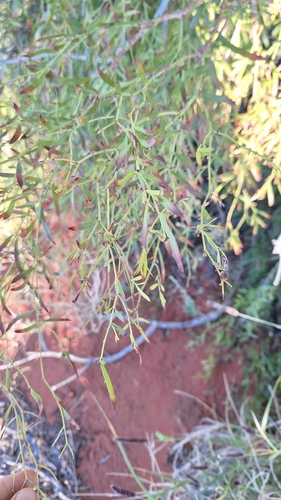
Carissa lanceolata
Konkleberry, Conkerberry, Currant bush, Kunkerberry, Aperlap, Perlap
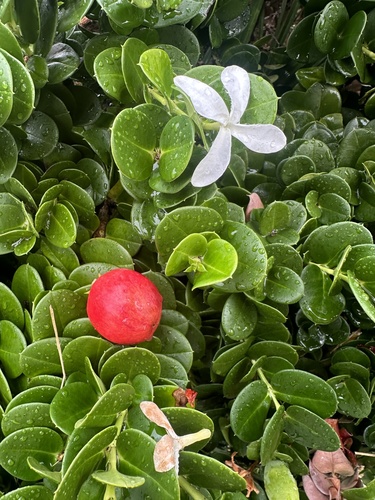
Carissa macrocarpa
Natal plum, Large num-num, Carissa
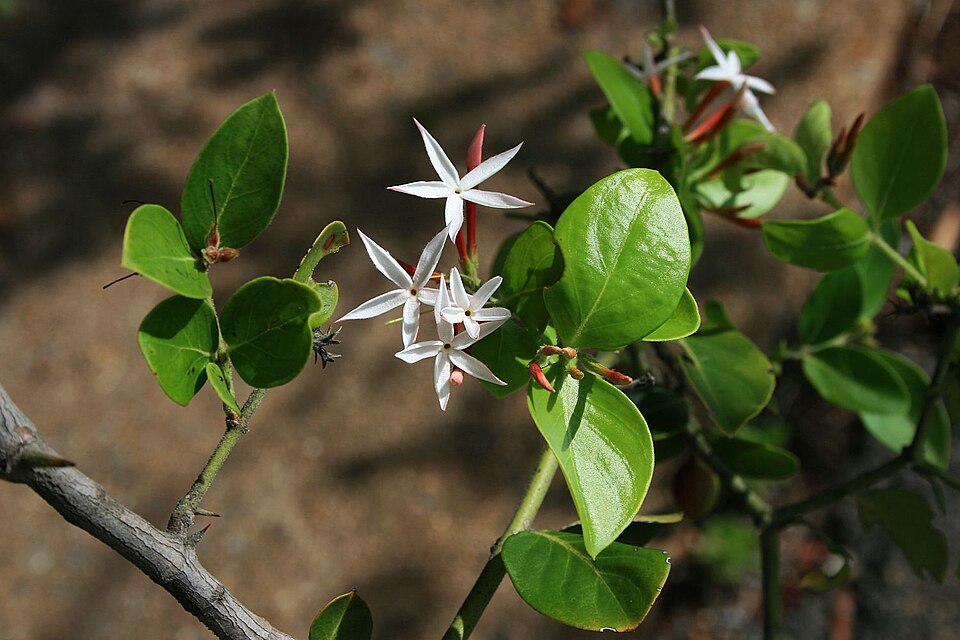
Carissa opaca
Karonda
Carissa ovata
Currant bush, Carissa, Kunkerberry
Carissa spinarum
Simple-spined num-num