Lepisanthes senegalensis
(Juss. ex Poir.) Leenhouts
Soapberry tree, Cherry of Senegal
iNaturalist· cc-by-nc-sa
(c) filibot.web, some rights reserved (CC BY-NC-SA)
iNaturalist· cc-by
(c) Mochamad Firmansyah Agustio, some rights reserved (CC BY)
Summary
Source: WikipediaLepisanthes senegalensis is a tree widespread through tropical Africa and tropical Asia to New Guinea and northern Australia.
Description
A shrub or tree. It grows 5 m tall. It can grow to 24 m high. The trunk can be 45 cm across. The branches often have small cracks along them. The bark is smooth and pale brown. The leaves are leathery. The leaves are compound. The leaves are divided 3-6 times. They are 30-60 cm long. There are 4-8 leaflets. They are 6-30 cm long by 3-10 cm wide. The lowest pair of leaflets are small and often fall off. The flowers are in groups and can be in the axils of leaves or hanging from the branches. The flowers are small and red. The flowers are 8-10 mm across. There are 4 or 5 white petals. The fruit are dark red to black berries. They are lobed. They are 2-3 cm long. There are 1 or 2 seeds. These are 14-19 mm long and grey-brown. The fruit are edible.
Edible Uses
Fruit - raw. The pulp is swallowed and the seeds discarded. The red, oval fruit is 12 - 18mm in diameter, containing two black seeds. Some caution is advised, there are reports that the fruit could be toxic.
Traditional Uses
CAUTION. The seeds are toxic. The leaves are also toxic. The ripe fruit are eaten raw. The seeds are ejected.
This uses section is brief — help expand it
Medicinal Uses
The roots are used medicinally.
Known Hazards
The seed is said to be poisonous in quantity. The flowers are used as a fish poison. The plant contains saponins and some reports suggest that the fruit is poisonous, whilst others say that they are all right to eat. Although poisonous, saponins are poorly absorbed by the human body and so most pass through without harm. Saponins are quite bitter and can be found in many common foods such as some beans. They can be removed by carefully leaching in running water. Thorough cooking, and perhaps changing the cooking water once, will also normally remove most of them. However, it is not advisable to eat large quantities of food that contain saponins. Saponins are much more toxic to some creatures, such as fish, and hunting tribes have traditionally put large quantities of them in streams, lakes etc in order to stupefy or kill the fish.
Distribution
A tropical plant. It grows in tropical Africa. It is an understorey tree. It grows in evergreen forests. In tropical Australia it grows in rainforest from sea level to 50 m altitude. It suits humid locations. In Borneo it grows in coastal and swamp forest up to 600 m above sea level. It can grow in sandy or clay soils. In Tanzania it grows from sea level to 1,800 m above sea level. It can often be on coral or lava rock near the sea. It often grows near rivers in arid areas.
Where It Grows
Africa, Andamans, Angola, Asia, Australia, Bangladesh, Benin, Brunei, Cambodia, Cameroon, Central Africa, China, Congo, East Africa, Ethiopia, Ghana, Guinea-Bissau, India, Indochina, Indonesia, Kenya, Laos, Madagascar, Malaysia, Mozambique, Myanmar, Nigeria, Northeastern India, Pacific, Pakistan, Papua New Guinea, PNG, SE Asia, Senegal*, Sikkim, Southern Africa, Sri Lanka, Sudan, Tanzania, Thailand, Uganda, West Africa*,
Cultivation
Plants can be grown from fresh seeds.
Propagation
Seed - best sown as soon as it is ripe.
Other Uses
The leaves are used to make a shampoo. The twigs used as chew-sticks. The wood is medium hard, heavy and durable. It has an attractive grain. It is used for furniture, poles and for making small utensils.
Production
In Tanzania fruit are collected from February to June. In India plants flower and fruit November to April.
Other Information
Fruit are sold in markets in Senegal. It is a cultivated plant.
Notes
There are 24-40 Lepisanthes species. They are mostly in the tropics. The fruit are rich in Vitamin C.
Synonyms
Also Known As
Achatta, Akisibaka, Amjam, Bekuda, Bonghadi, Bulao, Celle, Ceri senegal, Cerise du Senegal, Ch'egua, Daung-baung, Dieng-soh-jimmang, Duluai no, Dodekhitheng, Eyindie, Gotaharina, Hekokeko, Iligisiriko, Jejide, Kelayu gunung, Kihari, Kilinga caba, Kul, Kulugengeno, Kumen rofokor, Kurudiendieng, Lal-kocpura, Mancinga, Maiki-bandardima tiktiki, Mduru-mweupe, Mguena, Mgwena, Mkungulungu, Mlangwe, Msaro, Musaretsi, Nghuya, Obah, Ochol, Oleragai, Sarenja, Sembo, Sirhootungchir, Txiv ntsav npua, Zutul
References (50)
- Abbiw, D.K., 1990, Useful Plants of Ghana. West African uses of wild and cultivated plants. Intermediate Technology Publications and the Royal Botanic Gardens, Kew. p 46
- Ambasta S.P. (Ed.), 2000, The Useful Plants of India. CSIR India. p 46 (As Lepisanthes senegalensis)
- Argent, G et al, nd, Manual of the Larger and More important non Dipterocarp Trees of Central Kalimantan Indonesia. Volume 2 Forest Research Institute, Samarinda, Indonesia. p 563
- Asfaw, Z. and Tadesse, M., 2001, Prospects for Sustainable Use and Development of Wild Food Plants in Ethiopia. Economic Botany, Vol. 55, No. 1, pp. 47-62
- Balemie, K., & Kebebew, F., 2006, Ethnobotanical study of wild edible plants in Derashe and Kucha Districts, South Ethiopia. Journal of Ethnobiology and Ethnomedicine.
Show all 50 references Hide references
- BARC, 2016, State of Biodiversity for Food and Agriculture in Bangladesh. Bangladesh Agricultural Research Council.
- Berihun, T. & Molla, E., 2017, Study on the Diversity and Use of Wild Edible Plants in Bullen District Northwest Ethiopia. Hindawi Journal of Botany. Article ID 8383468
- Bircher, A. G. & Bircher, W. H., 2000, Encyclopedia of Fruit Trees and Edible Flowering Plants in Egypt and the Subtropics. AUC Press. p 35 (As Aphania senegalensis and Aphania ochnoides and Lepisanthes senegalensis)
- Blumea 17:85. 1969
- Burkill, H. M., 1985, The useful plants of west tropical Africa, Vol. 5. Kew.
- Burkill, I. H., 1966, A Dictionary of the Economic Products of the Malay Peninsula. Ministry of Agriculture and Cooperatives, Kuala Lumpur, Malaysia. Vol 1 (A-H) p 191 (As Aphania ochnoides and Aphania viridis)
- Busson, 1965, (As Aphania senegalensis)
- Catarino, L., et al, 2016, Ecological data in support of an analysis of Guinea-Bissau's medicinal flora. Data in Brief 7 (2016):1078-1097
- Codjia, J. T. C., et al, 2003, Diversity and local valorisation of vegetal edible products in Benin. Cahiers Agricultures 12:1-12 (As Aphania senegalensis)
- Cooper, W. and Cooper, W., 2004, Fruits of the Australian Tropical Rainforest. Nokomis Editions, Victoria, Australia. p 495
- Dale, I. R. and Greenway, P. J., 1961, Kenya Trees and Shrubs. Nairobi. p 507 (As Aphania senegalensis)
- Dalziel, J. M., 1937, The Useful plants of west tropical Africa. Crown Agents for the Colonies London. (As Aphania senegalensis)
- Djihounouck, Y., et al, 2018, Diversité Et Importance Socio-Economique Des Espèces Fruitières Sauvages Comestibles En Zone Kasa (Sud-Ouest Du Sénégal). European Scientific Journal December 2018 edition Vol.14, No.36 ISSN: 1857 – 7881 (As Aphania senegalensis)
- Djihounouck, Y., et al, 2021, Ethnobotanical Uses of Non-cultivated Edible Fruit Species in the Department of Oussouye (South Senegal). Journal of Food Research; Vol. 10, No. 4 p 20 (As Aphania senegalensis)
- Dobriyal, M. J. R. & Dobriyal, R., 2014, Non Wood Forest Produce an Option for Ethnic Food and Nutritional Security in India. Int. J. of Usuf. Mngt. 15(1):17-37
- Encycl. 6:666. 1805 (As Aphania senegalensis)
- Food Composition Tables for use in Africa FAO http://www.fao.org/infoods/directory No. 1031 (As Aphania senegalensis)
- Hedrick, U.P., 1919, (Ed.), Sturtevant's edible plants of the world. p 594 (As Sapindus senegalensis)
- Hide, R. L., (Ed.) 1984, Research Report of the Simbu Land Use Project. Vol.V1 South Simbu: Studies in Demography, Nutrition, and Subsistence. p 441
- Jardin, C., 1970, List of Foods Used In Africa, FAO Nutrition Information Document Series No 2.p 121 (As Aphania senegalensis)
- Jeeva, S., 2009, Horticultural potential of wild edible fruits used by the Khasi tribes of Meghalaya. Journal or Horticulture and Forestry Vol. 1(9) pp. 182-192 (As Aphania rubra)
- Johns, T., and Kokwaro, J.O., 1991, Food Plants of the Luo of Siayo District, Kenya. Economic Botany 45(1), pp 103-113. (As Aphania senegalensis)
- Johns, T., Mhoro, E. B. and Sanaya, P., 1996, Food Plants and Masticants of the Batemi of Ngorongoro District, Tanzania. Economic Botany, Vol. 50, No. 1, pp. 115-121
- Kar, A., & Borthakur, S. K., 2008, Wild edible fruits of Karbi's of Karbi Anglong district of Assam, India, Pleione 2(2): 175-181 (As Aphania rubra)
- Keay, R.W.J., 1989, Trees of Nigeria. Clarendon Press, Oxford. p 361
- Lovett, J. C. et al, Field Guide to the Moist Forest Trees of Tanzania. p 156
- Lulekal, E., et al, 2011, Wild edible plants in Ethiopia: a review on their potential to combat food insecurity. Afrika Focus - Vol. 24, No 2. pp 71-121
- Mengistu, F. & Hager, H., 2008, Wild Edible Fruit Species Cultural Domain, Informant Species Competence and Preference in Three Districts of Amhara Region, Ethiopia. Ethnobotany Research & Applications 6:487-502
- Mutie, F. M., et al, 2023, Important Medicinal and Food Taxa (Orders and Families) in Kenya, Based on Three Quantitative Approaches. Plants 2023, 12, 1145
- Pasha, M. K. & Uddin, S. B., 2019, Minor Edible Fruits of Bangladesh. Bangladesh J. Plant Taxon. 26(2): 299–313
- Patiri, B. & Borah, A., 2007, Wild Edible Plants of Assam. Geethaki Publishers. p 30 (As Lepisanthes senegalensis)
- Peters, C. R., O'Brien, E. M., and Drummond, R.B., 1992, Edible Wild plants of Sub-saharan Africa. Kew. p 180 (As Aphania senegalensis)
- Plants of Papua New Guinea LAE herbarium record
- Ruffo, C. K., Birnie, A. & Tengnas, B., 2002, Edible Wild Plants of Tanzania. RELMA p 438
- Sawian, J. T., et al, 2007, Wild edible plants of Meghalaya, North-east India. Natural Product Radiance Vol. 6(5): p 413 (As Lepisanthes senegalensis)
- Schatz, G.E., 2001, Generic Tree Flora of Madagascar. Royal Botanical Gardens, Kew and Missouri Botanical Garden. p 369
- Singh, H.B., Arora R.K.,1978, Wild edible Plants of India. Indian Council of Agricultural Research, New Delhi. p 17, 49 (As Lepisanthes senegalensis) p 86 (As Sapindus attentuatus)
- Slik, F., www.asianplant.net
- Soepadmo, E. and Wong, K. M. and Saw, L. G., 1996, Tree Flora of Sabah and Sarawak. Forestry Malaysia. Volume Two. p 324
- Sukarya, D. G., (Ed.) 2013, 3,500 Plant Species of the Botanic Gardens of Indonesia. LIPI p 354, 662
- Vivien, J., & Faure, J.J., 1996, Fruitiers Sauvages d'Afrique. Especes du Cameroun. CTA p 303 (As Aphania senegalensis)
- White, F., Dowsett-Lemaire, F. and Chapman, J. D., 2001, Evergreen Forest Flora of Malawi. Kew. p 525 (As Aphania senegalensis)
- Whitney, C. W., et al, 2014, Conservation and Ethnobotanical Knowledge of a Hmong Community in Long Lan, Luang Prabang, Lao People’s Democratic Republic. Ethnobotany Research and Applications 12:643-658
- Wild edible plants of Himachal Pradesh (As Aphania rubra)
- World Checklist of Useful Plant Species 2020. Royal Botanic Gardens, Kew
More from Sapindaceae
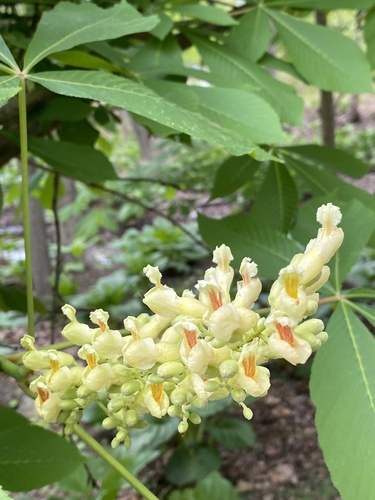
Aesculus flava
Sweet buckeye, Horse Chestnut, Yellow Buckeye
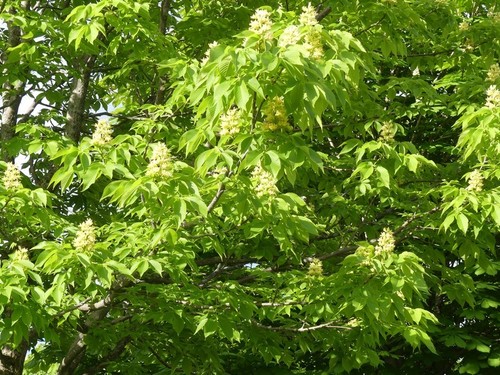
Aesculus glabra
Ohio buckeye, Fetid buckeye
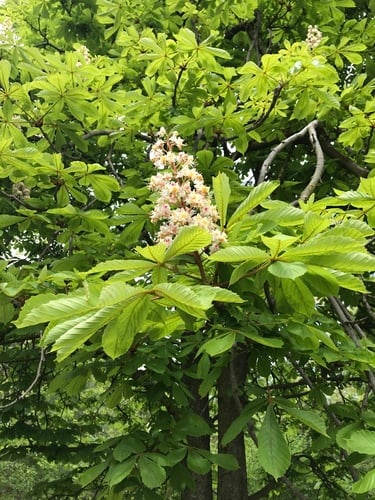
Aesculus hippocastanum
European horse chestnut
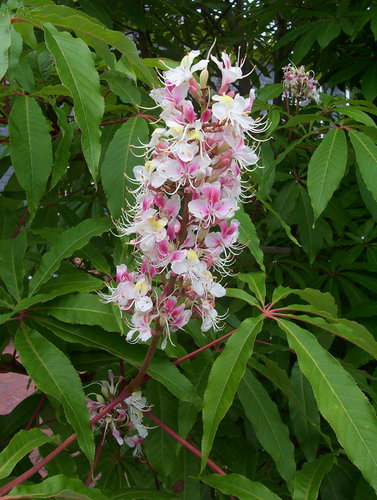
Aesculus indica
Indian chestnut, Indian horse chestnut
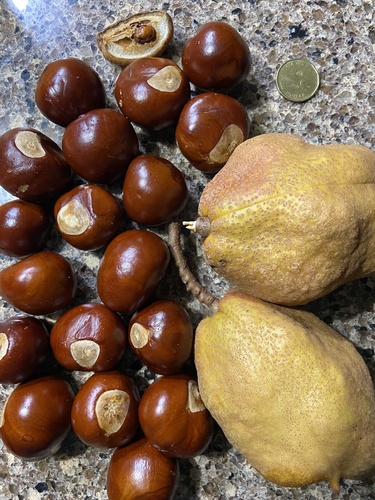
Aesculus octandra
Yellow buckeye, Sweet buckeye, Big buckeye
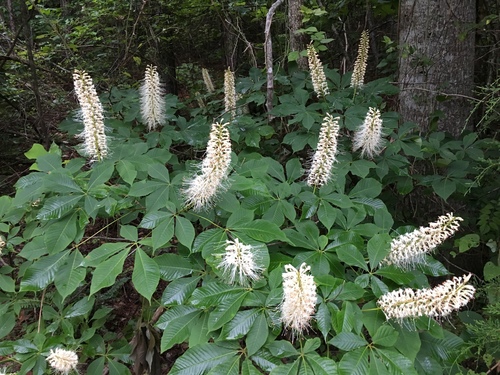
Aesculus parviflora
Dwarf buckeye, Bottlebrush Buckeye