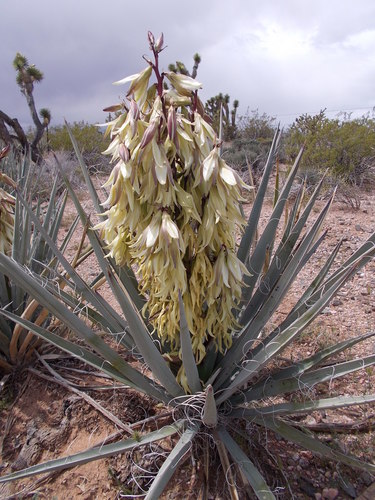
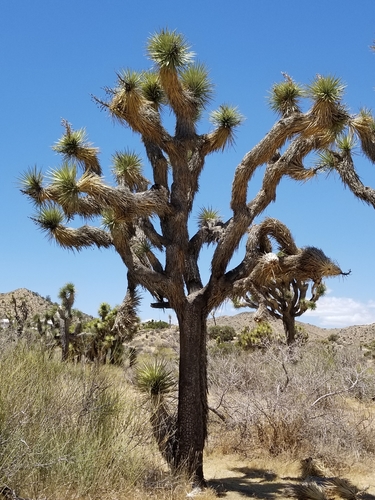
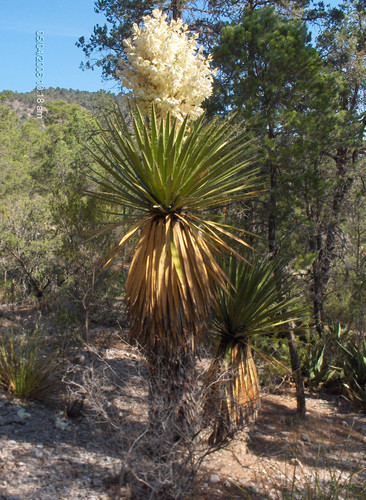
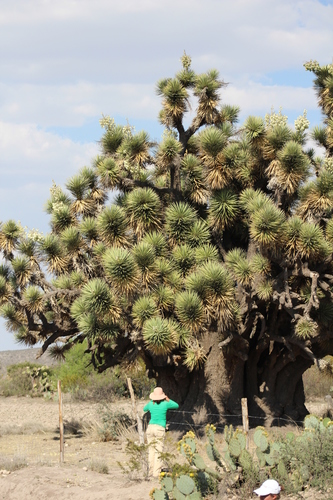
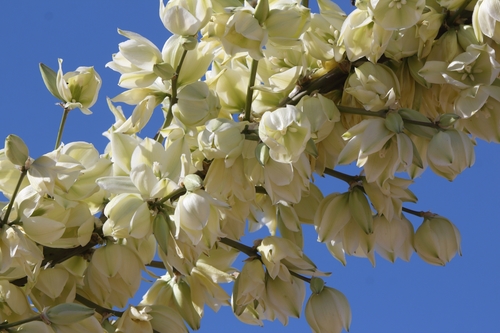
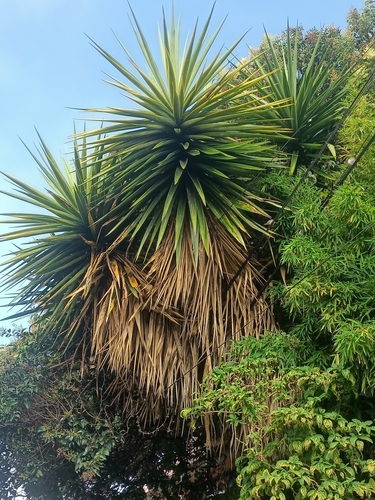
Sansevieria hyacinthoides
(L.) Druce
African bow string hemp
iNaturalist· cc-by
(c) Shaun Swanepoel, some rights reserved (CC BY), uploaded by Shaun Swanepoel
iNaturalist· cc-by-sa
(c) Douglas Goldman, some rights reserved (CC BY-SA)
iNaturalist· cc-by-sa
(c) Douglas Goldman, some rights reserved (CC BY-SA)
Summary
Fast-growing evergreen perennial reaching 0.5 m tall and 0.1 m wide. Hardy to UK zone 10. Tolerates light sandy and medium loamy soils, prefers well-drained conditions, and grows in nutritionally poor soil. Adapts to neutral and mildly alkaline pH. Thrives in semi-shade or full sun, tolerates both drought and moist soil. Noted for attracting wildlife including butterflies and birds. Suitable for indoor containers and potted cultivation.
Description
A succulent herb. It is a bulb plant or has spreading rhizomes of underground stems. It grows 50 cm tall. There are 2-8 leaves in a ring. They are narrow or sword shaped and 60 cm long by 4-8 cm wide. The flowers are in tufts on long stalks. The fruit is a berry. It is yellow or orange.
Edible Uses
None known
Traditional Uses
The fruit is eaten as a snack.
This uses section is brief — help expand it
Medicinal Uses
A decoction of the rootstock is used as a treatment against internal parasites. The plant is also used to treat fevers, toothache, ear complaints, and haemorrhoids. The leaves contain steroidal compounds.
Distribution
It is a subtropical plant.
Where It Grows
Africa, Anguilla, Caribbean, Central America, Nicaragua, South Africa, Southern Africa,
Cultivation
A plant of the tropics. It grows best in areas where annual daytime temperatures are within the range 20 - 30°c, but can tolerate 15 - 36°c. It prefers a mean annual rainfall in the range 700 - 1,400mm, but tolerates 500 - 2,000mm. Requires a sunny position in a well-drained soil. Succeeds in most soils. Prefers a pH in the range 6.5 - 7.5, tolerating 6 - 8. Established plants are very drought tolerant. The plant can spread freely at the roots. It is considered an invasive weed in Florida. Fibre yields of up to 2.25 tonnes per hectare per year have been recorded.
Propagation
Propagate by seed, by division of the rootstock, or by leaf cuttings. For leaf cuttings, cut the leaf into sections approximately 5cm long and place in a 2:1 mix of sand and peat in a propagating case with bottom heat of 18°C.
Other Uses
A good-quality fibre is obtained from the leaves — it is soft, silky, and elastic, and is used to make clothes, nets, string, and mats, as well as for producing fine papers. The plant attracts butterflies and birds, and is well suited to pots and indoor growing.
Synonyms
Also Known As
Mother-in-law's tongue
References (2)
- Ruiters-Welcome, A. K., 2019, Food plants of southern Africa. Ph.D. thesis. Univ. of Johannesburg p 98
- Welcome, A. K. & Van Wyk, B.-E., 2019, An inventory and analysis of the food plants of southern Africa. South African Journal of Botany 122 (2019) 136–179