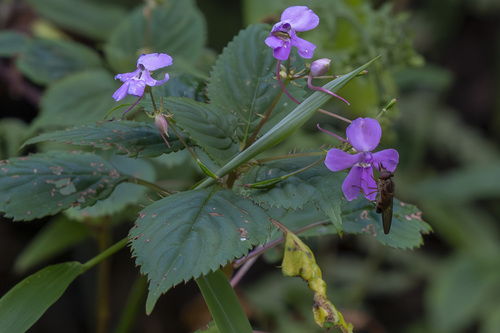
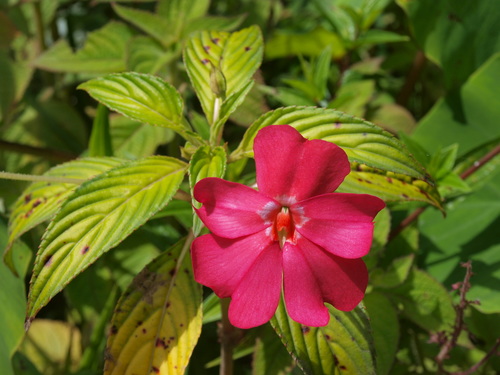
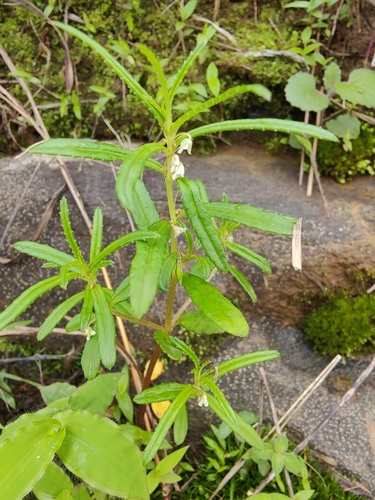
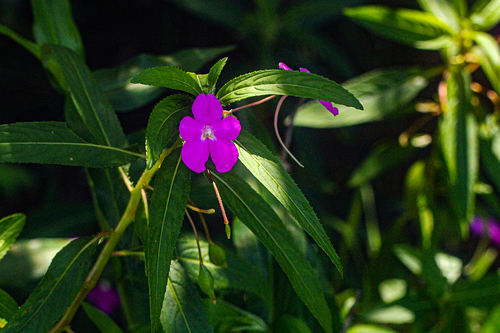
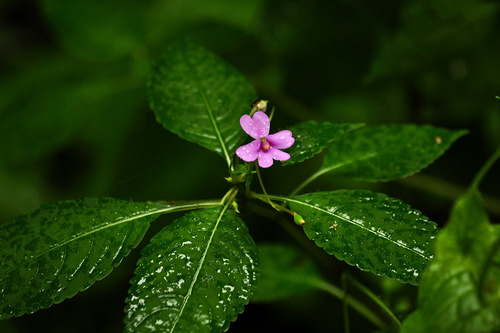
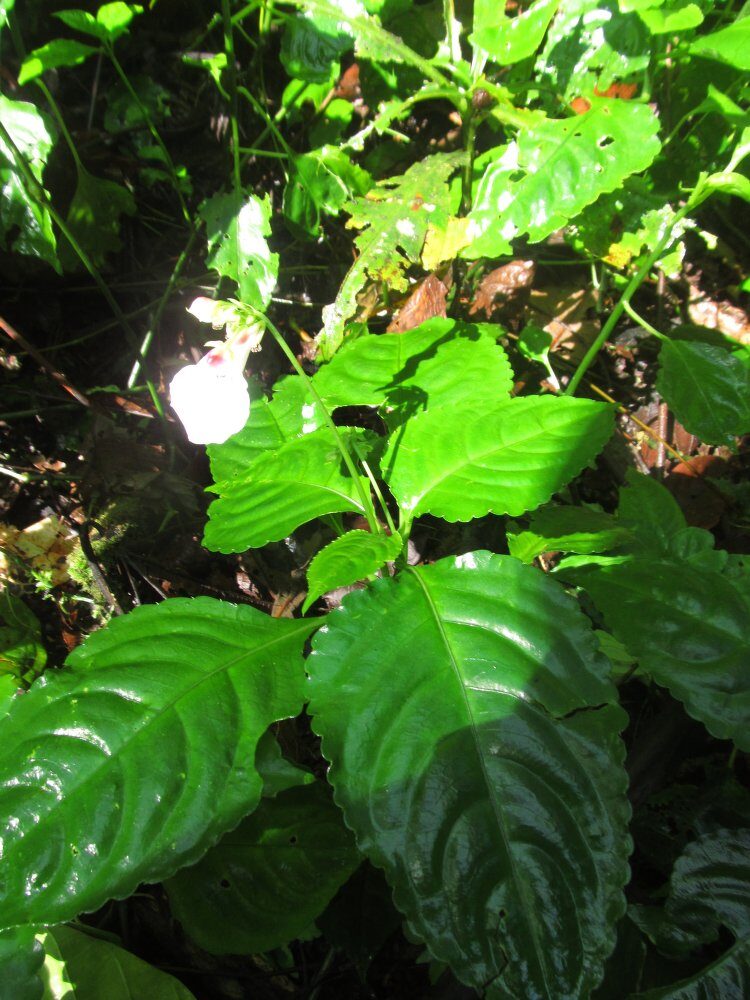
Impatiens linearifolia
Warb.
wikimedia· cc-by-sa
Wikimedia Commons - Yercaud-elango
wikimedia· cc-by-sa
Wikimedia Commons - Yercaud-elango
Description
A tropical herb in the Balsaminaceae family, found at elevations up to 1,500 m above sea level.
This description is brief — help expand it
Edible Uses
The leaves are potentially edible.
Medicinal Uses
Impatiens contain 2-methoxy-1,4-naphthoquinone, an anti-inflammatory and fungicide naphthoquinone that is an active ingredient in some formulations of Preparation H. North American impatiens have been used as herbal remedies for the treatment of bee stings, insect bites, and stinging nettle (Urtica dioica) rashes. They are also used after poison ivy (Toxicodendron radicans) contact to prevent a rash from developing. The efficacy of orange jewelweed (I. capensis) and yellow jewelweed (I. pallida) in preventing poison ivy contact dermatitis has been studied, with conflicting results. A study in 1958 found that Impatiens biflora was an effective alternative to standard treatment for dermatitis caused by contact with sumac, while later studies found that the species had no antipruritic effects after the rash has developed. Researchers reviewing these contradictions state that potential reason for these conflicts include the method of preparation and timing of application. A 2012 study found that while an extract of orange jewelweed and garden jewelweed (I. balsamina) was not effective in reducing contact dermatitis, a mash of the plants applied topically decreased it. Impatiens glandulifera is one of the Bach flower remedies, flower extracts used as herbal remedies for physical and emotional problems. It is included in the "Rescue Remedy" or "Five Flower Remedy", a potion touted as a treatment for acute anxiety and which is supposed to be protective in stressful situations. Studies have found no difference between the effect of the potion and that of a placebo. All Impatiens taste bitter and seem to be slightly toxic upon ingestion, causing intestinal ailments like vomiting and diarrhea. The toxic compounds have not been identified but are probably the same as those responsible for the bitter taste, likely might be glycosides or alkaloids. α-Parinaric acid, a polyunsaturated fatty acid discovered in the seeds of the makita tree (Atuna racemosa subsp. racemosa), is together with linolenic acid the predominant component of the seed fat of garden jewelweed (I. balsamina), and perhaps other species of Impatiens. This is interesting from a phylogenetic perspective, because the makita tree is a member of the Chrysobalanaceae in a lineage of eudicots entirely distinct from the balsams. Certain jewelweeds, including the garden jewelweed contain the naphthoquinone lawsone, a dye that is also found in henna (Lawsonia inermis) and is also the hair coloring and skin coloring agent in mehndi. In ancient China, Impatiens petals mashed with rose and orchid petals and alum were used as nail polish: leaving the mixture on the nails for some hours colored them pink or reddish.
Distribution
It is a tropical plant. It has been collected at 1,500 m above sea level.
Where It Grows
Papua New Guinea, PNG,
References (1)
- World Checklist of Useful Plant Species 2020. Royal Botanic Gardens, Kew