Zornia latifolia
Sm.
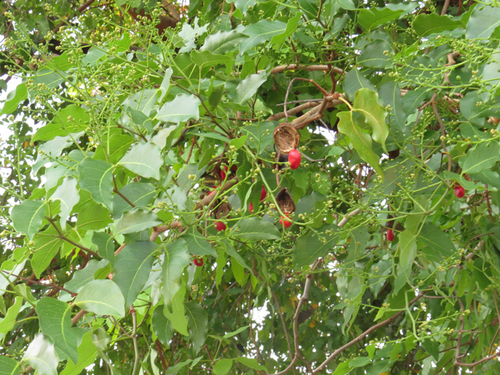
iNaturalist· cc-by-nc
(c) Frederico Acaz Sonntag, some rights reserved (CC BY-NC), uploaded by Frederico Acaz Sonntag
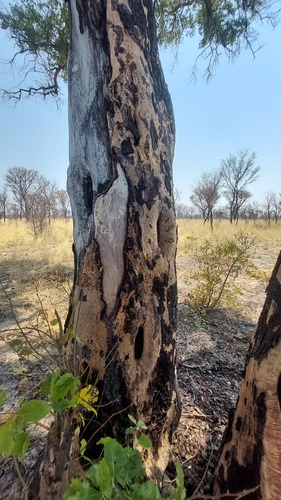
iNaturalist· cc-by-nc
(c) Frederico Acaz Sonntag, some rights reserved (CC BY-NC), uploaded by Frederico Acaz Sonntag
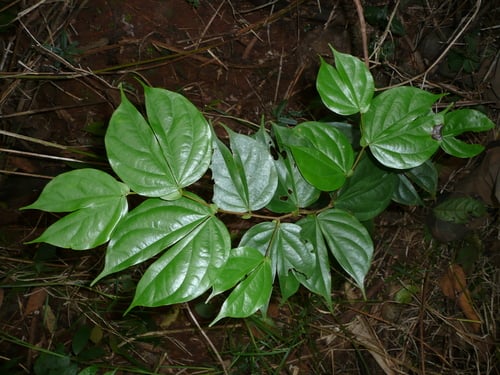
iNaturalist· cc-by-nc
(c) Frederico Acaz Sonntag, some rights reserved (CC BY-NC), uploaded by Frederico Acaz Sonntag
Summary
Source: WikipediaZornia latifolia is a species of flowering plant in the legume family, Fabaceae. It is native to South America. Its distribution may extend into Central and North America. It is also known as a naturalized species in tropical western Africa. The plant is known commonly as maconha brava.
Description
A herb. It grows 20-50 cm long. It has a taproot. It keeps growing from year to year. It grows along the ground and branches often. The flowers are small and yellow.
Edible Uses
The plant is used as both a spice and vegetable.
Medicinal Uses
A juice made from the whole plant is drunk in order to calm inflamed intestines.
Known Hazards
The plant probably has a mild narcotic effect.
Distribution
It is a tropical plant It can grow in hot places. It needs good sun. It is best in a well-drained acid soil. In Argentina it grows below 500 m above sea level.
Where It Grows
Africa, Argentina, Bolivia, Brazil, Central Africa, Ecuador, Gabon, Guiana, Guianas, Guyana, Paraguay, Peru, Sao Tome and Principe, South America*, Suriname, Uruguay, Venezuela,
Cultivation
Zornia latifolia plant of the subtropical to tropical zones, where it is found at elevations up to 1,000 metres. It grows best in areas where annual daytime temperatures are within the range 18 - 29°c, but can tolerate 13 - 34°c. Growth ceases at temperatures lower than -13°c. When dormant, the plant can survive temperatures down to about -1°c, but the young growth can be severely damaged at that same temperature. It prefers a mean annual rainfall in the range 1,200 - 1,800mm, but tolerates 1,000 - 2,000mm. Plants can tolerate a dry season of 4 - 6 months. Requires a sunny position. Grows best in a well-drained medium to heavy soil of moderate fertility, tolerating soils of low fertility. The plant is well adapted to the free-draining, acid and low-fertility, Aluminium-toxic oxisols of the South American savannahs. Prefers a pH in the range 4.5 - 6, tolerating 4 - 7. Established plants are drought tolerant. The plant has often been cultivated and has become established in several countries outside its native range. Dry matter yields of 2.4 - 2.8 tonnes per hectare in 12 weeks have been recorded; 0.6 - 4.9 tonnes when grown in association with the grasses Brachiaria decumbens and/or Andropogon gayanus. This species has a symbiotic relationship with certain soil bacteria; these bacteria form nodules on the roots and fix atmospheric nitrogen. Some of this nitrogen is utilized by the growing plant but some can also be used by other plants growing nearby.
Notes
It probably has a mild narcotic effect.
Synonyms
References (2)
- Grubben, G. J. H. and Denton, O. A. (eds), 2004, Plant Resources of Tropical Africa 2. Vegetables. PROTA, Wageningen, Netherlands. p 566
- World Checklist of Useful Plant Species 2020. Royal Botanic Gardens, Kew