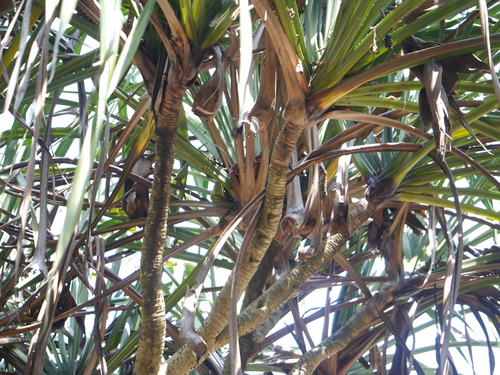
Pandanus rabaiensis
Rendle
iNaturalist· cc-by
(c) Diogo Luiz, some rights reserved (CC BY), uploaded by Diogo Luiz
iNaturalist· cc-by-nc
(c) Erwin Sieben, some rights reserved (CC BY-NC)
Description
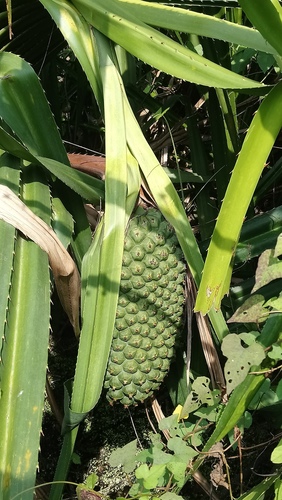
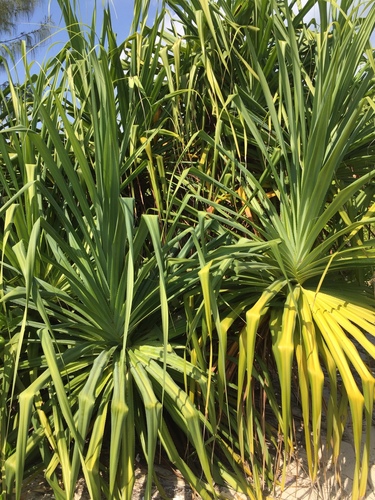
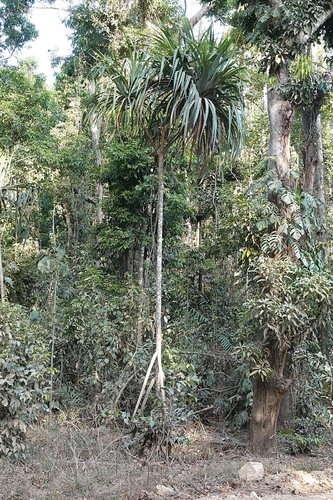
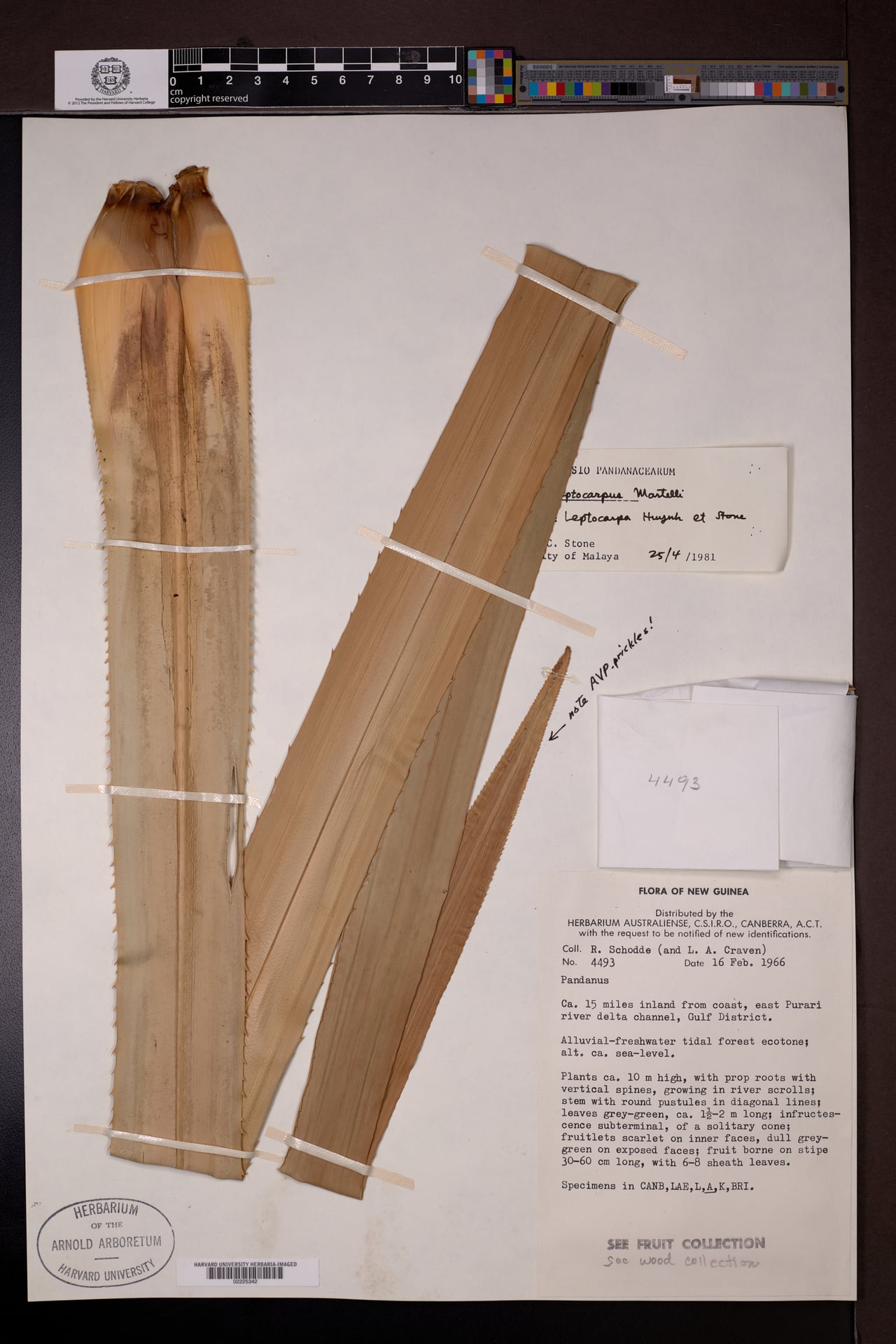
A pandanus tree. It grows 3-20 m tall and the trunk is 25 cm across. It has sharp spines. The leaves break and bend downwards for the last third. They are 120-400 cm long and 5-16 cm wide. The clasp the trunk at the base. They are olive-green above and more pale underneath. There are spine along the edges that are 2-5 mm long and 5-13 mm apart. The fruiting stems are 75 cm long and 2.5 cm wide. There are 2-7 compound fruit that are red and with 34-84 parts in each.
Edible Uses
Although no specific records have yet been seen for this species, most members of this genus have more or less edible fruits, seeds and inner leaf bases. The cylindrical fruit is a syncarp made up of a number of individual drupes. Individual drupes are hard, woody wedges - each containing a few, slender seeds. Each wedge has a fleshy base imbued with a sweet-smelling, orange pulp that in many species has a delicious flavour. This pulp needs to be cooked in order to destroy a deleterious substance. The syncarp of this species is 7 - 20cm x 5.5 - 12cm. The seed often has a delicious nutty flavour when eaten raw or cooked, though it is fiddly to extract. Seeds contain 44 - 50% fat and 20 - 34% protein. Inner base of young leaves - raw.
Distribution
It is a tropical plant.
Where It Grows
Africa, East Africa, Kenya, Tanzania,
Cultivation
Species in this genus generally grow well in most moist, well-dained soils and a sunny position Branches do not have dormant buds and so will not resprout if cut back into the old wood. A dioecious species, both male and female forms need to be grown if fruits and seed are required.
Propagation
Seed - best pre-soaked for 24 hours prior to sowing.
Other Uses
The leaves are used for making baskets, mats etc. The leaves are 90 - 300cm long by 47 - 66mm wide with spines on the margins and midrib. The tree is planted for soil conservation.
Synonyms
References (2)
- Mutie, F. M., et al, 2023, Important Medicinal and Food Taxa (Orders and Families) in Kenya, Based on Three Quantitative Approaches. Plants 2023, 12, 1145
- World Checklist of Useful Plant Species 2020. Royal Botanic Gardens, Kew