Aloe aculeata
Pole-Evans
Red hot poker aloe
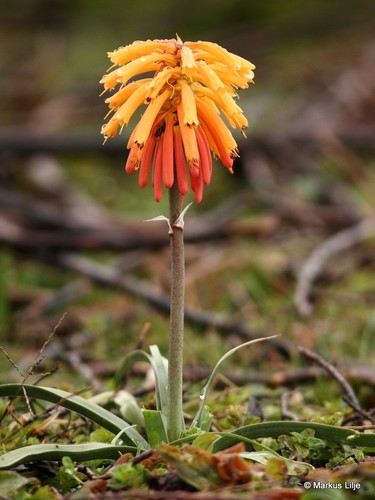
iNaturalist· cc-by
(c) Ryan van Huyssteen, some rights reserved (CC BY), uploaded by Ryan van Huyssteen
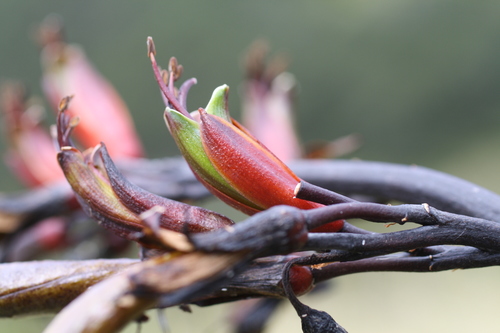
iNaturalist· cc-by
(c) John Rusk, some rights reserved (CC BY)
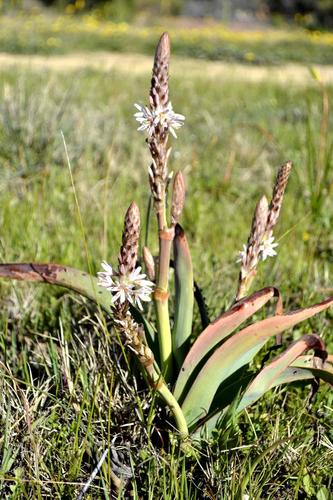
iNaturalist· cc-by-nc
(c) Alan Horstmann, some rights reserved (CC BY-NC), uploaded by Alan Horstmann
Summary
Source: WikipediaAloe aculeata (common names include ngopanie, sekope, red hot poker aloe) is an Aloe species that is native to the Limpopo valley and Mpumalanga in South Africa along with southern and central Zimbabwe and Mozambique. It grows on rocky outcrops in grassland and dry bushveld. Aculeata ("prickly") refers to the spines on the leaf's surface and the teeth on its margins. The plant's leaves reach 30 to 60 cm (12 to 24 in) tall. Flowers are reddish orange to yellow when in bud, opening to orange to yellow, and 23 to 40 mm (0.91 to 1.57 in) long. Aloe aculeata was depicted on the reverse of the South African 10 cent coin from 1965-1989. The plant can also be viewed in the Gibraltar Botanic Gardens.
Description
An aloe. It is a herb without a stem. The leaves are in a ring. They are 30-60 cm long and 9-14 cm wide near the base. They have spines. They have reddish-brown prickles.
Medicinal Uses
Used in traditional medicine.
Distribution
It is a subtropical plant. It grows in grassland and rocky bushveld.
Where It Grows
Africa, Mozambique, South Africa, Southern Africa, Zimbabwe,
Notes
Also put in the family Asphodelaceae.
Also Known As
Ngopanie, Sekope
References (1)
- World Checklist of Useful Plant Species 2020. Royal Botanic Gardens, Kew