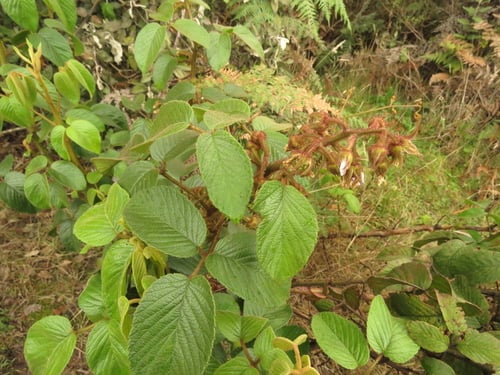
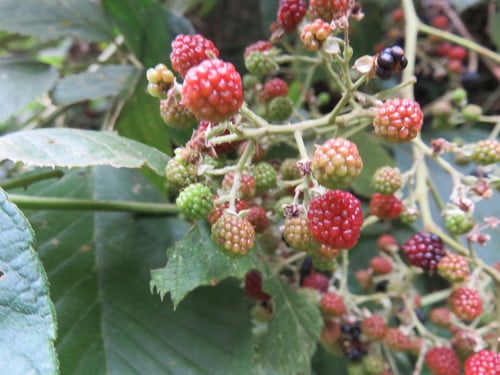
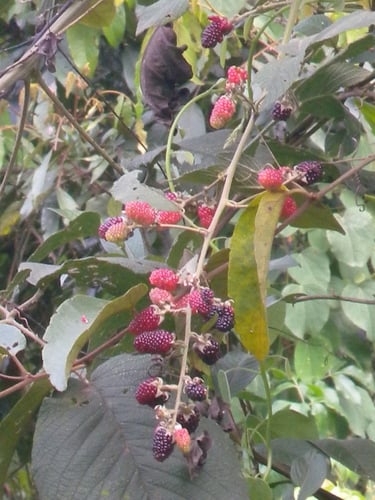
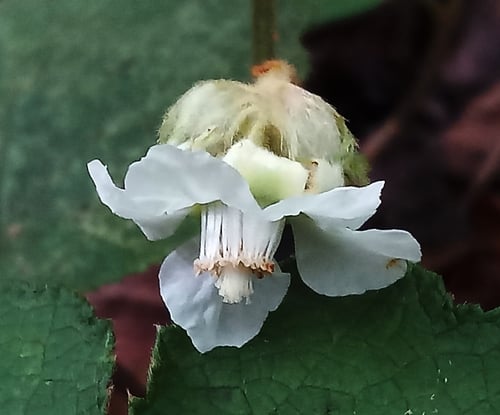
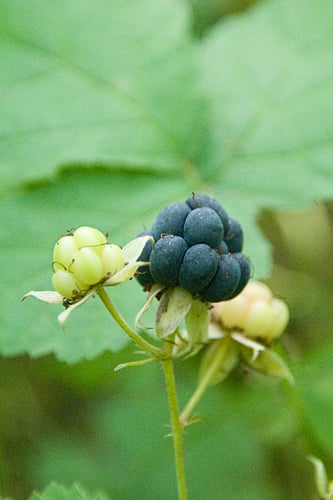
Crataegus monogyna
Jacq.
English Hawthorn, May Thorn
iNaturalist· cc0
no rights reserved, uploaded by Mirela
iNaturalist· cc-by-nc
(c) Brian Turner, some rights reserved (CC BY-NC), uploaded by Brian Turner
iNaturalist· cc-by-nc
(c) myrix, some rights reserved (CC BY-NC), uploaded by myrix
Summary
Source: WikipediaCrataegus monogyna, known as common hawthorn, whitethorn, one-seed hawthorn, or single-seeded hawthorn, is a species of flowering plant in the rose family, Rosaceae. It grows to about 10 metres (33 feet) tall, producing hermaphrodite flowers in late spring. The berry-like pomes (known as haws) contain a stone-encased seed. The plant is native to Europe, but has been introduced in many other parts of the world. The pome flesh is of little culinary interest due to its dryness, but is used to make jellies. The young leaves and petals are also edible.
Description
A small deciduous tree. It can grow to 9-14 m tall. The bark is greyish-brown with many small scales. The leaves are alternate. They are 2-3 cm long. The leaves have 5-7 jagged lobes. They turn yellow-brown in autumn. There are a pair of leafy growths near the base of each leaf. The thorns are short 1-2 cm. They are grey and straight. The flowers are single and red, pink or white. They have a scent. The fruit are small and red. It has a single style and fruit stone. The fruit are 6-8 mm across.
Edible Uses
The fruit, about 1cm in diameter, can be eaten raw or cooked, though it is not very appetizing raw and is more commonly used for jams and preserves. It can also be dried, ground, and mixed with flour for bread-making. Young shoots have a pleasant nutty flavour and make a good addition to salads. Dried leaves can be brewed as a substitute for china tea. The roasted seeds serve as a coffee substitute. Flowers are used in syrups and sweet puddings. As with other hawthorns, the fruit contains up to five fairly large seeds in the centre that tend to stick together, giving the impression of a cherry-like fruit with a single stone.
Traditional Uses
The fruit can be eaten raw or made into jellies which are rich in Vitamin C. They are also ground into flour. The ripe fruit are eaten fresh. The young leaves are added to tossed salads. The young buds are used in spring puddings. The flowers are mixed with sugar and brandy and made into a liqueur. They are also used in syrups and sweet puddings. Dried leaves are used for tea.
Medicinal Uses
Hawthorn is a highly valued medicinal plant, used primarily for disorders of the heart and circulatory system, particularly angina. Western herbalists regard it as a 'food for the heart', increasing blood flow to the heart muscles and helping to restore a normal heartbeat. These effects are attributed to bioflavonoids in the fruit, which are also strongly antioxidant and help prevent or reduce degeneration of the blood vessels. The fruit is antispasmodic, cardiac, diuretic, sedative, tonic, and vasodilator. The fruits and flowers are well established as a heart tonic in herbal folk medicine, a use supported by modern research. They have a hypotensive effect and act as a mild direct cardiac tonic, indicated for weak heart with high blood pressure, age-weakened heart muscle, inflammation of the heart muscle, arteriosclerosis, and nervous heart complaints. Prolonged use is necessary for the treatment to be effective, typically taken as a tea or tincture. Combined with ginkgo (Ginkgo biloba), hawthorn is used to address poor memory by improving blood supply to the brain. The bark is astringent and has been used to treat malaria and other fevers. The roots are said to stimulate the arteries of the heart.
Distribution
It is a temperate plant. It is native to Europe. In Chile it grows from sea level to 2,000 m altitude. It grows in areas with regular rain. It grows in full sun. It grows in the Sahara. It suits hardiness zones 4-9. It can tolerate frost and snow. Tasmania Herbarium. Arboretum Tasmania.
Where It Grows
Africa, Albania, Algeria, Andorra, Argentina, Australia, Balkans, Bosnia, Britain, Bulgaria, Canada, Caucasus, Chile, Croatia, Cyprus, Europe, France, Georgia, Greece, Hungary, Iraq, Italy, Lithuania, Luxembourg, Macedonia, Mediterranean, Middle East, Moldova, Morocco, Netherlands, North Africa, North America, Norway, Portugal, Romania, Russia, San Marino, Scandinavia, Sicily, Slovakia, Slovenia, South America, Spain, Switzerland, Tasmania, Tunisia, Turkey, USA,
Cultivation
A very easily grown plant, it prefers a well-drained moisture retentive loamy soil but is not at all fussy. Succeeds in all but the very poorest acid soils. Once established, it succeeds in excessively moist soils and also tolerates drought. It grows well on a chalk soil and also in heavy clay soils. A position in full sun is best when plants are being grown for their fruit, they also succeed in semi-shade though fruit yields and quality will be lower in such a position. Most members of this genus succeed in exposed positions, they also tolerate atmospheric pollution. A very hardy plant, tolerating temperatures down to at least -18°c. Hybridizes freely with other members of this genus and with C. laevigata in the wild. There are many named forms selected for their ornamental value. Seedling trees take from 5 - 8 years before they start bearing fruit, though grafted trees will often flower heavily in their third year. The flowers have a foetid smell somewhat like decaying fish. This attracts midges which are the main means of fertilization. When freshly open, the flowers have more pleasant scent with balsamic undertones. Seedlings should not be left in a seedbed for more than 2 years without being transplanted. In heavier shade they quickly become drawn and leggy, eventually dying. An important food plant for the caterpillars of many lepidoptera species, there are 149 insect species associated with this tree. Plants are susceptible to fireblight. In garden design, as well as the above-ground architecture of a plant, root structure considerations help in choosing plants that work together for their optimal soil requirements, including nutrients and water. Some species of Hawthorn, including Crataegus monogyna, are self-fertile, but cross-pollination often improves fruit set. Hawthorn berries are typically harvested in late Summer to early Autumn. Hawthorn flowers in Spring. Hawthorn grows moderately fast, reaching maturity in about 5-10 years, depending on the species and growing conditions.
Propagation
Seed is best sown fresh in autumn in a cold frame; some will germinate the following spring, though most are likely to take a further year. Stored seed germinates slowly and erratically — warm stratify for 3 months at 15°C, then cold stratify for 3 months at 4°C, and even then germination may take another 18 months. Scarifying before stratification may shorten this period, and fermenting the seed briefly in its own pulp can also help. Alternatively, harvest seed 'green' — once the embryo is fully developed but before the seedcoat hardens — and sow immediately in a cold frame for possible spring germination. For small batches, pot seedlings individually as soon as they are large enough to handle and grow on for the first year before planting out in late spring. For larger quantities, sow direct into a protected outdoor seedbed and undercut the roots if plants are to remain in situ for more than two years.
Other Uses
Hawthorn makes an excellent hedge or windbreak. It is very tolerant of cutting and neglect, capable of regenerating when cut back severely, and forms a thorny, stock-proof barrier that resists strong winds. It is widely used in layered hedges. The cultivar 'Stricta' has produced a hedge 3.5 metres tall in an exposed maritime position at Rosewarne in north Cornwall. The wood is very hard and tough, though difficult to work; it is used for tool handles and valued in turning. It also makes a good fuel, producing a high heat output. Hawthorn flowers are rich in nectar and pollen, attracting bees, flies, and butterflies. The fruit and seeds provide food for birds and small mammals, the dense thorny branches offer shelter and nesting sites for birds, and rough bark and fallen leaf litter create overwintering habitat for invertebrates and soil organisms.
Production
It is fast growing.
Other Information
Fruit are sold in local markets.
Notes
There are 200 or more Crataegus species. It can be invasive.
Nutrition
| Part | Moisture | kJ | kcal | Protein | Vit A | Vit C | Iron | Zinc |
|---|---|---|---|---|---|---|---|---|
| Fruit | — | — | — | 1.4 | 4.2 | 4.1 | 0.3 | — |
Synonyms
Also Known As
Alic, Aluc, Arc, Biancospino, Bossu, Calabriche, Common Hawthorn, Dara givij, Digdigan, Enovrati glog, Espinero, Espino albar, Galaginya, Galagonya, Geyikdikeni, Givij izaran, Glog, Gloginja, Gloginje, Gogic, Guhij, Guhujsor, Hagton, Hedgerow Thorn, Hloh, Istengyumolcs, Istengyumolcsfa, Kirmizi alic, Majoleto, Majuelo, Majueta, Meidoom, Morrisi, Murrisi, Okuzgotu, One-seeded hawthorn, Paducel, Peumo alemain, Quickthorn Haw, Singleseed Hawthorn, Sipka, Yemisen
References (85)
- Abbet, C., et al, 2014, Ethnobotanical survey on wild alpine food plants in Lower and Central Valais (Switzerland). Journal of Ethnopharmacology 151 (2014) 624–634
- Ahmad, S. A. & Askari, A. A., 2015, Ethnobotany of the Hawraman Region of Kurdistan Iraq. Harvard Papers in Botany, Vol. 20, No. 1, 2015, pp. 85–89
- Ari, S., et al, 2015, Ethnobotanical survey of plants used in Afyonkarahisar-Turkey. Journal of Ethnobiology and Ethnomedicine 11:84
- Blamey, M and Grey-Wilson, C., 2005, Wild flowers of the Mediterranean. A & C Black London. p 76
- Blanco-Salas, J., et al, 2019, Wild Plants Potentially Used in Human Food in the Protected Area “Sierra Grande de Hornachos” of Extremadura (Spain). Sustainability 2019, 11, 456
Show all 85 references Hide references
- Bodkin, F., 1991, Encyclopedia Botanica. Cornstalk publishing, p 295
- Bonet, M. A. & Valles, J., 2002, Use of non-crop food vascular plants in Montseny biosphere reserve (Catalonia, Iberian Peninsula). International Journal of Food Sciences and Nutrition (2002) 53, 225–248
- Boudraa, S. et al, 2010, Mineral and vitamin composition of fruits of five underexploited species in Algeria: Fruits. Vol. 65:75-84
- Bremness, L., 1994, Herbs. Collins Eyewitness Handbooks. Harper Collins. p 100
- Brickell, C. (Ed.), 1999, The Royal Horticultural Society A-Z Encyclopedia of Garden Plants. Convent Garden Books. p 313
- Cerne, M., 1992, Wild Plants from Slovenia used as Vegetables. Acta Horticulturae 318
- Ciocarlan, N. & Ghendov, V., 2015, Ethnobotanical and Ecological Studies of Wild Edible Plants from Bugeac Steppe, Republic of Moldova. Journal of EcoAgriTourism. Cailta terra Vol. 11(2):
- Coombes, A.J., 2000, Trees. Dorling Kindersley Handbooks. p 243
- Cundall, P., (ed.), 2004, Gardening Australia: flora: the gardener's bible. ABC Books. p 433
- Curtis, W.M., 1956, The Students Flora of Tasmania Vol 1 p 175
- Dashorst, G.R.M., and Jessop, J.P., 1998, Plants of the Adelaide Plains & Hills. Botanic Gardens of Adelaide and State Herbarium. p 74
- Della, A., et al, 2006, An ethnobotanical survey of wild edible plants of Paphos and Larnaca countryside of Cyprus. J. Ethnobiol. Ethnomed. 2:34
- Denes, A., et al, 2012, Wild plants used for food by Hungarian ethnic groups living in the Carpathian Basin. Acta Societatis Botanicorum Poloniae 81 (4): 381-396
- Dogan, A. & Tuzlaci, E., 2015, Wild Edible Plants of Pertek (Tunceli-Turkey). Marmara Pharmaceutical Journal 19: 126-135
- Dogan, Y., & Nedelcheva, A., 2015, Wild plants from open markets on both sides of the Bulgarian-Turkish border. Indian Journal of Traditional Knowledge. Vol. 14(3): 351-358
- Dolina, K. & Luczaj, L., 2014, Wild food plants used on the Dubrovnik coast (south-eastern Croatia) Acta Soc Bot Pol 83(3):175–181
- Egea, I., et al., 2010, Six Edible Wild fruits as potential Antioxidant Additives or Nutritional Supplements. Plant Foods for Human Nutrition. 65:121-129
- Ertug, F., 2000, An Ethnobotanical Study in Central Anatolia (Turkey). Economic Botany Vol. 54. No. 2. pp. 155-182
- Ertug, F., 2004, Wild Edible Plants of the Bodrum Area. (Mugla, Turkey). Turk. J. Bot. 28 (2004): 161-174
- Ertug, F, Yenen Bitkiler. Resimli Türkiye Florası -I- Flora of Turkey - Ethnobotany supplement
- Etherington, K., & Imwold, D., (Eds), 2001, Botanica's Trees & Shrubs. The illustrated A-Z of over 8500 trees and shrubs. Random House, Australia. p 240
- Facciola, S., 1998, Cornucopia 2: a Source Book of Edible Plants. Kampong Publications, p 197
- Farrar, J.L., 1995, Trees of the Northern United States and Canada. Iowa State University press/Ames p 393
- Fl. austriac. 3:50, t. 292, fig. 1. 1775
- Flowerdew, B., 2000, Complete Fruit Book. Kyle Cathie Ltd., London. p 180
- Girard, N. J., 2020, Sustainable Foraging of Wild Edible Plants in Norway. A Biocultural Approach. M. Sc. thesis Norwegian University. p 135
- Gonzalez, J. A., et al, 2011, The consumption of wild and semi-domesticated edible plants in the Arribes del Duero (Salamanca-Zamora, Spain): an ananalysis of traditional knowledge. Genetic Resources and Crop Evolution 58:991-1006
- Gunes, S. et al, 2018, Survey of wild food plants for human consumption in Karaisali (Adana-Turkey). Indian Journal of Traditional Knowledge. Vol. 17(2), April 2018, pp 290-298
- Hadjichambis, A. C., et al, 2007, Wild and semi-domesticated food plant consumption in seven circum-Mediterranean areas. International Journal of Food Sciences and Nutrition. 2007, 1-32.
- Hancer, C. K., et al, 2020, Traditional Knowledge of Wild Edible Plants of Biga (Çanakkale), Turkey. Acta Societatis Botanicorum Poloniae / 2020 / Volume 89 / Issue 1 / Article 8914
- Harris, E & J., 1983, Field Guide to the Trees and Shrubs of Britain. Reader's Digest. p 144
- Hibbert, M., 2002, The Aussie Plant Finder 2002, Florilegium. p 75
- Irving, M., 2009, The Forager Handbook, A Guide to the Edible Plants of Britain. Ebury Press p 264
- Kaya, O. M., et al, 2020, An ethnobotanical research in Sanhurfa central district and attached Villages (Turkey). Indian Journal of Traditional Knowledge. Vol. 19(1) pp 7-23
- Kargioglu, M., et al, 2008, An Ethnobotanical Survey of Inner-West Anatolia, Turkey. Human Ecology 36:763-777
- Kremer, B.P., 1995, Shrubs in the Wild and in Gardens. Barrons. p 143 (Fruit listed as inedible)
- Lord, E.E., & Willis, J.H., 1999, Shrubs and Trees for Australian gardens. Lothian. p 52
- Low, T., 1992, Bush Tucker. Australia’s Wild Food Harvest. Angus & Robertson. p 73
- Luczaj, L., 2012, Ethnobotanical review of wild edible plants of Slovakia. Acta Societatis Botanicorum Poloniae 81(4):245-255
- Luczaj, L. et al, 2012, Wild food plant use in 21st century Europe: the disappearance of old traditions and the search for new cuisines involving wild edibles. Acta Soc Bot Pol 81(4):359–370
- Luczaj, L. et al, 2013, Wild food plants used in the villages of the Lake Vrana Nature Park (northern Dalmatia, Croatia). Acta Societatis Botanicorum Poloniae, 82(4): 275-281
- Luczaj, L. et al, 2014, Wild Food Plants of Dalmatia (Croatia). in A. Pieroni, C. L. Quave (eds.), Ethnobotany and Biocultural Diversities in the Balkans, p 138
- Mabey, R., 1973, Food for Free. A Guide to the edible wild plants of Britain, Collins. p 82, 153, 171
- Marinelli, J. (Ed), 2004, Plant. DK. p 451
- Mattalia, G., et al, 2012, Traditional uses of wild food and medicinal plants among Brigasc, Kye ́, and Provenc ̧al communities on the Western Italian Alps. Genet Resour Crop Evol. Springer
- Michael, P., 2007, Edible Wild Plants and Herbs. Grub Street. London. p 112
- Morley, B.D., & Toelken, H.R., (Eds), 1983, Flowering Plants in Australia. Rigby. p 145
- Mraihi, F., 2013, Phenolic Contents and Antioxidant Potential of Crataegus Fruits Grown in Tunisia as determined by DPPH, FRAP and b-Carotent/Lineleic Acid Assay. Journal of Chemistry Volume 2013, Article ID 378264, 6 pages
- Mukemre, M., et al, 2016, Survey of wild food plants for human consumption in villages of Catak, (Van-Turkey), Indian Journal of Traditional Knowledge. Vol. 15(2) pp. 183-191
- Nassif, F., & Tanji, A., 2013, Gathered food plants in Morocco: The long forgotten species in Ethnobotanical Research. Life Science Leaflets 3:17-54
- Nedelcheva A., 2013, An ethnobotanical study of wild edible plants in Bulgaria. EurAsian Journal of BioSciences 7, 77-94
- Nimis, P. L., et al, 2015, A guide to the vascular plants of the temporary ponds of Sardinia (Italy) p 125
- Özdemir, E. and Kültür, S., 2017, Wild Edible Plants of Savaştepe District (Balıkesir, Turkey), Marmara Pharm J 21/3: 578-589
- Pardo-de-Santayana, M., et al, 2005, The gathering and consumption of wild edible plants in the Campoo (Cantabria, Spain). International Journal of Food Sciences and Nutrition. 56(7): 529-542
- Pardo-de-Santayana, M., et al, 2007, Traditional knowledge of wild edible plants used in the northwest of the Iberian Peninsula (Spain and Portugal): a comparative study. Journal of Ethnobiology and Ethnomedicine 2007, 3:27
- Pasta, S., et al, 2020, An Updated Checklist of the Sicilian Native Edible Plants: Preserving the Traditional Ecological Knowledge of Century-Old Agro-Pastoral Landscapes. Frontiers in Plant Science. Volume 11|Article 388
- Pieroni, A., et al, 2005, Food for two seasons: Culinary uses of non-cultivated local vegetables and mushrooms in a south Italian village. International Journal of Food Sciences and Nutrition, 56(4): 245-272
- Pieroni, A., et al, 2012, "We are Italians!": The Hybrid Ethnobotany of a Venetian Diaspora in Eastern Romania. Human Ecology 40:435-451
- Pieroni, A. et al, 2013, One century later: the folk botanical knowledge of the last remaining Albanians of the upper Reka Valley, Mount Korab, Western Macedonia. Journal of Ethnobiology and Ethnomedicine. 9:22 (var. sericea)
- Pieroni, A., 2017, Traditional uses of wild food plants, medicinal plants, and domestic remedies in Albanian, Aromanian and Macedonian villages in South-Eastern Albania. Journal of Herbal Medicine Volume 9, September 2017, Pages 81-90
- Pieroni, A. & Soukand, R., 2017, The disappearing wild food and medicinal plant knowledge in a few mountain villages of North-Eastern Albania. Journal of Applied Botany and Food Quality 90, 58 - 67
- Plants for a Future database, The Field, Penpol, Lostwithiel, Cornwall, PL22 0NG, UK. http://www.scs.leeds.ac.uk/pfaf/
- Polat, R., et al, 2015, Survey of wild food plants for human consumption in Elazig (Turkey). Indian Journal of Traditional Knowledge. Vol. 1(1): 69-75
- Postman, J. D., et al, 2012, Recent NPGS Coordinated Expeditions in the Trans-Caucasus Region to Collect Wild Relatives of Temperate Fruit and Nut Crops. In Acta Horticulturae Number 948 p 191-198
- Redzic, S. J., 2006, Wild Edible Plants and their Traditional Use in the Human Nutrition in Bosnia-Herzegovina. Ecology of Food and Nutrition, 45:189-232
- Rexhepi, B., et al, 2018, Ethnobotanical Study of Wild Edible Plants in Pelagonia Region (Southwestern Macedonia) International Journal of Advances in Science Engineering and Technology, Vol. 6 (1) p 57
- Ruiz-Rodriguez, B. M., et al, 2014, Wild blackthorn (Prunus spinosa L.) and hawthorn (Crataegus monogyna Jacq.) fruits as valuable sources of antioxidants. Fruits, Vol. 69, p.61-73
- Sansanelli, S., et al, 2014, Wild food plants traditionall consumed in the area of Bologna (Emilia Romagna region, Italy). Journal of Ethnobiology and Ethnomedicine 10:69
- Senkardes, I & Tuzlaci, E., 2016, Wild Edible Plants of Southern Part of Nevsehir inTurkey. Marmara Pharmaceutical Journal 20:34-43
- Sfikas, G., 1984, Trees and shrubs of Greece. Efstathiadis Group. Athens. p 76
- Shikov, A. N. et al, 2017, Traditional and Current Food Use of Wild Plants Listed in the Russian Pharmacopoeia. Frontiers in Pharmacology. Vol. 8 Article 841
- Signorini, M. A., et al, 2009, Plants and traditional knowledge: An ethnobotanical investigation on Monte Ortobene (Nuoro, Sardinia). Journal or Ethnobiology and Ethnomedicine, 5:6
- Tasmanian Herbarium Vascular Plants list p 48
- Tardio, J., et al, Ethnobotanical review of wild edible plants in Spain. Botanical J. Linnean Soc. 152 (2006), 27-71
- Tozer, F., 2007, The Uses of Wild Plants. Green Man Publishing. p 73
- Vorstenbosch, T., et al, 2017, Famine food of vegetal origin consumed in the Netherlands during World War II. Journal of Ethnobiology and Ethnomedicine (2017) 13:63
- www.chileflora.com
- www.ediblewildfood.com
- Yesil, Y., et al, 2019, Traditional knowledge of wild edible plants in Hasankeyf (Batman Province, Turkey). Acta Societatis Botanicorum Poloniae. 88(3):3633
- Young, J., (Ed.), 2001, Botanica's Pocket Trees and Shrubs. Random House. p 292