Crataego-mespilus dardarii
Simon-Louis
Bronvaux medlar
wikimedia· cc-by-sa
Wikimedia Commons - Krzysztof Ziarnek, Kenraiz
wikimedia· cc-by-sa
Wikimedia Commons - Agnieszka Kwiecień, Nova
Description
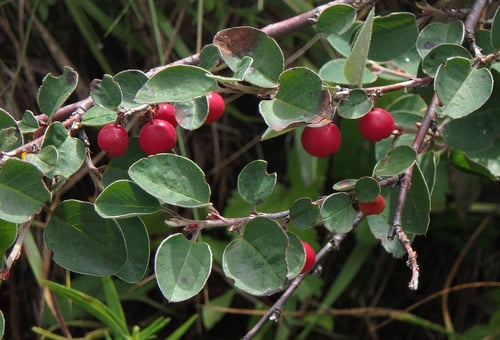
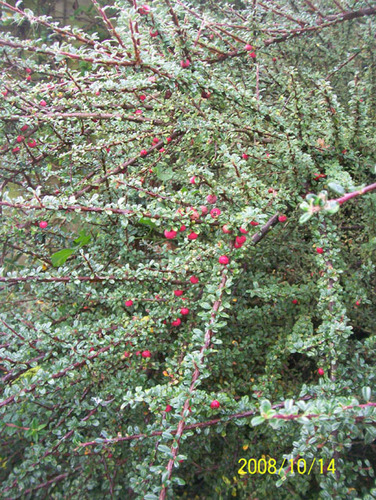
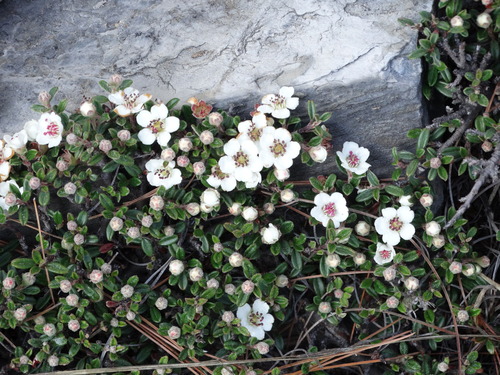
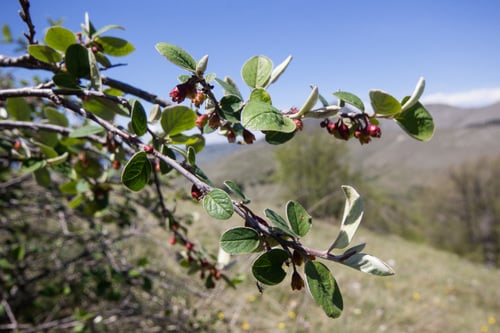
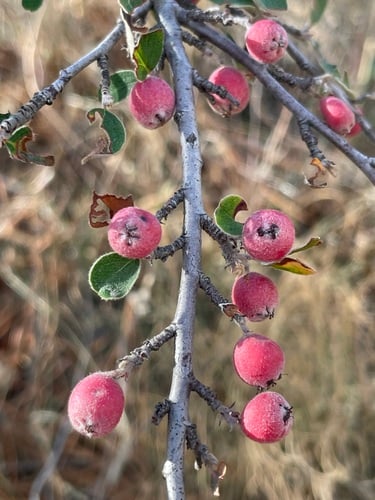
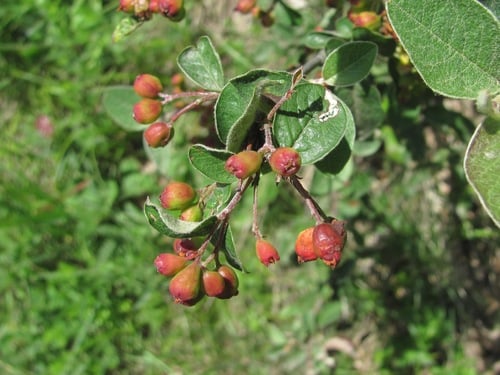
A wide spreading small tree. It grows 6 m high and spreads 6 m wide. The leaves turn yellow-orange in autumn. The flowers are large and white. Two different forms occur and one has thorns. One has fruit like medlar and the other has fruit like hawthorn.
Edible Uses
The fruit is eaten raw or cooked. This tree produces three distinct fruit sizes, all of the same flavour. The first is quite large, up to 35mm in diameter, resembling the medlar (Mespilus germanica). The second is slightly smaller at around 25mm in diameter and also medlar-like. The third is smaller still, around 10mm in diameter, and is intermediate between the medlar and hawthorn (Crataegus spp). The fruit does not ripen until very late autumn or even early winter and will likely need to be harvested before fully ripe and stored in a cool but frost-free place to finish ripening. It is ready to eat when the flesh has turned brown and become very soft, at which point it develops a delicious, sweet flavour reminiscent of lush tropical fruit. The fruit should be eaten promptly at this stage, as it is close to rotting and can cause gastric upsets if consumed beyond that point.
Medicinal Uses
None known.
Distribution
It is a temperate plant. It will grow in sun or part shade. It will grow in most soils but they must not be waterlogged. It suits hardiness zones 6-9.
Where It Grows
Australia, Europe, France,
Cultivation
It can only be propagated onto a rootstock such as common hawthorn.
Propagation
This species is a bi-generic graft hybrid and is very unlikely to breed true from seed. If attempting seed propagation, sow as soon as ripe in autumn in a cold frame. Some seed may germinate in spring, but most will likely take another year. Stored seed can be very slow and erratic to germinate; stratify for 3 months at 15°c followed by 3 months at 4°c, and it may still take a further 18 months to germinate. Scarifying before stratifying may reduce this time. Fermenting the seed for a few days in its own pulp may also speed germination. Alternatively, harvest seed green — as soon as the embryo has fully developed but before the seedcoat hardens — and sow immediately in a cold frame, where it may germinate the following spring. For small quantities, pot seedlings as soon as large enough to handle and grow on individually for the first year before planting out in late spring into nursery beds or final positions. For larger quantities, sow directly outdoors in a seedbed with protection from mice and seed-eating creatures, undercutting roots if plants are to remain in the seedbed for more than two years. The plant can also be propagated by grafting onto a hawthorn (Crataegus species) rootstock.
Other Uses
None known.
Synonyms
References (4)
- Cundall, P., (ed.), 2004, Gardening Australia: flora: the gardener's bible. ABC Books. p 432
- Etherington, K., & Imwold, D., (Eds), 2001, Botanica's Trees & Shrubs. The illustrated A-Z of over 8500 trees and shrubs. Random House, Australia. p 238
- Plants for a Future database, The Field, Penpol, Lostwithiel, Cornwall, PL22 0NG, UK. http://www.scs.leeds.ac.uk/pfaf/
- Rev. Hort. 71:403. 1899 (ex Bellair, Rev. Hort. 70:482.)