Costus phyllocephalus
K. Schum
iNaturalist· cc-by-nc-sa
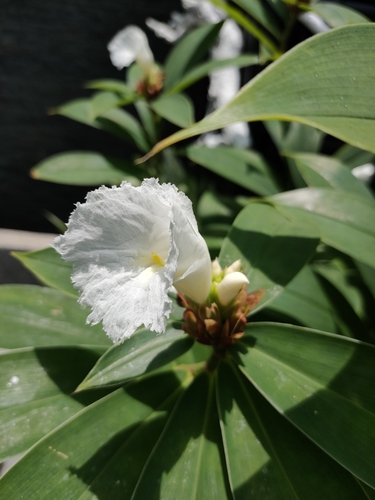
(c) Jonathan Hiew, some rights reserved (CC BY-NC-SA), uploaded by Jonathan Hiew
iNaturalist· cc-by-nc
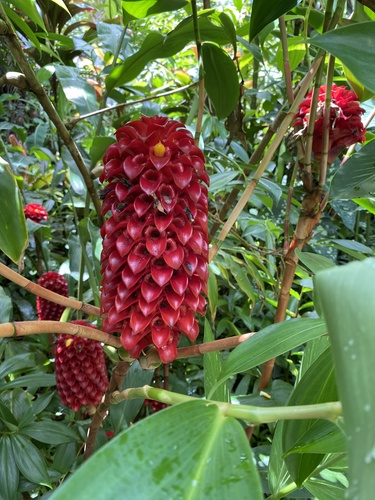
(c) HP Lim, some rights reserved (CC BY-NC)
Description
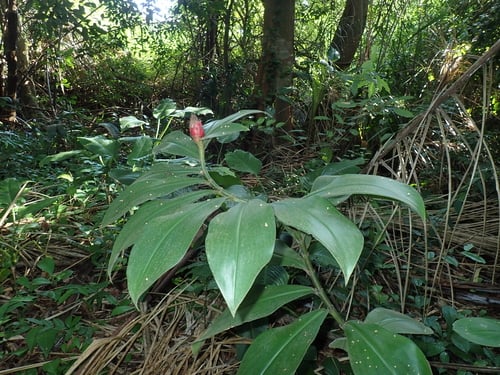
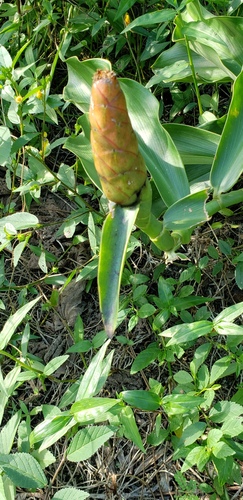
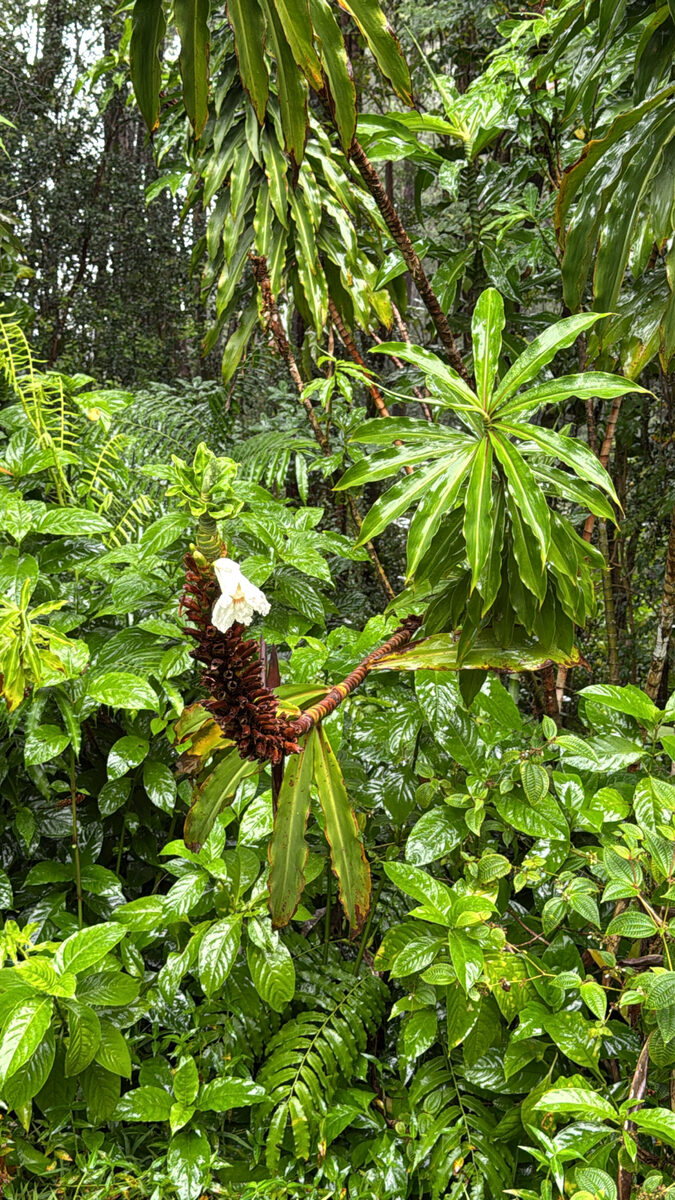
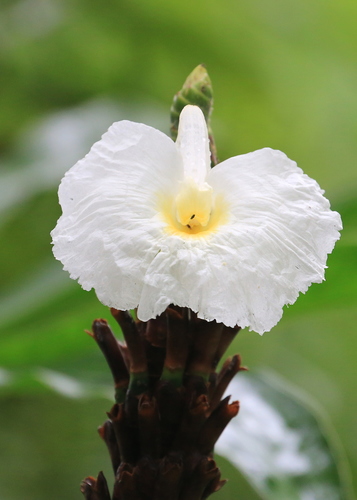
A herb. It keeps growing from year to year. The plant is somewhat like ginger. It has a rhizome of thickened underground stem and a stem up to 50 cm tall. The leaves are arranged in spirals. They are simple and the sheath forms a closed tube. The leaf blade is sword shaped and 8-17 cm long by 4-7 cm wide. They taper to the tip. The flowering stalk is at the top. It has a head 5 cm across with large bracts. The flowers have both sexes. There is a tube 1.5 cm long. The lobes are fused at the base. The lower lobe is pink and 5 cm long by 5 cm wide. It has a white throat. The fruit is a capsule with a crown at the top. There are many seeds.
Edible Uses
The young leaves and stems are eaten raw as a salad and are used as a popular vegetable.
Traditional Uses
The young leaves and stems are eaten raw as a salad.
This uses section is brief — help expand it
Distribution
A tropical plant.
Where It Grows
Africa, Angola, Central Africa, Congo DR,
Other Information
It is a popular vegetable.
Notes
There are 90-150 Costus species. There are about 60 in tropical America.
Also Known As
Munkeni, Munkuiza, Tulukako
References (6)
- Grubben, G. J. H. and Denton, O. A. (eds), 2004, Plant Resources of Tropical Africa 2. Vegetables. PROTA, Wageningen, Netherlands. p 225
- Jardin, C., 1970, List of Foods Used In Africa, FAO Nutrition Information Document Series No 2.p 70
- Latham, P., 2004, Useful Plants of Bas-Congo province. Salvation Army & DFID p 95
- Martin, F.W. & Ruberte, R.M., 1979, Edible Leaves of the Tropics. Antillian College Press, Mayaguez, Puerto Rico. p 225
- Termote, C., et al, 2011, Eating from the wild: Turumbu, Mbole and Bali traditional knowledge of non-cultivated edible plants, District Tshopo, DRCongo, Gen Resourc Crop Evol. 58:585-618
Show all 6 references Hide references
- World Checklist of Useful Plant Species 2020. Royal Botanic Gardens, Kew