Cosmos caudatus
H. B. Kunth
Wild cosmos
iNaturalist· cc-by-nc
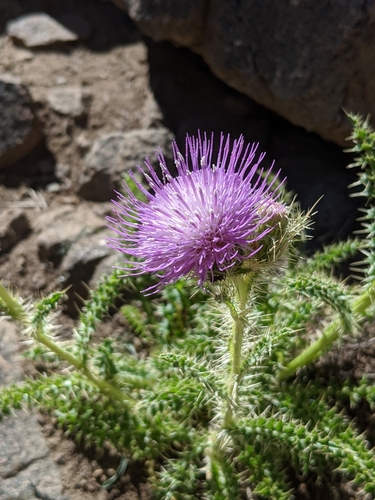
(c) Kirsten Van Goethem, some rights reserved (CC BY-NC), uploaded by Kirsten Van Goethem
iNaturalist· cc-by-nc
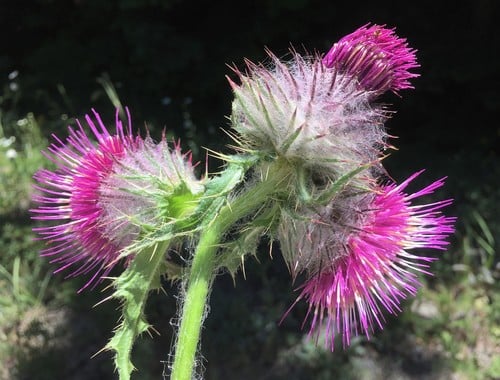
(c) sergiortc, some rights reserved (CC BY-NC)
iNaturalist· cc-by-nc-sa
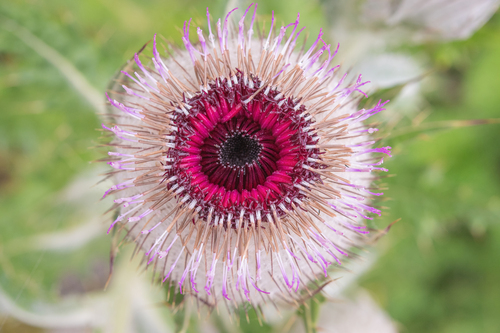
(c) Mauricio Mercadante, some rights reserved (CC BY-NC-SA)
Summary
Source: WikipediaCosmos caudatus or king's salad is an annual plant in the genus Cosmos, bearing purple, pink, or white ray florets. It is native to Latin America (from Rio Grande do Sul in southern Brazil to Tamaulipas in northeastern Mexico), and the West Indies, though naturalized in tropical parts of Asia, Africa, and Australia.
Description
An erect annual herb. It grows 0.5-2 m high. The stem has sparse hairs. The leaves are divided 2 or 3 times. They are 5-15 cm long with a leaf stalk 7 cm long. The upper segments of the leaf are oblong and 1.5-3.5 cm long by 3-6 mm wide. There is one flower head. It is 1-1.5 cm long and 5 mm wide. The dry fruit is 2-2.6 cm long.
Edible Uses
The shoots are eaten raw with vermicelli. Young leaves are eaten as a vegetable, either cooked and added to stews or mixed with rice to prepare yeast. It is commercially cultivated and sold in local markets.
Traditional Uses
The shoots are eaten raw with vermicelli. The young leaves are eaten as a vegetable. They are also cooked and added to stews. The leaves are mixed with rice to prepare yeast.
Medicinal Uses
The plant possibly has anti-cancer properties.
Distribution
It is a tropical plant. In Indonesia it grows from coastal areas up to high mountains. It needs a fertile, well-drained soil. It suits hardiness zones 7-11.
Where It Grows
America, Asia, Australia, Central America, Cuba, Dominican Republic, Fiji, Guiana, Guianas, Guyana, Haiti, India, Indochina, Indonesia, Malaysia, Mexico*, Myanmar, North America, Pacific, Pan tropical, Philippines, Puerto Rico, Rotuma, SE Asia, Singapore, South America*, Suriname, Thailand, Venezuela, Virgin Islands, West Indies, West Timor,
Cultivation
Plants can be grown from seeds. For edible leaves it is normally planted densely and harvested by thinning out.
Other Information
It is a commercially cultivated vegetable. It is sold in local markets.
Notes
There are about 25 Cosmos species. It possibly has anti-cancer properties.
Nutrition
| Part | Moisture | kJ | kcal | Protein | Vit A | Vit C | Iron | Zinc |
|---|---|---|---|---|---|---|---|---|
| Leaves | 93 | 70 | 17 | 3 | 900 | — | — | — |
Synonyms
Also Known As
Cosmos, Daao rueang phamaa, Daoruang-phama, Dewa daroo, Kenikir, Kenikir, Khamhae, Kiun'ut, Margarita, Onwad, Pelampong, Randa midang, Turay-turay, Ulam rajah
References (26)
- Abas, F., et al, 2006, Antioxidant and nitric oxide inhibition of selected Malay traditional vegetables. Food Chemistry 95: 566-573
- Andarwulan, N., et al, 2010, Flavonoid content and antioxidant activity of vegetables from Indonesia. Food Chemistry 121: 1231-1235
- Anderson, E. F., 1993, Plants and people of the Golden Triangle. Dioscorides Press. p 207
- Arora, R. K., 2014, Diversity in Underutilized Plant Species - An Asia-Pacific Perspective. Bioversity International. p 39
- Burkill, I.H., 1966, A Dictionary of the Economic Products of the Malay Peninsula. Ministry of Agriculture and Cooperatives, Kuala Lumpur, Malaysia. Vol 1 (A-H) p 679
Show all 26 references Hide references
- Chin, H. F., 1999, Malaysian Vegetables in Colour. Tropical Press. p 97
- Cooper, W. and Cooper, W., 2004, Fruits of the Australian Tropical Rainforest. Nokomis Editions, Victoria, Australia. p 80
- Cundall, P., (ed.), 2004, Gardening Australia: flora: the gardener's bible. ABC Books. p 425 (As Cosmos bipinnatus)
- Facciola, S., 1998, Cornucopia 2: a Source Book of Edible Plants. Kampong Publications, p 37
- Franklin, J., Keppel, G., & Whistler, W., 2008, The vegetation and flora of Lakeba, Nayau and Aiwa Islands, Central Lau Group, Fiji. Micronesica 40(1/2): 169–225, 2008
- Jacquat, C., 1990, Plants from the Markets of Thailand. D.K. Book House p 90
- Kays, S. J., and Dias, J. C. S., 1995, Common Names of Commercially Cultivated Vegetables of the World in 15 languages. Economic Botany, Vol. 49, No. 2, pp. 115-152
- Lembogi Biologi Nasional, 1980, Sayur-sayuran. Balai Pustaka, Jakarta. p 57
- MARDI Malaysia
- Martin, F.W. & Ruberte, R.M., 1979, Edible Leaves of the Tropics. Antillian College Press, Mayaguez, Puerto Rico. p 184
- Murakami, A. et al, 2014, Screening for the In Vitro Anti-tumor-promoting Activities of Edible Plants from Malaysia. Bioscience, Biotechnology, and Biochemistry, 64:1, 9-16.
- Ochse, J.J. et al, 1931, Vegetables of the Dutch East Indies. Asher reprint. p 125
- Ong, H. C., Mojiun, P. F. J., & Milow, P., 2011, Traditional knowledge of edible plants among the Temuan villagers in Kampung Guntor, Negeri Sembilan, Malaysia. African Journal of Agricultural Research Vol. 6(8), pp. 1962-1965, 18 April, 2011
- Plants of Haiti Smithsonian Institute http://botany.si.edu
- Samy, J., Sugumaran, M., Lee, K. L. W., 2009, Herbs of Malaysia, Marshall Cavendish. p 82
- Siemonsma, J. S. and Piluek, K. (Eds), 1994, Plant Resources of South-East Asia No. 8 Vegetables. Prosea Foundation, Bogor, Indonesia, p 152
- Terra, G.J.A., 1973, Tropical Vegetables. Communication 54e Royal Tropical Institute, Amsterdam, p 41
- USDA, ARS, National Genetic Resources Program. Germplasm Resources Information Network - (GRIN). [Online Database] National Germplasm Resources Laboratory, Beltsville, Maryland. Available: www.ars-grin.gov/cgi-bin/npgs/html/econ.pl (10 April 2000)
- F. W. H. A. von Humboldt et al., Nov. gen. sp. 4:188[folio]. 1818; 4:240[quarto]. 1820
- Wiersema, J. H. & Leon, B., 2013, World Economic Plants. A Standard Reference CRC Press. 2nd Ed. p 205
- World Checklist of Useful Plant Species 2020. Royal Botanic Gardens, Kew