Oreocnide integrifolia
(Gaudicj.) Miq.
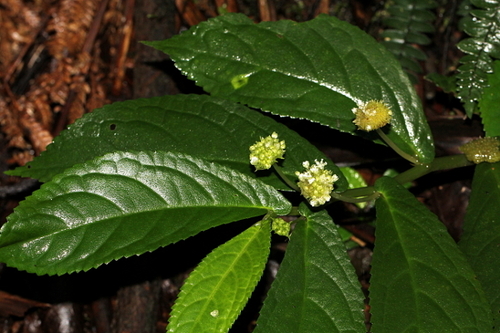
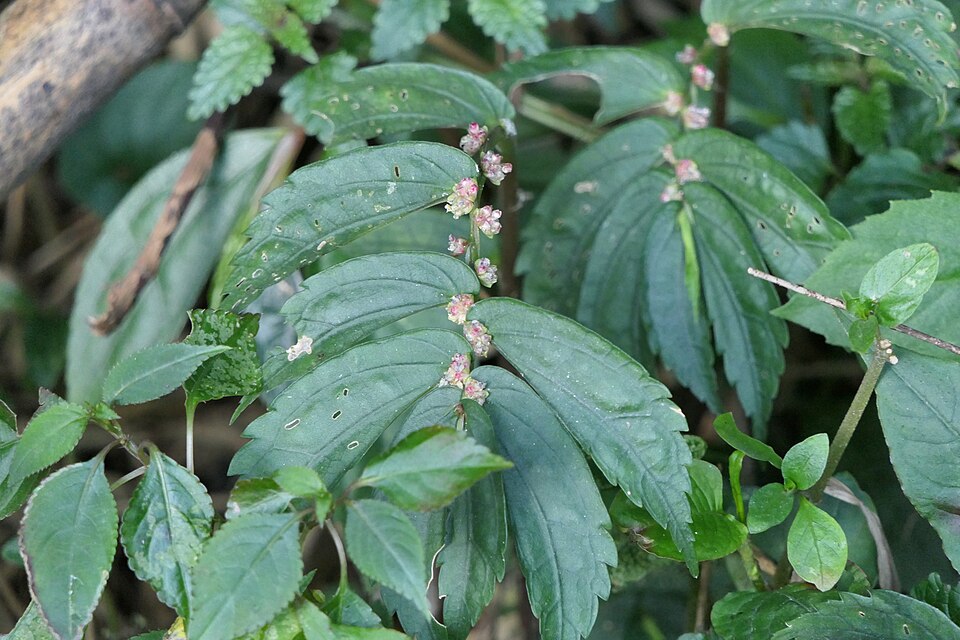
iNaturalist· cc-by
(c) madhavan a.p, some rights reserved (CC BY), uploaded by madhavan a.p
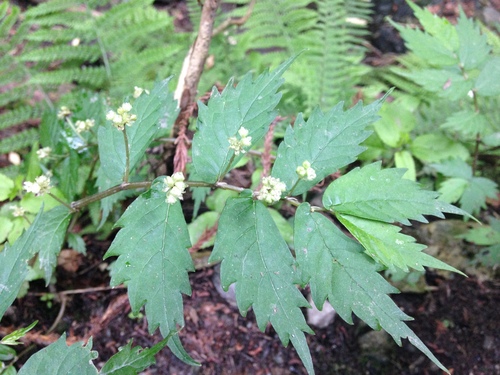
iNaturalist· cc-by-nc-sa
(c) James Ojascastro, some rights reserved (CC BY-NC-SA)
Summary
Evergreen tree growing slowly to 12m tall and wide. Hardy to UK zone 10. Tolerates light sandy, medium loamy, and heavy clay soils across mildly acid to basic pH ranges. Grows in full shade in deep woodland or semi-shade in light woodland. Prefers moist or wet soil conditions.
Description
Evergreen tree growing slowly to 12m tall and wide. Hardy to UK zone 10. Tolerates light sandy, medium loamy, and heavy clay soils across mildly acid to basic pH ranges. Grows in full shade in deep woodland or semi-shade in light woodland. Prefers moist or wet soil conditions.
Edible Uses
None known.
Traditional Uses
The flowers are cooked with dried fish and made into a chutney.
This uses section is brief — help expand it
Medicinal Uses
None known.
Distribution
It is a tropical plant.
Where It Grows
Asia, India, Northeastern India,
Cultivation
An understorey tree of wet evergreen forests, it requires a position in dappled shade. Requires a fertile, humus-rich soil. The tree grows freely and quickly, and coppices readily. It can be coppiced annually to provide a regular supply of stems from which to extract fibre. Although this species is in the nettle family (Urticaceae), it does not have stinging hairs on the leaves or stems. A dioecious species, both male and female forms need to be grown if seed is required.
Propagation
Propagate by seed, cuttings, or root cuttings.
Other Uses
A brown fibre obtained from the stems is strong and flexible, and is made into ropes, nets, and coarse cloth. It is considered one of the strongest plant fibres produced in India. The fibre is extracted from shoots less than 12 months old. The outer green skin or bark and any slimy matter are scraped off, then ribbons of partly cleaned fibre are stripped from the shoots. The inner face of these ribbons is scraped with a knife held so its edge rests against the forefinger, and the strips are drawn through repeatedly to remove slimy and gummy substances. The cleaned ribbons are then dried in the shade, steeped in water and wood-ash for approximately 24 hours, and boiled in rice water for four hours, after which the fibre is fully free of gum and can be separated into fine threads. An alternative method yielding a coarser fibre suited to ropes and nets involves removing the ribbons while the shoots are in a half-dry state, without first scraping away the outer bark and gum, and leaving the inner face coated with slime. The fibre is then purified by washing in lime and twisting into twine, or simply dividing the ribbons and twisting them directly into twine without further preparation. The plant is noted for its suitability for coppicing.
Synonyms
Also Known As
Thehoi
References (3)
- Ethnobotany of Karbis. Chapter 4 in p 84
- Teron, R. & Borthakur, S. K., 2016, Edible Medicines: An Exploration of Medicinal Plants in Dietary Practices of Karbi Tribal Population of Assam, Northeast India. In Mondal, N. & Sen, J.(Ed.) Nutrition and Health among tribal populations of India. p 156
- World Checklist of Useful Plant Species 2020. Royal Botanic Gardens, Kew