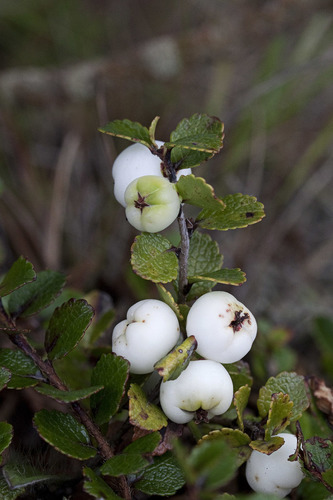
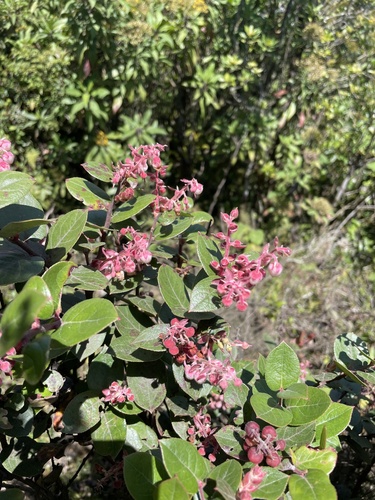
Corema album
(L.) D. Don.
Portuguese crowberry
iNaturalist· cc-by-nc-sa
(c) Alexandre Moleiro, some rights reserved (CC BY-NC-SA)
iNaturalist· cc-by-nc
(c) David Claro, some rights reserved (CC BY-NC)
iNaturalist· cc-by
(c) zebedeugalinha, some rights reserved (CC BY)
Summary
Source: WikipediaCorema album, the Portuguese crowberry (Portuguese: camarinha; Galician: camariña); Spanish: camarina; French: camarine, is a species of flowering plant in the family Ericaceae endemic to the Iberian Peninsula, Aquitaine, and the Azores (sub-species), where it may also be considered a different species. Its white berries are known to have been consumed by people in the Iberian Peninsula at least since the Middle-Ages. The only other species of the same genus is Corema conradii, found in North America.
Description
A compact evergreen shrub reaching 0.3 meters tall, hardy to UK zone 8. Grows in light sandy to medium loamy, well-drained soils with mildly to very acid pH. Tolerates semi-shade to full sun and adapts to dry or moist conditions. Dioecious species requiring both male and female plants for seed production; not self-fertile.
Edible Uses
The fruit can be eaten raw or cooked.
Traditional Uses
The fruit can be eaten raw or cooked.
This uses section is brief — help expand it
Medicinal Uses
None known.
Distribution
It is a Mediterranean climate plant. It suits USDA hardiness zones 7-10. It grows in sand dunes and near the coast.
Where It Grows
Europe, Mediterranean, Portugal, Spain,
Propagation
Seed is best sown as soon as it is ripe in a cold frame. Stored seed requires 5 months of warm stratification followed by 3 months at 5°C. Prick seedlings into individual pots once large enough to handle and grow on in the greenhouse through at least their first winter. Plant out into permanent positions in late spring or early summer, after the last expected frosts. Cuttings of half-ripe wood can be taken in July/August in a frame. Cuttings of mature wood from the current year's growth can be taken in November in a frame.
Other Uses
None known.
References (1)
- Plants for a Future database, The Field, Penpol, Lostwithiel, Cornwall, PL22 0NG, UK. http://www.scs.leeds.ac.uk/pfaf/