Coprosma quadrifida
(Labill.) Robinson
Prickly Currant Bush, Native currant
iNaturalist· cc-by-nc-sa
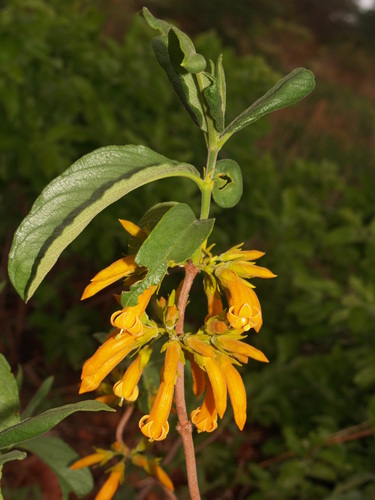
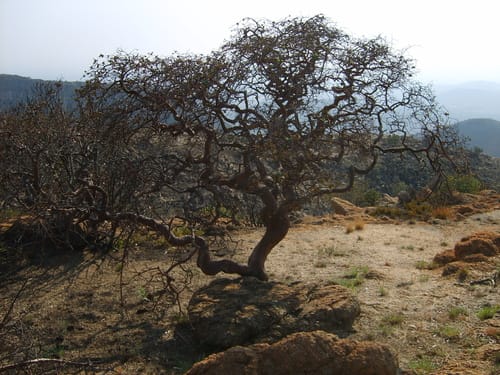
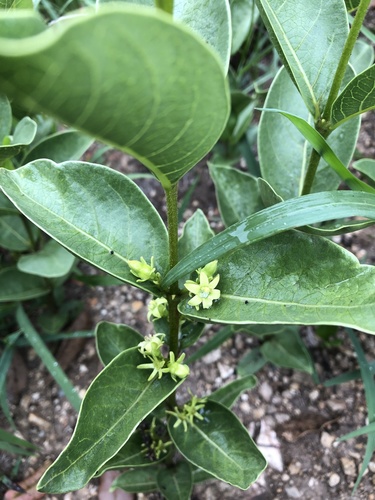
(c) Reiner Richter, some rights reserved (CC BY-NC-SA), uploaded by Reiner Richter
iNaturalist· cc-by-nc
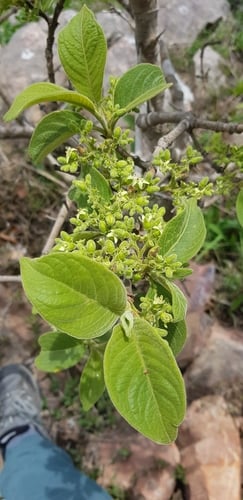
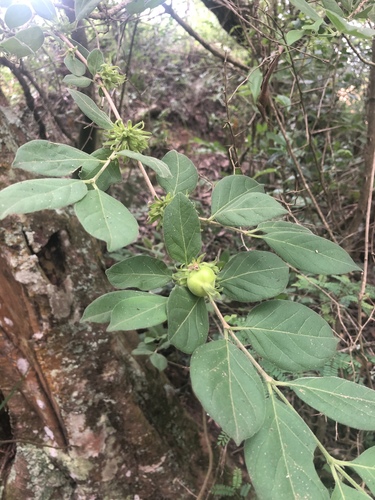
(c) Melvin Xu, some rights reserved (CC BY-NC)
iNaturalist· cc-by-nc
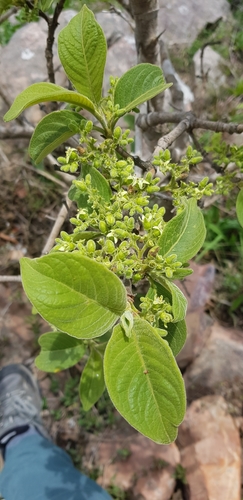
(c) Melvin Xu, some rights reserved (CC BY-NC)
Summary
Source: WikipediaCoprosma quadrifida is a dioecious shrub of the family Rubiaceae native to southeastern Australia. First described as Canthium quadrifidum by Labillardiere, it was given its current name by B. L. Robinson in 1910. Typically found at damp sites within woodlands, Eucalyptus forests or cool-temperate rainforests, it prefers sheltered slopes or sites near water sources. They are able to withstand frost and are salt tolerant. The species is also known as the Prickly Currant Bush.
Description
A prickly shrub about 2 m high. It often has many stems. It grows 2-4 m high and spreads 1-2 m wide. The branches are spiny. The leaves are 0.5-1.2 cm long by 0.3-0.5 cm wide. They are sword shaped and thin textured. The male and female flowers are on separate plants. The flowers are 0.4 cm long. The occur singly on the ends of short branches. They are green. The fruit is fleshy with a hard stone inside. It is 0.5-0.8 cm long and bright red.
Edible Uses
The fruit are astringent and slightly sweet, and can be used in puddings, pies, cakes and tarts. The seeds have been used as a coffee substitute.
Traditional Uses
The fruit can be used in puddings, pies, cakes and tarts. They are astringent and slightly sweet.
This uses section is brief — help expand it
Distribution
It is a temperate plant. It occurs in cool, moist forests and gullies. In Tasmania it grows from sea level to 500 m altitude. It is drought and frost resistant. On Mt Roland. It suits hardiness zones 8-10. Melbourne Botanical Gardens. Tasmania Herbarium. Arboretum Tasmania.
Where It Grows
Australia*, Tasmania*,
Cultivation
Plants can be grown from seed or stem cuttings.
Notes
There are about 90 Coprosma species.
Synonyms
Also Known As
Moor, Morr
References (20)
- Bodkin, F., 1991, Encyclopedia Botanica. Cornstalk publishing, p 280
- Cherikoff V. & Isaacs, J., The Bush Food Handbook. How to gather, grow, process and cook Australian Wild Foods. Ti Tree Press, Australia p 194
- Collier, P., 1992, Rainforest Plants of Tasmania. Plant Identikit. Society for growing Australian Plants. Tasmania. p 53
- Cribb, A.B. & J.W., 1976, Wild Food in Australia, Fontana. p 26
- Curtis, W.M., 1963, The Students Flora of Tasmania Vol 2 p 268
Show all 20 references Hide references
- De Angelis, D., 2005, Aboriginal Plant Use of the Greater Melbourne Area. La Trobe University Environment Collective
- Elliot, W.R., & Jones, D.L., 1984, Encyclopedia of Australian Plants suitable for cultivation. Vol 3. Lothian. p 86
- Etherington, K., & Imwold, D., (Eds), 2001, Botanica's Trees & Shrubs. The illustrated A-Z of over 8500 trees and shrubs. Random House, Australia. p 224
- Gilfedder, L et al, 2003, The Nature of the Midlands. Midlands Bushweb. PO Box 156 Longford, Tasmania. p 103
- Hastings Advance Community College, 2017, Uses for Native Plants of the Mornington Peninsula. 86pp. p 34
- Hibbert, M., 2002, The Aussie Plant Finder 2002, Florilegium. p 72
- IRVINE,
- Plants for a Future database, The Field, Penpol, Lostwithiel, Cornwall, PL22 0NG, UK. http://www.scs.leeds.ac.uk/pfaf/ (As Coprosma billardieri)
- Proc. Amer. Acad. Arts 45:409. 1910
- Tasmanian Herbarium Vascular Plants list p 51
- Whiting, J. et al, 2004, Tasmania's Natural Flora. Tasmania's Natural Flora Editorial Committee PO Box 194, Ulverstone, Tasmania, Australia 7315 p 296
- Williams, J.B., Harden, G.J., and McDonald, W.J.F., 1984, Trees and shrubs in rainforests of New South Wales and Southern Queensland. Univ. of New England, Armidale. p 59
- Woolmore, E et al, 2002, King Island Flora: A Field Guide. p 70
- www.ceres.org.au/bushfoodcatalogue
- Zola, N., & Gott, B., 1992, Koorie Plants Koorie People. Koorie Heritage Trust. p 34