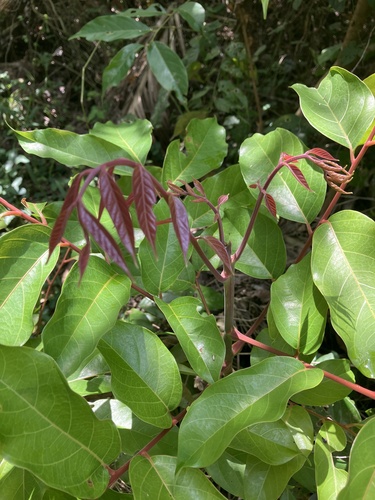
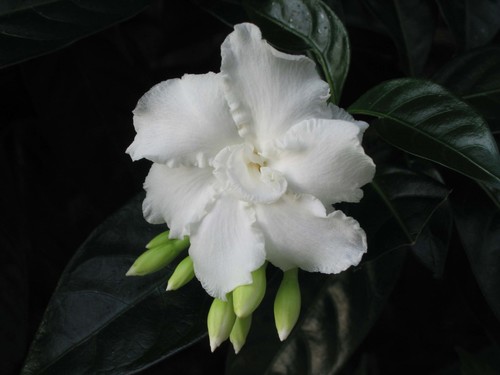
Funastrum clausum
(Jacq.) Schltr.
White twinevine
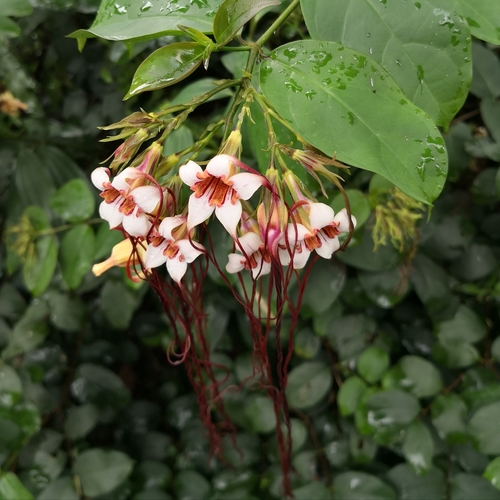
iNaturalist· cc-by-sa
(c) Bob Peterson, some rights reserved (CC BY-SA)
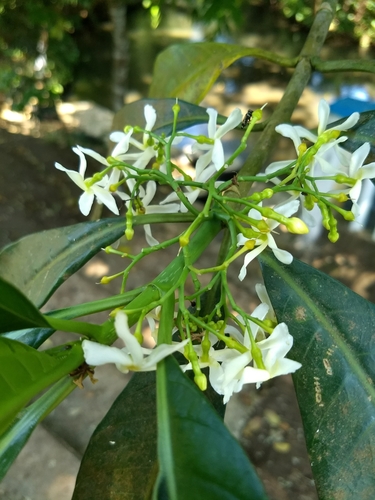
iNaturalist· cc-by-nc
(c) jrebman, some rights reserved (CC BY-NC), uploaded by jrebman
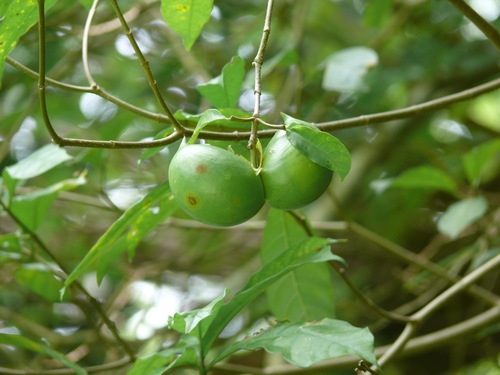
iNaturalist· cc-by-nc
(c) Arles García, some rights reserved (CC BY-NC), uploaded by Arles García
Summary
Source: WikipediaFunastrum clausum, commonly known as white twinevine, is a species of flowering plant in the dogbane family, Apocynaceae. It is native to southern Florida and Texas in the United States, Mexico, the Caribbean, Central America and South America as far south as Paraguay.
Description
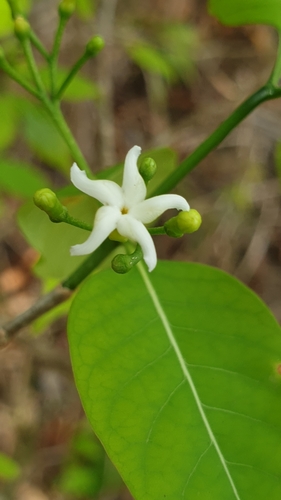
A climber. The leaves are 3-9 cm long by 0.3-3 cm wide. The flowers are in large clusters.
This description is brief — help expand it
Edible Uses
The young fruit are cooked as a vegetable, with tender fruit being selected for this purpose.
Traditional Uses
The young fruit are cooked as a vegetable. Tender fruit are chosen.
This uses section is brief — help expand it
Distribution
It is a subtropical plant. It grows in swamps.
Where It Grows
Argentina, Bahamas, Belize, Bolivia, Brazil, Central America, Colombia, Costa Rica, Cuba, Dominican Republic, Ecuador, El Salvador, French Guiana, Guatemala, Guyana, Haiti, Honduras, India, Jamaica, Mexico, Nicaragua, Panama, Paraguay, Peru, North America, South America*, Suriname, Trinidad-Tobago, Uruguay, USA, Venezuela,
Notes
Also put in the family Asclepiadaceae. Several Sarcostemma have been changed to Cynanchum.
Synonyms
Also Known As
Hu'ta, Sayami, Supu'a mi, Tahsa
References (5)
- Arenas, P. and Scarpa, G. F., 2006, Edible wild plants of the Chorote Indians, Gran Chaco, Argentina. Botanical Journal of the Linnean Society. Vol. 153 (1): pp 73-85
- Kew Plants of the World Online
- Montani, M. C. & Scarpa, G. F., 2016, Recursos vegetales y prácticas alimentarias entre indígenas tapiete del noreste de la provincia de Salta, Argentina. Darwiniana, nueva serie vol.4 no.1 San Isidro jul. 2016
- Roa, J. A. G. & Boada, D. S. G., 2018, Fundación para el Fortalecimiento de la Fruticultura y Plantas Alimenticias no Convencionales en Colombia.
- Scarpa, G. F., 2009, Wild food plants used by the indigenous peoples of South American Gran Chaco: A general synopsis and intercultural comparison. Journal of Applied Botany and Food Quality 83:90-101