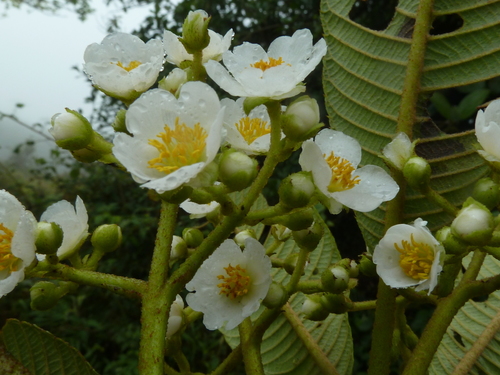
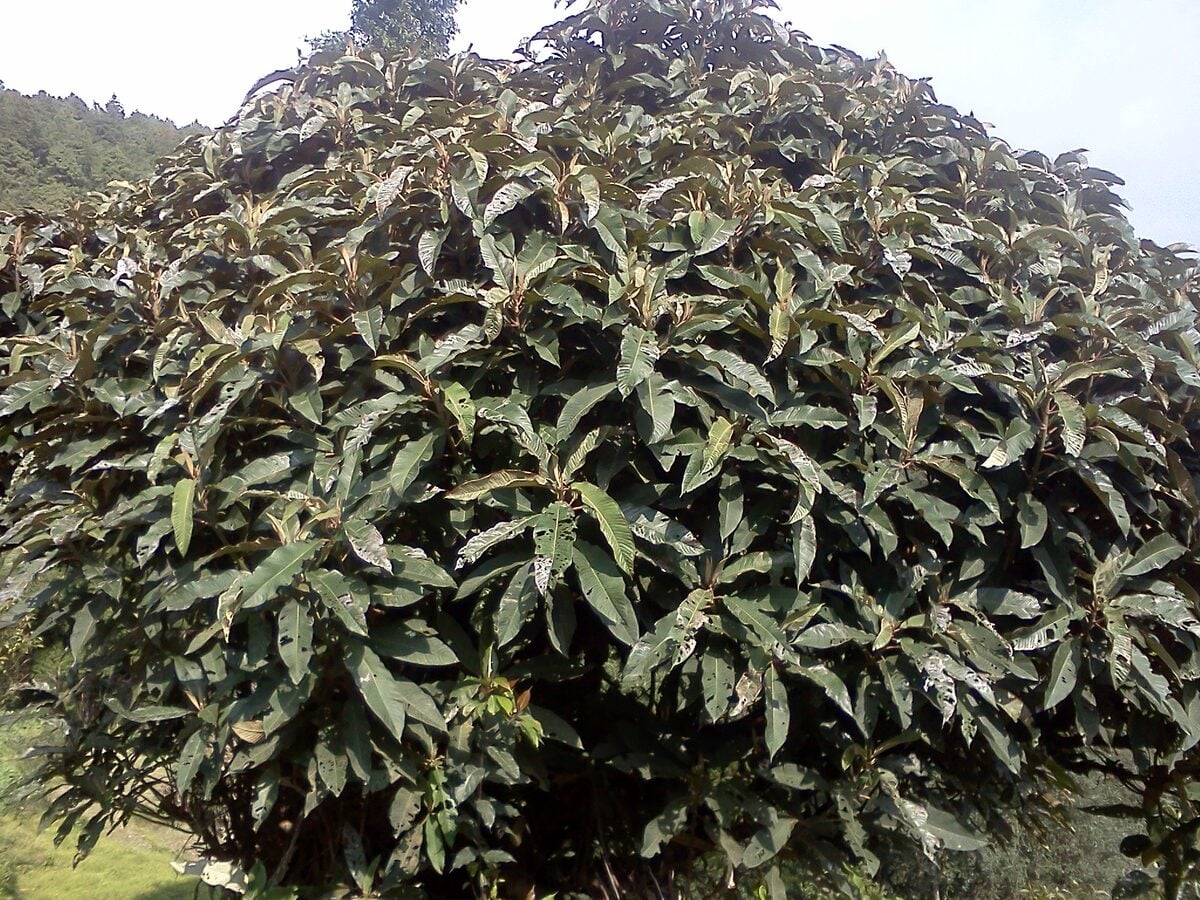
Actinidia polygama var. lecomtei
(Nakai)New name
gbif· cc0
Conveyor Belt
gbif· cc0
Conveyor Belt
gbif· cc0
Conveyor Belt
Summary
Source: WikipediaActinidia polygama (also known as silver vine, matatabi and cat powder) is a species of kiwifruit in the family Actinidiaceae. It grows in the mountainous areas of Korea, Japan and China at elevations between 500 and 1,900 metres (1,600 and 6,200 ft).
Description
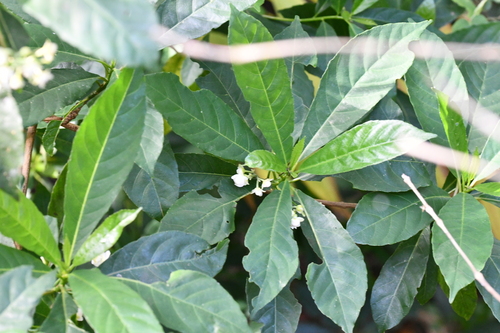
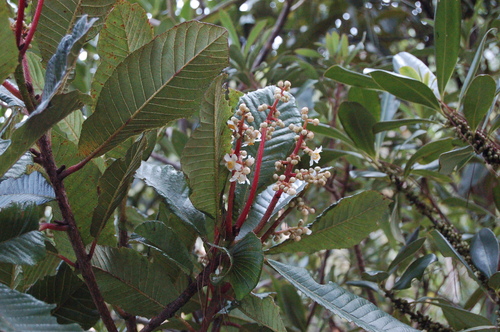
A climber 5 m tall. It has single and both sex flowers on the one plant. The fruit are 2.5 cm across.
This description is brief — help expand it
Edible Uses
The fruit in the "acorn" shape can be salted and eaten raw, fried in oil, added to rice, or mixed with sesame seeds and mayonnaise to top salads. The fruit may also be fermented to make Matatabi sake and miso, fermented into a fruit wine, or extracted for juice. The leaves, buds, and stems can also be ground into a powder or cut, steamed, and steeped to make tea. Adding mint or sugar can give variations in the tea.
Traditional Uses
The fruit are eaten raw or cooked.
This uses section is brief — help expand it
Medicinal Uses
Silver vine has been used for its medicinal benefits for centuries. In China, silver vine was used as a preventive health aid, and is still commonly used as an alternative therapy for hypertension, arthritic pain, and was investigated for potential to induce apoptosis in in vitro promyelocytic leukemia. In traditional Chinese and Japanese medicine, it has been used for a wide range of health problems, including: In Korean Buddhism, silver vine was soaked in traditional Korean sauces and used for diuresis, alleviation of pain, hypertension, genital troubles, and bronchitis. In ancient times, travelers in Japan used the fruit of silver vine to regain energy. Silver vine leaves also have a high content of flavonoids, terpenoids, saponins, beta-carotene, vitamin C and vitamin E.
Distribution
It grows naturally in Western China in thickets, 1350 - 2100 metres in W. Hupeh, Szechuan and S. Shensi Provinces.
Where It Grows
Asia, China,
Notes
There are 40-60 Actinidia species. The Actinidiaceae are a mainly tropical family.
Synonyms
References (1)
- Plants for a Future database, The Field, Penpol, Lostwithiel, Cornwall, PL22 0NG, UK. http://www.scs.leeds.ac.uk/pfaf/