Saurauia napaulensis
DC.
Gogan
wikimedia· cc-by-sa
सरोज कुमार ढकाल (via Wikimedia Commons)
wikimedia· cc-by
Taken by Fanghong (via Wikimedia Commons)
wikimedia· cc-by-sa
Krish Dulal (via Wikimedia Commons)
iNaturalist· cc-by-nc
(c) Shanta Budha-Magar, some rights reserved (CC BY-NC), uploaded by Shanta Budha-Magar
iNaturalist· cc-by-nc
(c) Basu Dev Neupane, some rights reserved (CC BY-NC), uploaded by Basu Dev Neupane
iNaturalist· cc-by-nc
(c) Wim Rubers, some rights reserved (CC BY-NC), uploaded by Wim Rubers
Summary
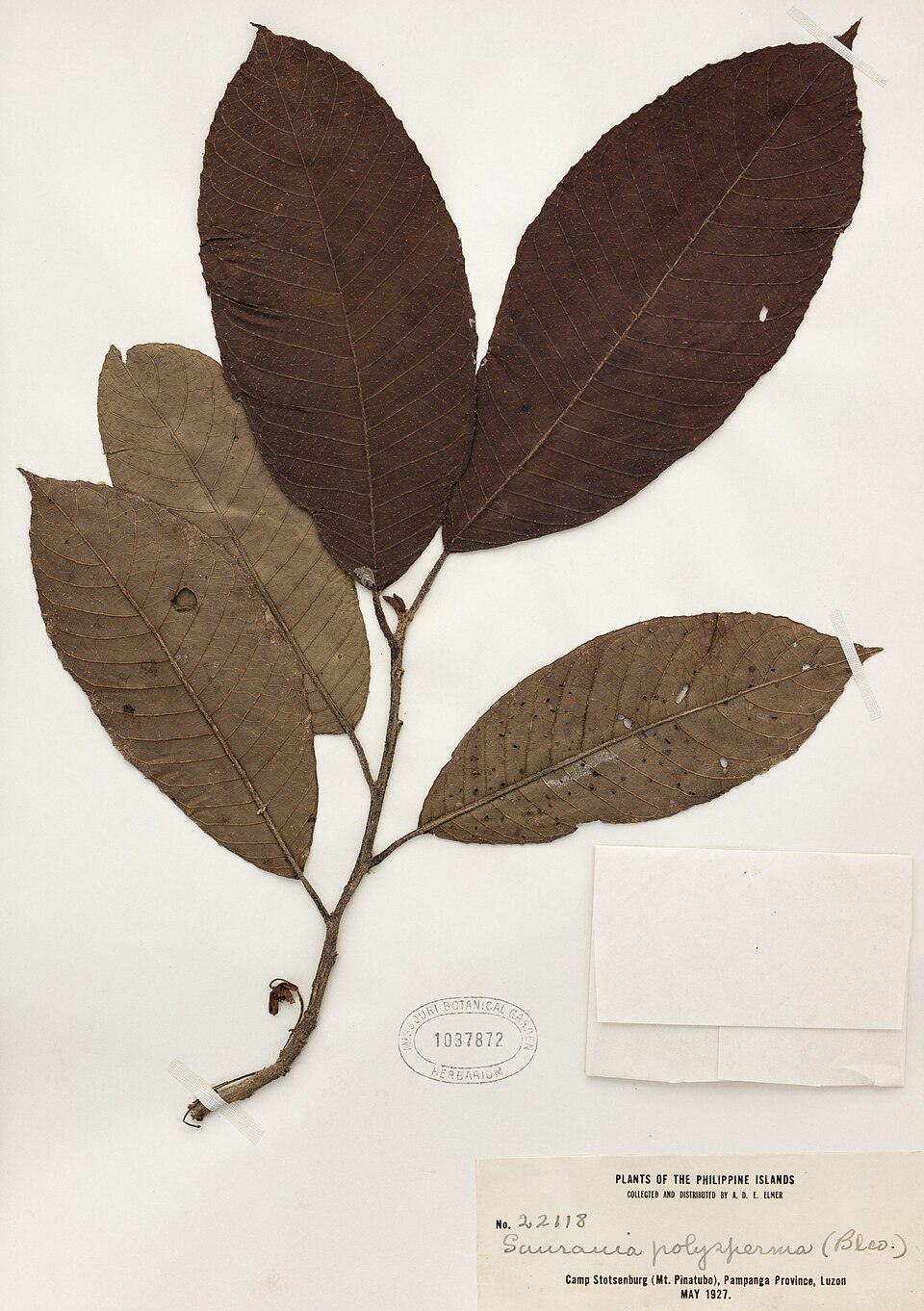
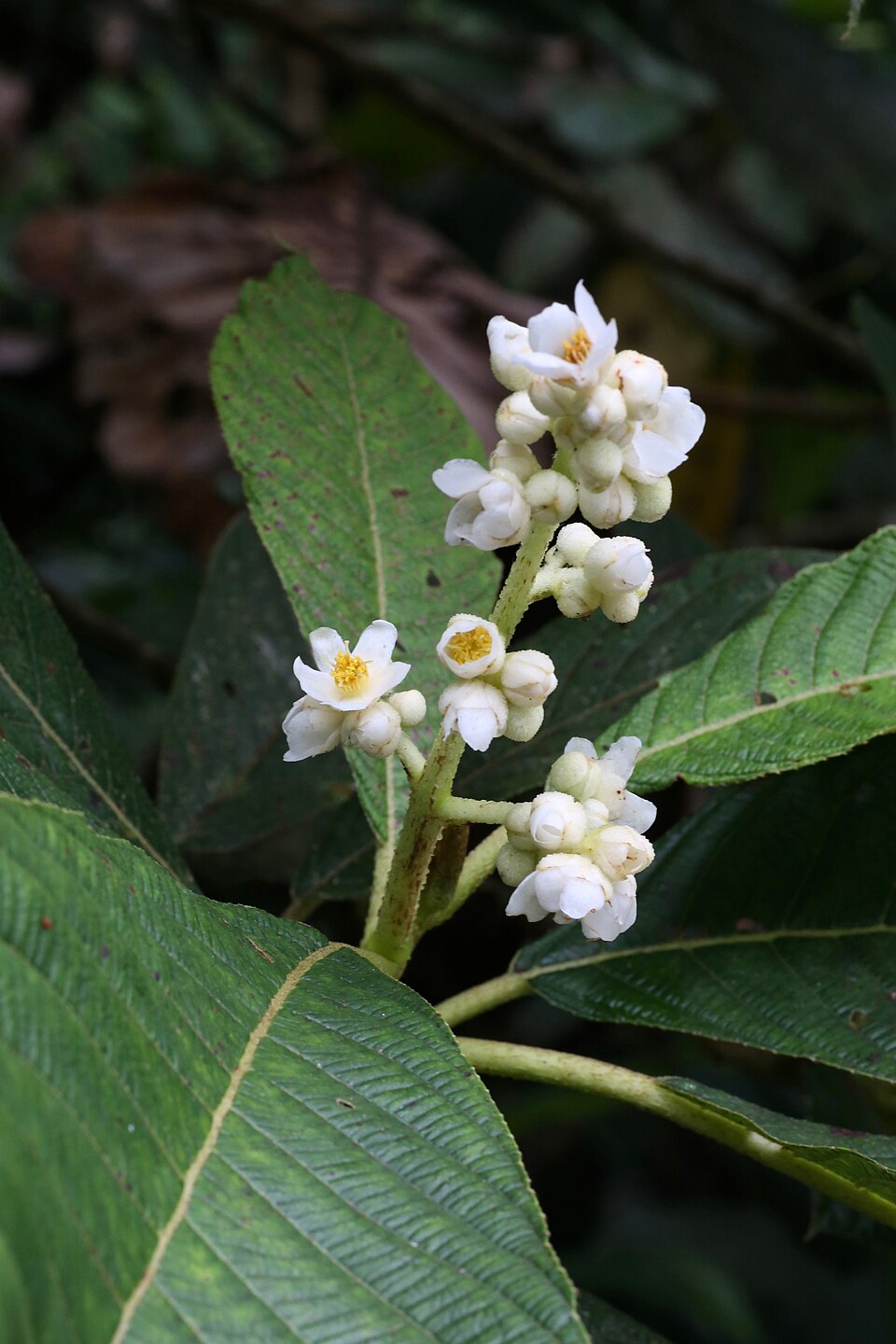
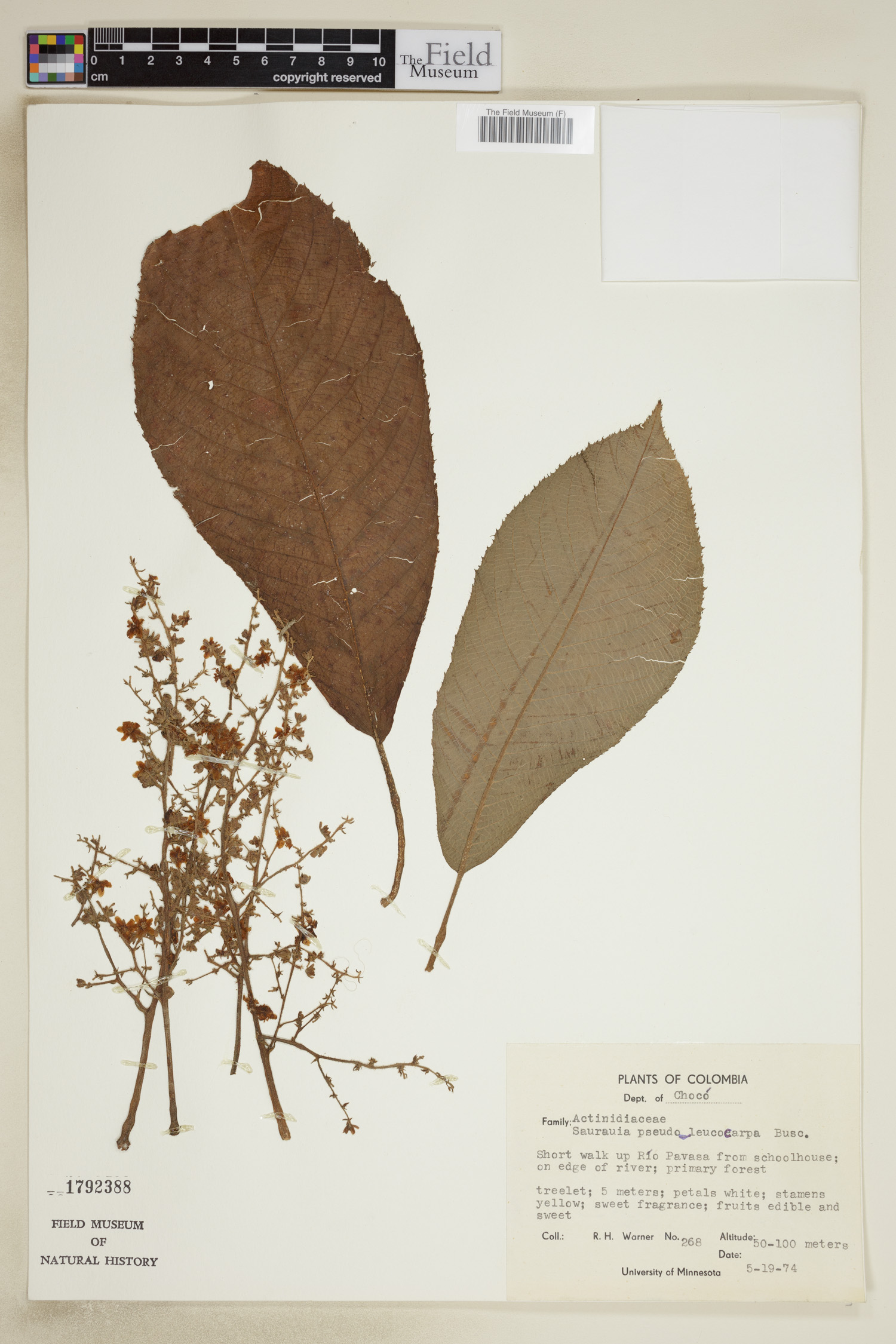
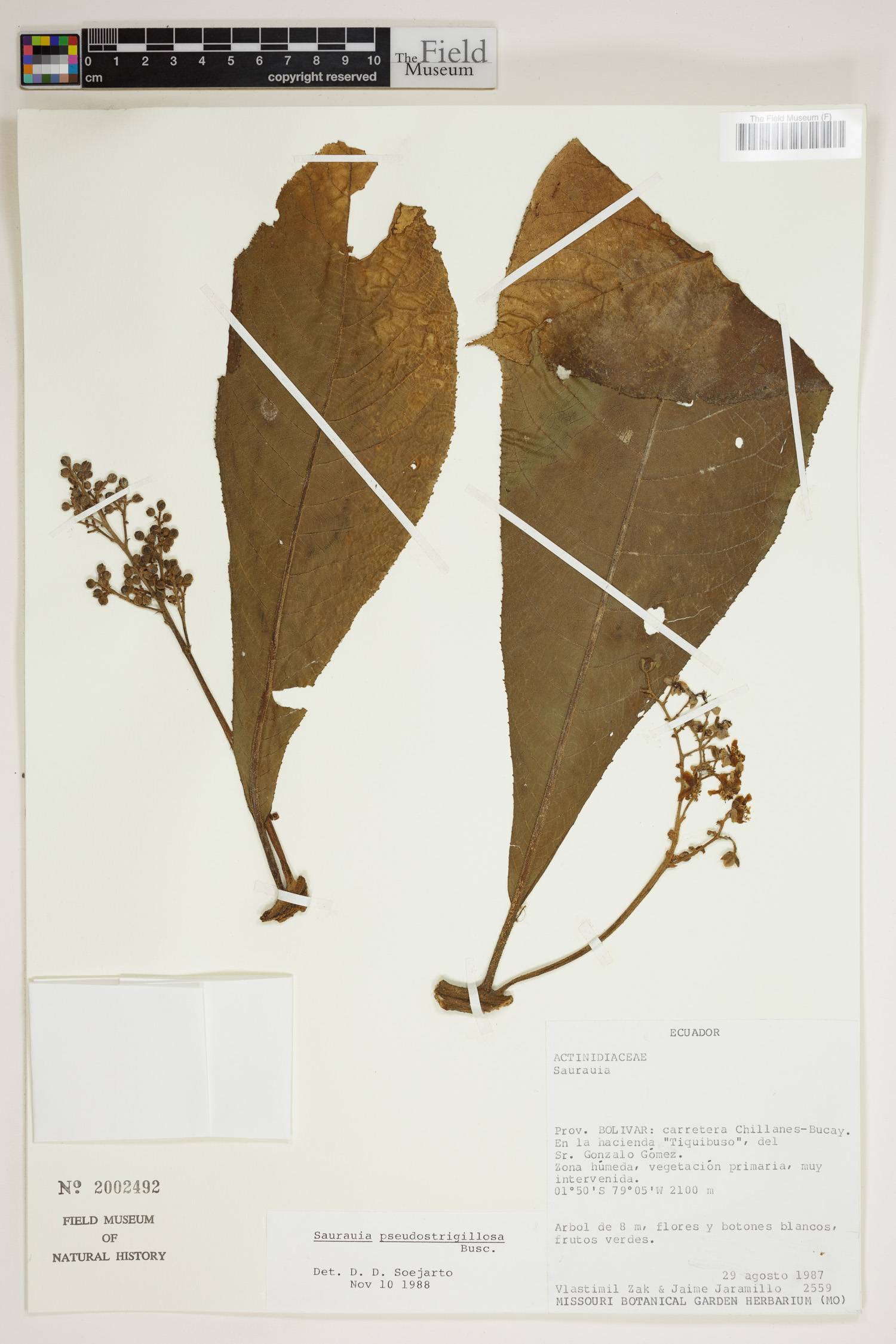
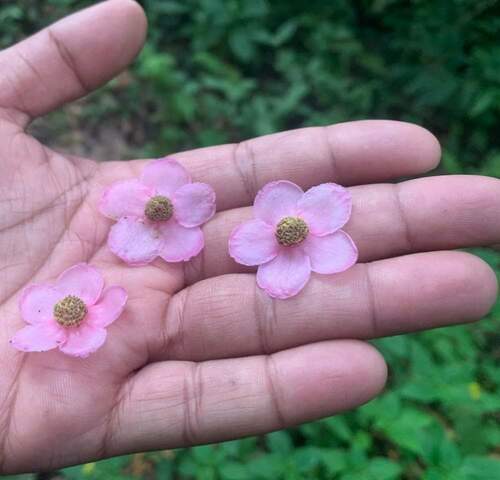
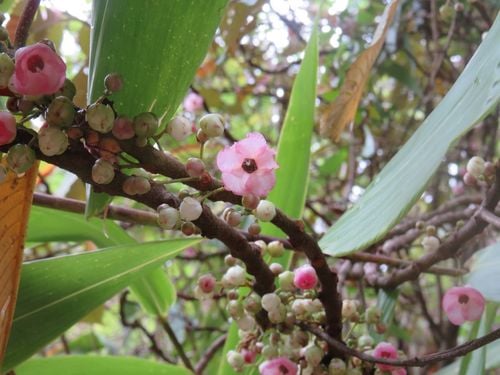
Source: WikipediaSaurauia napaulensis is a small to medium tree. Leaves 20–35 cm by 6.5–12 cm, apex acuminate, base rounded, margins with fine teeth; 30-35 pairs of straight prominent veins. Flowers about 1.5 cm in diameter, pink, in branched axillary inflorescences. Fruit a globose berry, about 8 mm in diameter.
Description
A large deciduous shrub or small tree. The bark is reddish and the wood soft and spongy. The leaves are large and narrowly oval and have rusty hairs underneath. The leaves are 18-36 cm long. There are prominent side veins and teeth along the edge. The young leaves are very rusty coloured and hairy. The flowers are pink and in clusters in the axils of the leaves. There are many flowers and they are about 1.3 cm across. They have 5 petals that have fringes at the edges. The fruit are green and have 4-5 lobes. They are fleshy with a sweet pulp and are edible.
Edible Uses
The ripe fruit are eaten raw, and the leaves are eaten as a vegetable.
Traditional Uses
The ripe fruit are eaten raw. The leaves are eaten as a vegetable.
This uses section is brief — help expand it
Distribution
It is a tropical and subtropical plant. In Yunnan in China it grows between 250-2,250 m altitude. It grows in secondary forest. In Melbourne Botanical gardens.
Where It Grows
Asia, Australia, Bhutan, China, Himalayas, India, Indochina, Laos, Malaysia, Myanmar, Nepal, Northeastern India, SE Asia, Sikkim, Thailand, Vietnam,
Other Uses
We have no information on the wood of this species, but the following is a general description of the wood from species in this genus. The wood is little used, except locally for fuel. It is a pale reddish brown throughout; not attractive; lustre rather low; odourless and tasteless; rather light, but firm, tough, and strong; texture medium; grain straight; easy to cut, saws finely woolly, is rather hairy under the plane; probably not durable. Useful locally for general carpentry and interior construction.
Production
In Sikkim fruit are available October to November.
Notes
There are 250 Saurauia species. They were previously in the Saurauiaceae family.
Also Known As
Da bu qiu, Gagun, Godanda, Gogan, Gogen, Gogina, Gogna, Gogun, Gokul, Gugna, Gungsning, Jia sten, Kasur-kung, Kasur, Kauji, Maraw, Numraw, Pangara, Pitiguo, Pleshi dhu, Ratendu, Soda nepal, Tiar-pui, Tonshi, Xiangya
References (22)
- Ambasta S.P. (Ed.), 2000, The Useful Plants of India. CSIR India. p 552
- Aryal, K. P., et al, 2018, Diversity and use of wild and non-cultivated edible plants in the Western Himalaya. Journal of Ethnobiology and Ethnomedicine (2018) 14:10
- Cheng, Z., et al, 2022, Ethnobotanical study on wild edible plants used by Dulong people in northwestern Yunnan, China. Journal of Ethnobiology and Ethnomedicine (2022) 18:3
- Dobriyal, M. J. R. & Dobriyal, R., 2014, Non Wood Forest Produce an Option for Ethnic Food and Nutritional Security in India. Int. J. of Usuf. Mngt. 15(1):17-37
- Gardner, S., et al, 2000, A Field Guide to Forest Trees of Northern Thailand, Kobfai Publishing Project. p 63
Show all 22 references Hide references
- Ghorbani, A., et al, 2012, A comparison of the wild food plant use knowledge of ethnic minorities in Naban River Watershed Nature Reserve, Yunnan, SW China. Journal of Ethnobiology and Ethnomedicine; 8:17
- Ghosh, C. & Das A. P., 2011, Some useful and poisonous tea garden weeds from the Darjiling District of West Bengal, India. Pleione 5(1): 91 - 114
- Hedrick, U.P., 1919, (Ed.), Sturtevant's edible plants of the world. p 596
- Jin, Chen et al, 1999, Ethnobotanical studies on Wild Edible Fruits in Southern Yunnan: Folk Names: Nutritional Value and Uses. Economic Botany 53(1) pp 2-14
- Kar, A., et al, 2013, Wild Edible Plant Resources used by the Mizos of Mizoram, India. Kathmandu University Journal of Science, Engineering and Technology. Vol. 9, No. 1, July, 2013, 106-126
- Khakurel, D., et al, 2021, Foods from the wild: Local knowledge, use pattern and distribution in Western Nepal. PLOS ONE.
- Kumar, Y J. et al, 1987, Further Contribution to the Ethnobotany of Meghalaya: Plants used by "War jaintia" of Jaintia Hill District. Econ. Tax. Bot. Vol 11 No. 1 pp 65-
- Luo, B., et al, 2019, Wild edible plants collected by Hani from terraced rice paddy agroecosystem in Honghe Prefecture, Yunnan, China. Journal of Ethnobiology and Ethnomedicine 15:56
- Mem. Soc. Phys. Geneve 1:421. 1822
- Polunin, O., & Stainton, A., 2006, Flowers of the Himalaya, Oxford India Paperbacks. p 59 (As Saurauia napaulensis)
- Savita, et al, 2006, Studies on wild edible plants of ethnic people in east Sikkim. Asian J. of Bio Sci. (2006) Vol. 1 No. 2 : 117-125
- Sawian, J. T., et al, 2007, Wild edible plants of Meghalaya, North-east India. Natural Product Radiance Vol. 6(5): p 421
- Singh, B., et al, 2012, Wild edible plants used by Garo tribes of Nokrek Biosphere Reserve in Meghalaya, India. Indian Journal of Traditional Knowledge. 11(1) pp 166-171
- Singh, V. B., et al, (Ed.) Horticulture for Sustainable Income and Environmental Protection. Vol. 1 p 219
- Sundriyal, M., et al, 1998, Wild edibles and other useful plants from the Sikkim Himalaya, India. Oecologia Montana 7:43-54
- Sundriyal, M., et al, 2004, Dietary Use of Wild Plant Resources in the Sikkim Himalaya, India. Economic Botany 58(4) pp 626-638
- Upreti, K., et al, 2010, Diversity and Distribution of Wild Edible Fruit Plants of Uttarakhand. Bioversity Potentials of the Himalaya. p 185