Tabernaemontana macrocalyx
Mull.Arg.
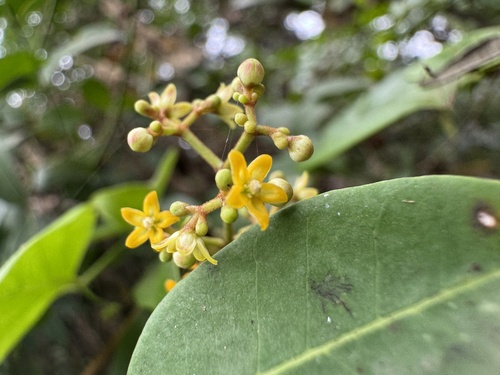
iNaturalist· cc-by-nc
(c) Sébastien SANT, some rights reserved (CC BY-NC), uploaded by Sébastien SANT
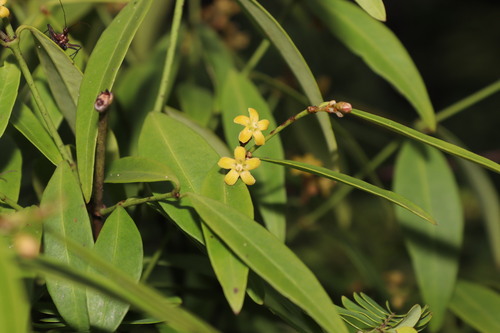
iNaturalist· cc-by-nc
(c) Sébastien SANT, some rights reserved (CC BY-NC), uploaded by Sébastien SANT
iNaturalist· cc-by-nc-nd
(c) Samuel Valdes, some rights reserved (CC BY-NC-ND), uploaded by Samuel Valdes
Summary
Source: WikipediaTabernaemontana macrocalyx is a species of plant in the family Apocynaceae. It is found in northern South America. The plant is sometimes harvested from the wild for local medicinal use.
Description
A shrub. It grows 2 m tall. The bark is green. The stems have 3 ribs when young. The leaves are narrowly oval and 20-25 cm long by 5 cm wide. The upper surface is green-brown and underneath they are whitish and velvety. The flowering shoots are erect and have 3-5 yellow flowers. The fruit are follicles they are yellow when ripe. They are 5 cm long by 1 cm wide. The seeds are brown.
Edible Uses
The fruit are eaten.
Medicinal Uses
The stem bark is macerated for the latex, which is employed as an hallucinogen. The bark of the stem and roots is decocted into a wash to treat abscesses and erysipelas, and is applied locally to the infected sores. Alkaloids in the stem-bark include coronaridine, heyneanine, voacangine and voacangarine.
Distribution
It is a tropical plant. It grows in open places.
Where It Grows
Bolivia, Brazil, Colombia, Ecuador, French Guiana, Guianas, Guyana, South America, Suriname,
Production
In Guyana it flowers throughout the year and produces fruit April to November.
Synonyms
Also Known As
Ailanlantan ananta, Kuayap-soil, Melu kanawy, Tseekat, Wasakusili
References (3)
- Allorge-Boiteau, L., Flora of the Guianas. 140 Apocynaceae p 50 (As Bonafousia morettii)
- Roa, J. A. G. & Boada, D. S. G., 2018, Fundación para el Fortalecimiento de la Fruticultura y Plantas Alimenticias no Convencionales en Colombia.
- Torre, de la L., et al, 2008, Enciclopedia de las Plantas Útiles del Ecuador. Herbario QCA. Pontificia Universidad Católica del Ecuador. p 176