ZZZ Conium maculatum
L.
Hemlock, Poison hemlock, Herb Bennet
No photos yet for ZZZ Conium maculatum
Sign in to contribute a photoDescription
A plant which usually grows over 2 years but can grow as an annual. It grows 2-2.5 m high. The stems are hollow. They are pale green with purple patches. The leaves at the base are in a ring. The leaves are pale green and large. They are divided twice. The segments are oblong or sword shaped. The edges have deep teeth. The leaf stalk sheaths the stem. The flowers have small white petals which curve inwards. The flowers are in a compound head. (The plant should not be confused with parsley nor the seeds with anise.) Both the fruit and leaves are poisonous.
Traditional Uses
CAUTION: This plant is poisonous. It has been used in medicine but should not be eaten. The poison called Cociine is destroyed by heat so in some places the leaves have been boiled and eaten as a vegetable. The poison is destroyed by drying. It has been reported as eaten in some locations. Cooking the leaves produces a nasty smell.
Medicinal Uses
It has been used historically in medicine, though use is not recommended. The poison (coniine) is destroyed by heat or drying, and in some locations the boiled leaves have been eaten as a vegetable, though this produces a nasty smell.
Known Hazards
Both the fruit and leaves are poisonous due to coniine alkaloid content. This plant should not be used as food. It can be invasive.
Distribution
It grows in subtropical and temperate places. It grows in cool, moist, sunny locations. Tasmania Herbarium.
Where It Grows
Africa, Asia, Australia, Britain, Dominican Republic, East Africa, Ethiopia, Europe, Georgia, Haiti, India, New Zealand, North America, Russia, South America, Tasmania, USA, West Indies, Zimbabwe,
Other Information
This plant should not be used as a food.
Notes
It can be invasive.
Synonyms
References (13)
- Ambasta, S.P. (Ed.), 2000, The Useful Plants of India. CSIR India. p 139
- Bremness, L., 1994, Herbs. Collins Eyewitness Handbooks. Harper Collins. p 243
- Bussman, R. W., et al, 2021, Unity in diversity—food plants and fungi of Sakartvelo (Republic of Georgia), Caucasus. Journal of Ethnobiology and Ethnomedicine (2021) 17:72 p 5
- Dashorst, G.R.M., and Jessop, J.P., 1998, Plants of the Adelaide Plains & Hills. Botanic Gardens of Adelaide and State Herbarium. p 114
- Esperanca, M. J., 1988. Surviving in the wild. A glance at the wild plants and their uses. Vol. 2. p 7
Show all 13 references Hide references
- Hedrick, U.P., 1919, (Ed.), Sturtevant's edible plants of the world. p 214
- Hussey, B.M.J., Keighery, G.J., Cousens, R.D., Dodd, J., Lloyd, S.G., 1997, Western Weeds. A guide to the weeds of Western Australia. Plant Protection Society of Western Australia. p 82
- Lamp, C & Collet F., 1989, Field Guide to Weeds in Australia. Inkata Press. p 81
- Loughmiller, C & L., 1985, Texas Wildflowers. A Field Guide. University of Texas, Austin. p 229
- Low, T., 1991, Wild Herbs of Australia and New Zealand. Angus & Robertson. p 65
- Marinelli, J. (Ed), 2004, Plant. DK. p 450
- Paczkowska, G. & Chapman, A.R., 2000, The Western Australian Flora. A Descriptive Catalogue. Western Australian Herbarium. p 146
- Plants for a Future database, The Field, Penpol, Lostwithiel, Cornwall, PL22 0NG, UK. http://www.scs.leeds.ac.uk/pfaf/
More from Apiaceae
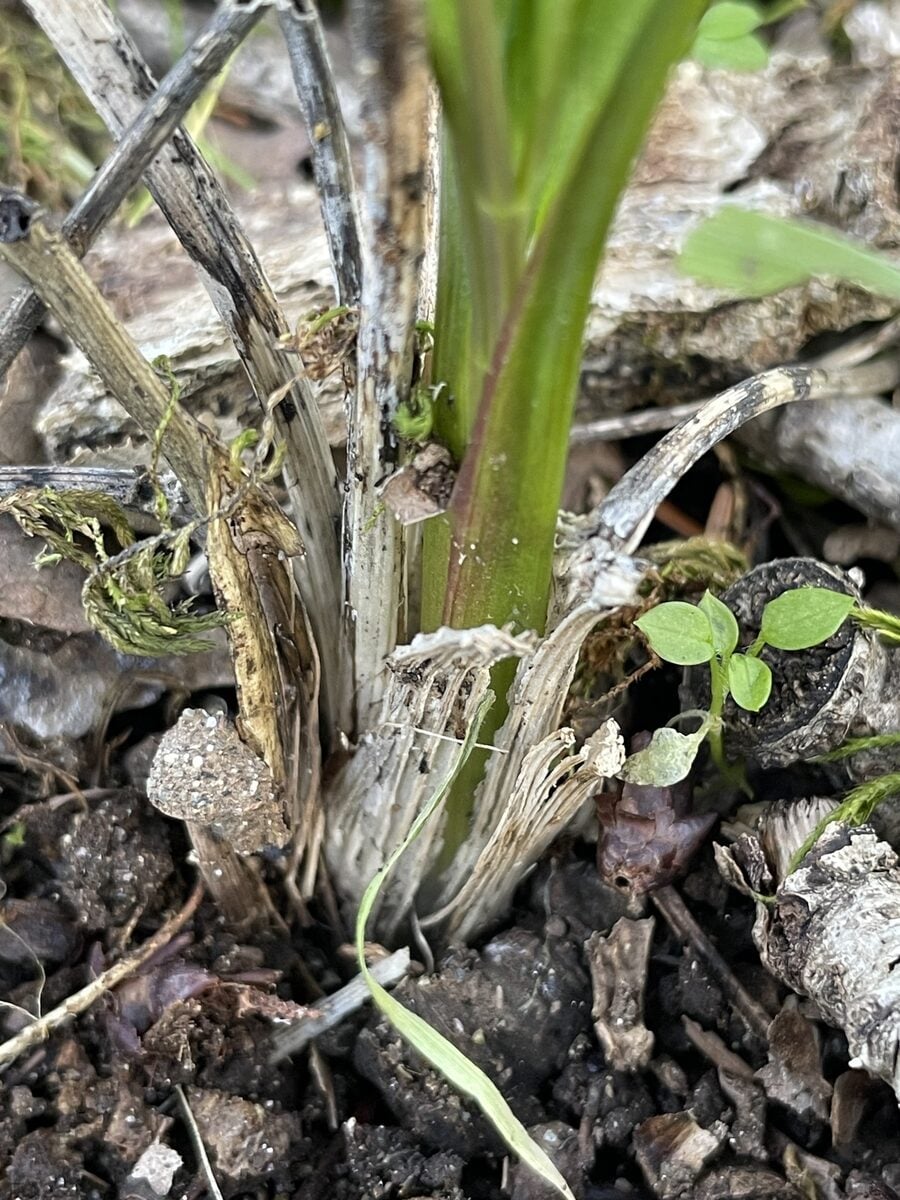
Lomatium nudicaule - (Pursh.)Coult.&Rose.
Pestle Parsnip, Barestem biscuitroot
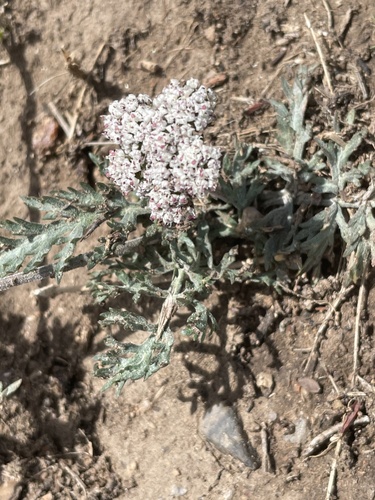
Lomatium orientale
Northern Idaho biscuitroot
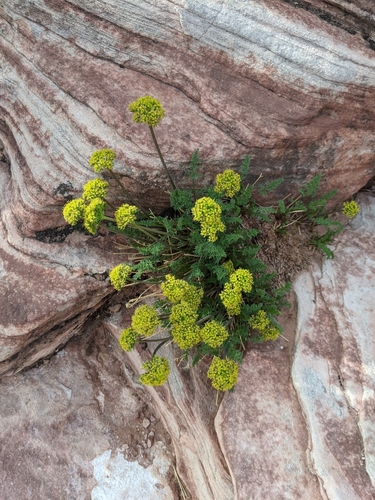
Lomatium parryi
Parry's biscuit root, Utah desert parsley
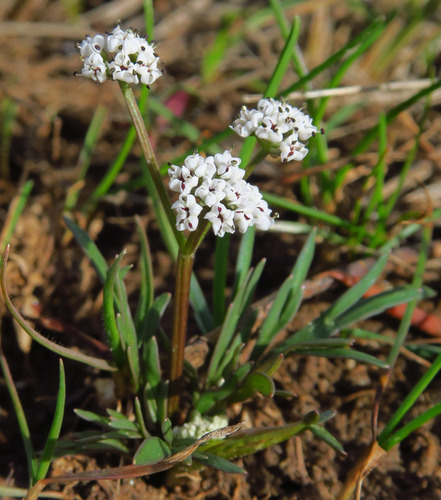
Lomatium piperi
Indian biscuitroot
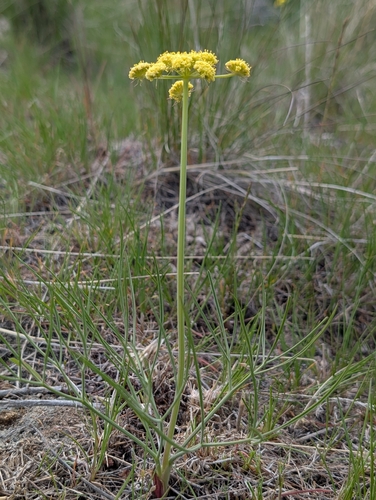
Lomatium simplex
Narrowleaf lomatium
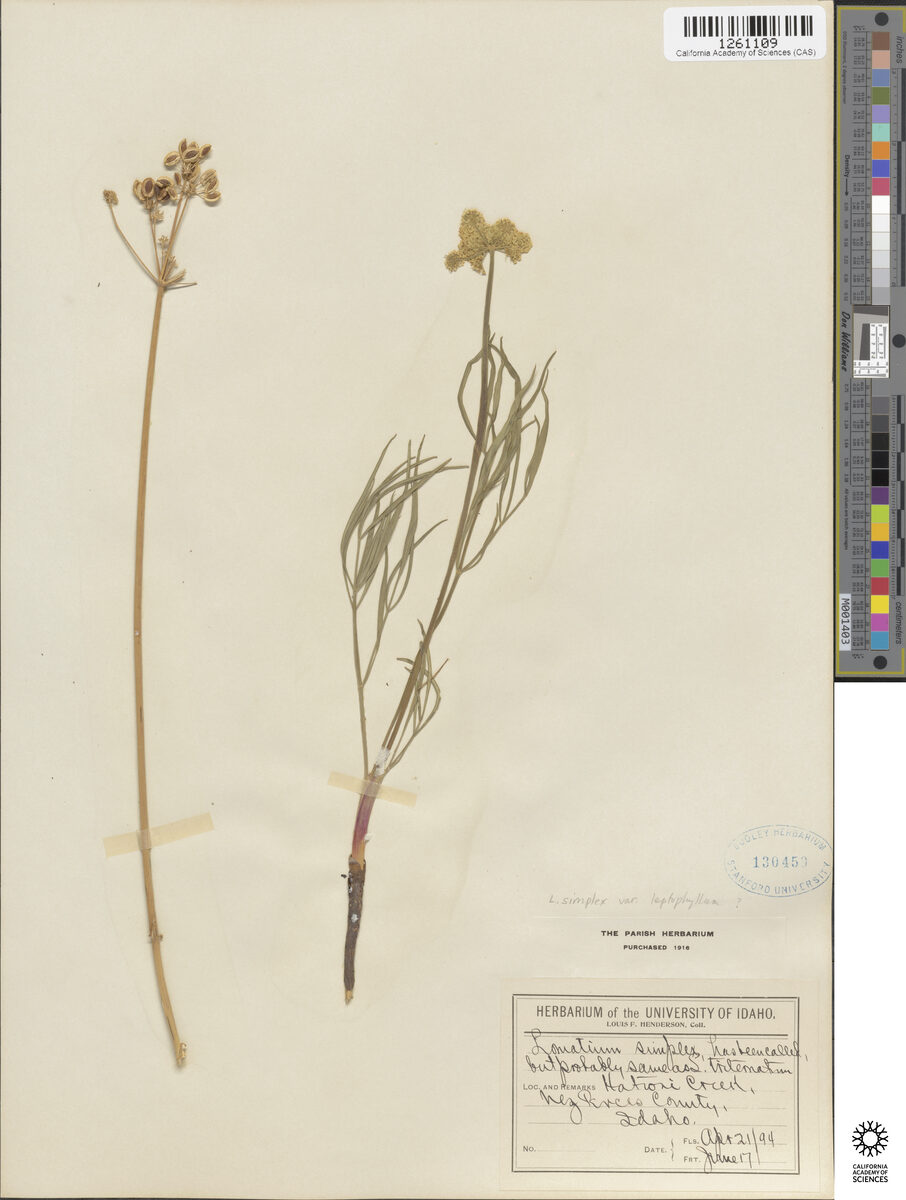
Lomatium simplex var. leptophyllum
Narrow leaf lomatium