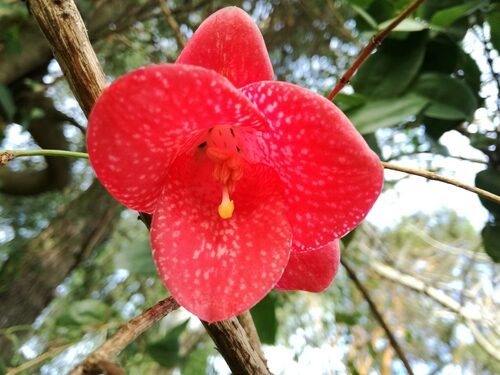
Philesia magellanica
J. F. Gmel.
Chilean bellflower
iNaturalist· cc-by-nc-nd
(c) danielaperezorellana, some rights reserved (CC BY-NC-ND)
iNaturalist· cc-by-nc
(c) Nicole Arcaya, some rights reserved (CC BY-NC)
Description
A shrub. It grows 1 m tall. The flowers are red and bell-shaped. They are 5 cm long.
This description is brief — help expand it
Edible Uses
The fruit are eaten raw.
Traditional Uses
The fruit are eaten raw.
This uses section is brief — help expand it
Distribution
It is a temperate plant. It grows in humid forests between 700-900 m above sea level in southern Chile.
Where It Grows
Argentina, Australia, Chile, South America, Tasmania,
Production
It is slow growing.
Synonyms
Philesia buxifolia Lam.
Also Known As
Chilote, Coicopihue, Coicopiu, Copihue, Copihuelo
References (4)
- Chamorro, M. F., & Ladio, A., 2020, Native and exotic plants with edible fleshy fruits utilized in Patagonia and their role as sources of local functional foods. BMC Complementary Medicine and Therapies. 20:155
- Leon-Lobos, P., et al, 2022, Patterns of Traditional and Modern Uses of Wild Edible Native Plants of Chile: Challenges and Future Perspectives. Plants (Basel) v 11 (6) Table S1
- Rapoport, E. H. & Ladio, A. H., 1999, Plantas comestibles. Bosque Volume 20 No. 2. ISSN 0314-8799
- Velasquez, P. & Montenegro, G., 2017, Chilean Endemic/Native Plant Resources as Functional and Superfoods. Chp. 6 in Superfood and Functional Food - An Overview of Their Processing and Utilization