Commelina communis
L.
Asiatic Dayflower
iNaturalist· cc-by-sa
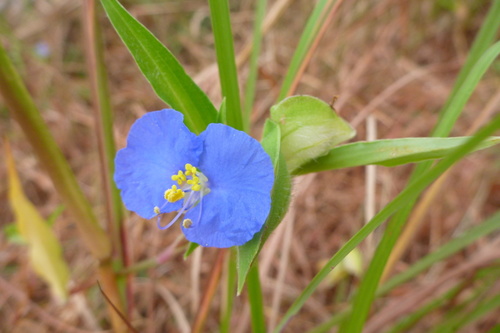
(c) NotAnonymous, some rights reserved (CC BY-SA)
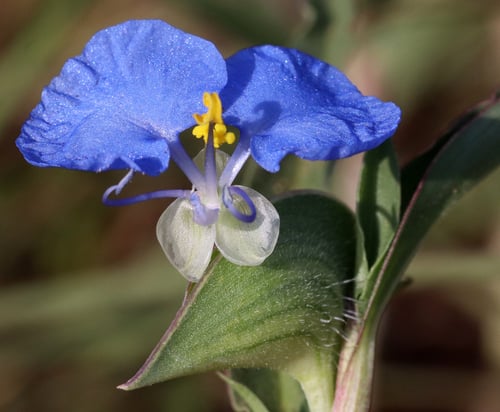
iNaturalist· cc-by
(c) Nathan Aaron, some rights reserved (CC BY)
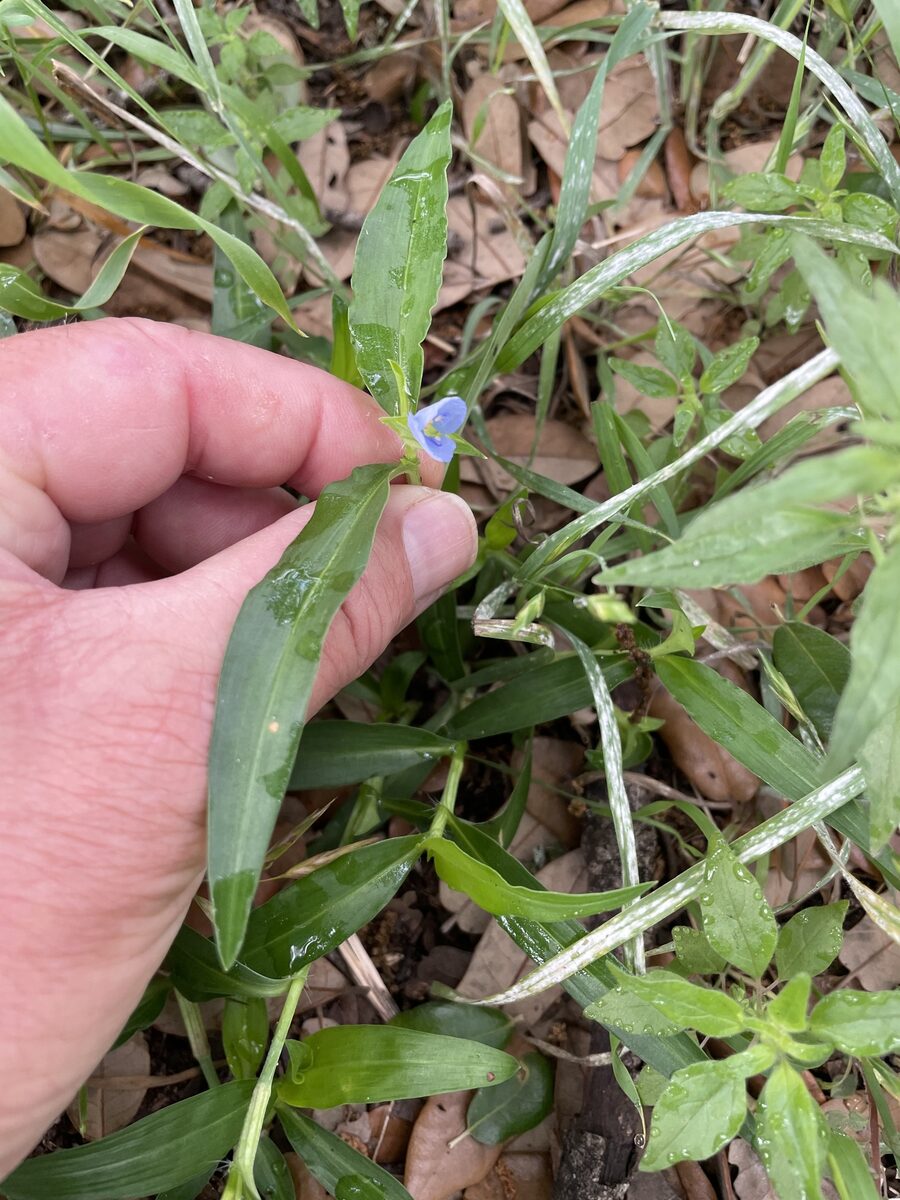
iNaturalist· cc-by
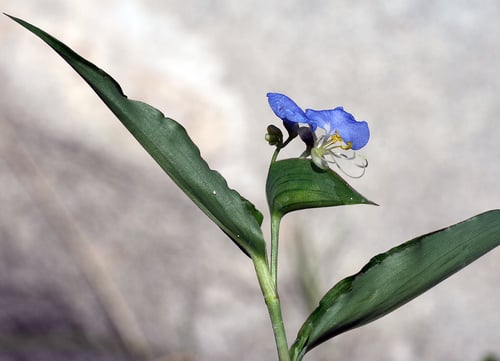
(c) Nathan Aaron, some rights reserved (CC BY)
Summary
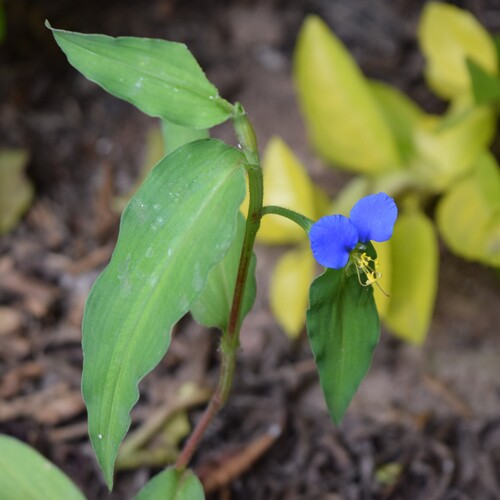
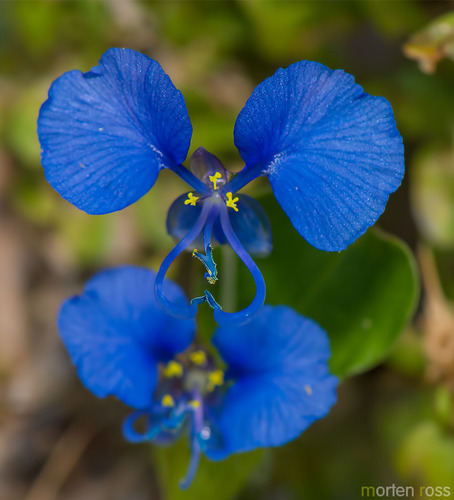
Source: WikipediaCommelina communis the Asiatic dayflower, is an herbaceous annual plant in the dayflower family. It gets its name because the blooms last for only one day. It is native throughout much of East Asia and northern parts of Southeast Asia. In China, the plant is known as yazhicao (simplified Chinese: 鸭 跖 草; traditional Chinese: 鴨跖草; pinyin: yāzhīcǎo), roughly translating to "duckfoot herb", while in Japan it is known as tsuyukusa (露 草, tsuyukusa), meaning "dew herb". It has also been introduced to parts of central and southeastern Europe and much of eastern North America, where it has spread to become a noxious weed. It is common in disturbed sites and in moist soil. The flowers emerge from summer through fall and are distinctive with two relatively large blue petals and one very small white petal. The Asiatic dayflower plant serves as the type species for its large genus. Linnaeus picked the name Commelina in honour of the two Dutch botanists of the Commelijn family, using the two large showy petals of Commelina communis to symbolise them. Linnaeus described the species in the first edition of his landmark work, Species Plantarum, in 1753. Long before the plant was studied in Europe, however, it had been used for generations in traditional Chinese medicine. The flowers have also been used in Japan to produce a dye and a pigment that was used in many world-renowned Ukiyo-e woodcuts from the 18th and early 19th centuries. In the modern era the plant has found limited use as a model organism in the field of plant physiology due to its complex pigment chemistry and the ease of viewing its stomata. The Asiatic dayflower is considered a weed both in areas where it was introduced and in certain parts of its native range. The flowers' interactions with pollinators have been well studied and have helped to support important hypotheses about pollination in the field of plant ecology. Recent research has also revealed that the Asiatic dayflower can bioaccumulate a number of metals, making it a candidate for revegetating and essentially cleaning spoiled copper mines. Several animals and fungi use the plant as a food source, with a few species feeding upon it exclusively.
Description
An annual herb with creeping stems. It grows 20-60 cm high. It can produce many branches that root at the nodes. The leaves are sword shaped and 4-9 cm long by 2 cm wide. It forms a sheath around the stem at the base. The flowers are bright blue. The 3 petals are not equal in size. There are 2 large ones and one small one. The upper 2 are blue and the lower one is white.
Edible Uses
Leaves, flowers, and young shoots can be eaten raw or cooked. They are best chopped finely and added to salads or prepared as a potherb. The flavour is sweet with a mucilaginous texture.
Traditional Uses
The leaves and tender shoots and flowers are eaten as a green vegetable. They are cooked. They are served with butter and salt and miso or rice. They can be chopped finely and added to salads. The seeds are eaten when food is scarce.
Medicinal Uses
The leaves are depurative, diuretic, and febrifuge. The plant is used as a throat gargle to relieve sore throats and tonsillitis. A decoction of the dried plant is used to treat bleeding, diarrhoea, and fever. Extracts of the plant have shown antibacterial activity.
Distribution
A tropical plant. It grows in humid places. It grows in wet soil. It grows in wetlands.
Where It Grows
Asia, Cambodia, China, India, Indochina, Japan, Korea, Laos, Malaysia, North America, Russia (Far East), SE Asia, Slovenia, Thailand, USA, Vietnam,
Cultivation
Prefers a light well-drained loam with added leafmold. Requires a sheltered position. This species is commonly cultivated as a vegetable in China. The plant can be invasive, the stems sprawling along the ground and rooting as they go.
Propagation
Seed — sow in March in a greenhouse. Germination usually takes 4–5 weeks at 20°C. Prick seedlings into individual pots when large enough to handle and plant out in late spring or early summer after the last expected frosts. Division in early spring, ensuring each portion has at least one growing bud. Cuttings taken during the growing season root very easily.
Other Uses
A bright blue dye is obtained from the petals.
Notes
It is used in medicine. There are about 230 Commelina species.
Synonyms
Also Known As
A tor, Dang dai, Danzhuye, Duck's tongue plant, Gangi gadda, Kannang keeray, Miandazi, Rau trai, Spider wort, Thai lai trang, Wa you, Yashecao, Ya song, Zhuyecao
References (24)
- Altschul, S.V.R., 1973, Drugs and Foods from Little-known Plants. Notes in Harvard University Herbaria. Harvard Univ. Press. Massachusetts. no. 184
- Ambasta, S.P. (Ed.), 2000, The Useful Plants of India. CSIR India. p 138
- Cao, Y., et al, 2020, Ethnobotanical study on wild edible plants used by three trans-boundary ethnic groups in Jiangcheng County, Pu’er, Southwest China. Journal of Ethnobiology and Ethnomedicine (2020) 16:66
- Chen, B. & Qiu, Z., Consumer's Attitudes towards Edible Wild Plants, Ishikawa Prefecture, Japan. p 23 www.hindawi.com/journals/ijfr/aip/872413.pdf
- Duke, J.A., 1992, Handbook of Edible Weeds. CRC Press. p 76
Show all 24 references Hide references
- Facciola, S., 1998, Cornucopia 2: a Source Book of Edible Plants. Kampong Publications, p 80
- Hedrick, U.P., 1919, (Ed.), Sturtevant's edible plants of the world. p 213
- Hong Deyuan; Robert A. DeFilipps, COMMELINACEAE, Flora of China
- Hu, Shiu-ying, 2005, Food Plants of China. The Chinese University Press. p 308
- Hwang, H., et al, 2013, A Study on the Flora of 15 Islands in the Western Sea of Jeollanamdo Province, Korea. Journal of Asia-Pacific Biodiversity Vol. 6, No. 2 281-310
- Hwang, HS, et al, 2014, Distribution characteristics of plant in the Ungseokbong Mountain, Gyeongsangnam-do, Korea. Journal of Asia-Pacific Biodiversity. 7(2014) e164-e178 (Also as var. angustifolia)
- Kang, Y., et al, 2012, Wild food plants and wild edible fungi in two valleys on the Qinling Mountains (Shaanxi, central China) Journal of Ethnobiology and Ethnomedicine; 9:26
- Loughmiller, C & L., 1985, Texas Wildflowers. A Field Guide. University of Texas, Austin. p 44
- Low, T., 1991, Wild Herbs of Australia and New Zealand. Angus & Robertson. p 102
- Ogle, B. M., et al, 2003, Food, Feed or Medicine: The Multiple Functions of Edible Wild Plants in Vietnam. Economic Botany 57(1): 103-117
- Plants for a Future database, The Field, Penpol, Lostwithiel, Cornwall, PL22 0NG, UK. http://www.scs.leeds.ac.uk/pfaf/
- READ,
- SHORTT,
- Sp. pl. 1:40. 1753
- Tanaka, Y. & Van Ke, N., 2007, Edible Wild Plants of Vietnam: The bountiful garden. Orchid books. p 67
- Valder, P., 1999, The Garden Plants of China. Florilegium. p 357
- WATT,
- Wujisguleng, W., & Khasbagen. K., 2010, An integrated assessment of wild vegetable resources in Inner Mongolian Autonomous Region, China. Journal of Ethnobiology and Ethnomedicine 6:34
- Zhang, Y., et al, 2014, Diversity of wetland plants used traditionally in China: a literature review. Journal of Ethnobiology and Ethnomedicine. 10:72