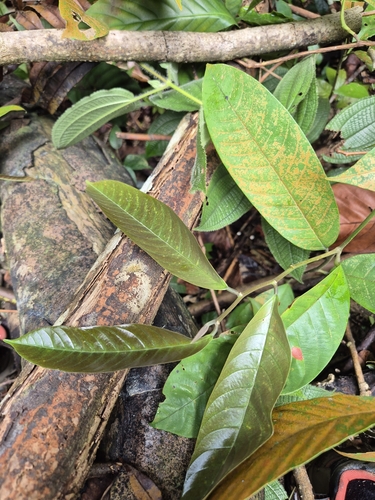
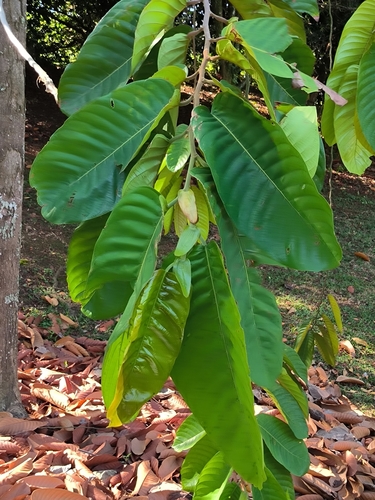
Vatica odorata
(Griff.) Symington
gbif· cc0
President and Fellows of Harvard College
Summary
Source: WikipediaVatica odorata is a tree in the family Dipterocarpaceae. The specific epithet odorata means 'scented', referring to the flowers.
Description
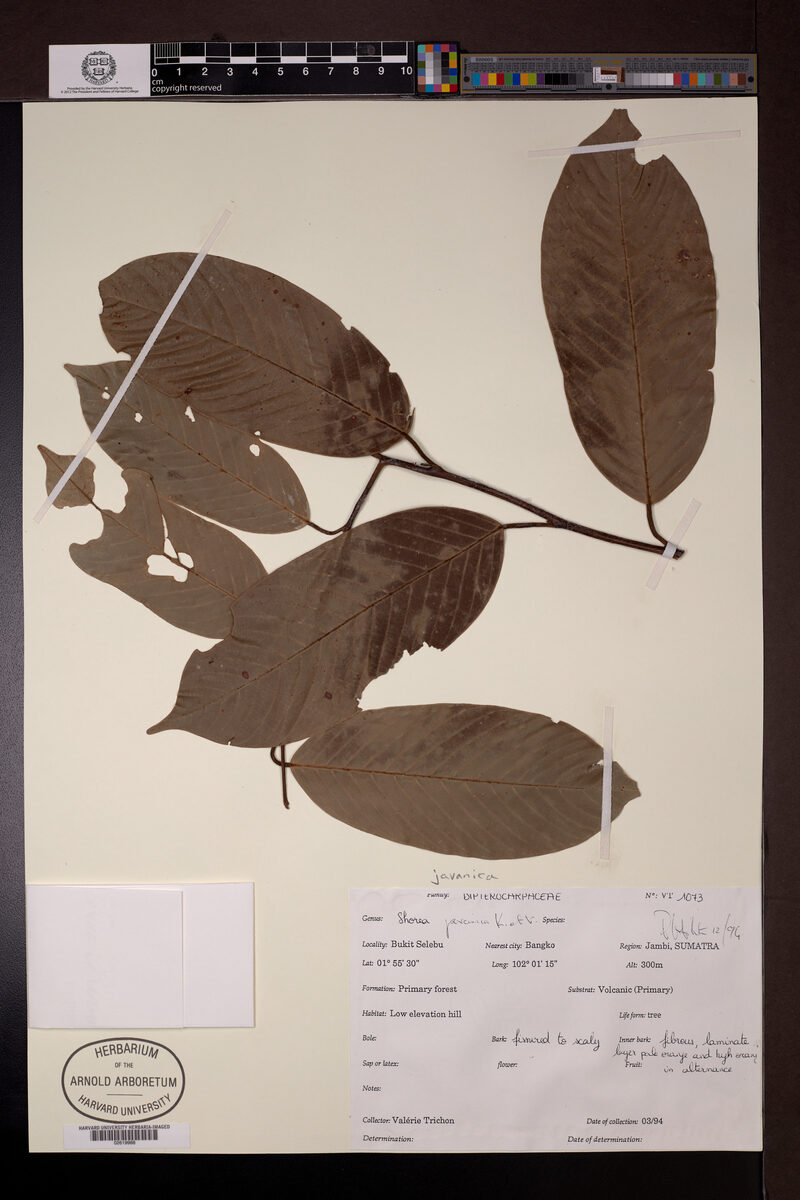
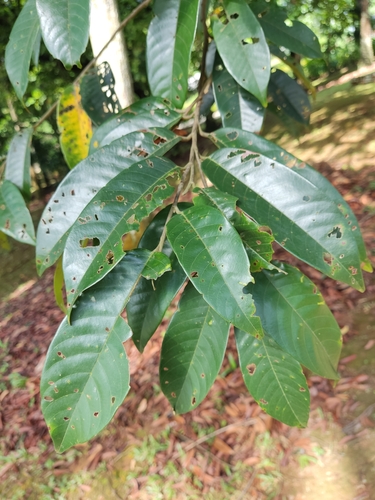
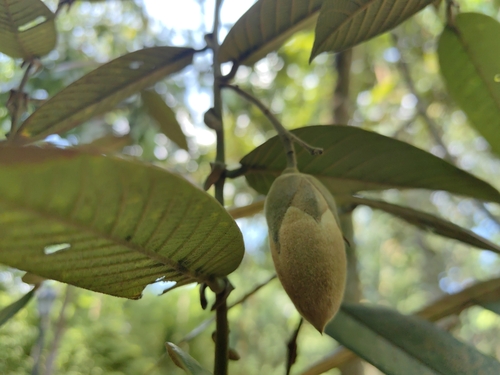
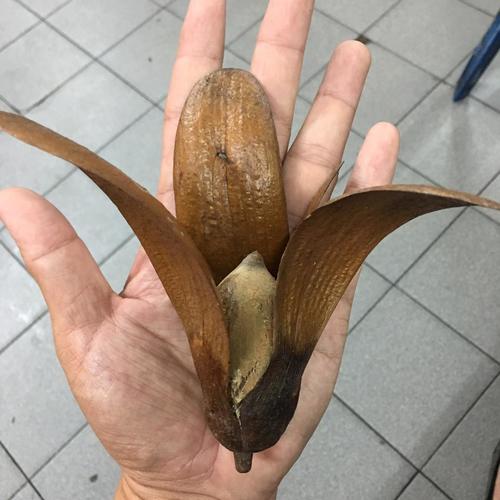
A tree. It grows 35 m tall. The trunk can be 40-100 cm across. The trunk is twisted. The bark is grey. The leaves are narrowly oval and 8-16 cm long by 3-6 cm wide. They are wedge shaped at the base and taper to the tip. The flowers are in groups in the axils of leaves or at the ends of branches. These are 10 cm long and hairy. The fruit are round and have a coating. There are 2 larger wings 4-7 cm long by 1-2 cm wide and then 3 shorter ones.
Distribution
It is a tropical plant. It grows between 300-900 m above sea level.
Where It Grows
Asia, Cambodia, China, Indochina, Laos, Malaysia, Myanmar, SE Asia, Thailand, Vietnam,
Cultivation
Young trees grow well in shade, but become light-demanding as they grow larger.
Propagation
Seed - Natural regeneration is very prolific under a forest cover of 70 - 90%.
Other Uses
The heartwood is brown; the sapwood greyish-white. The wood is hard and heavy, resistant to termites and insects. A valuable timber, it is much used in construction, making sleepers, bridges, ferry boats, and planks. We have no more information on the wood of this species. However, the following is a general description of the wood for members of this genus;- The heartwood is yellowish when fresh, turning light to deep red-brown upon exposure; it is generally not sharply demarcated from the lighter coloured sapwood. The texture is rather fine and even; the grain straight or shallowly interlocked; not lustrous; there is no distinctive taste or odour when dry. The heartwood, particularly that of the denser species, is rated as durable to very durable; with a good resistance to termites. It is generally reported to air season slowly, but with some warp and checking. Philippine species are reported to dry well with little degrade. The wood is said to be difficult to saw because of clogging due to gummy resins, otherwise it machines well to a smooth finish; turns well. The wood is used for purposes such as turnery, heavy construction, mining timbers, railroad crossties, boat construction; it is also suggested for flooring, interior joinery, and cabinetwork. Although slow growing, the tree is suitable for reforestation projects on (sandy) clay and sloping hill sides.
Production
It is slow growing.
Synonyms
Also Known As
Chik dong, Chrormas, Resak biabas, Si daeng, Tau
References (2)
- Turreira Garcia, N., et al, 2017, Ethnobotanical knowledgeof the Kuy and Khmer people in Prey Lang, Cambodia. Cambodian Journal of Natural History 2017 (1): 76-101
- Van Sam, H. et al, 2004, Trees of Laos and Vietnam: A Field Guide to 100 Economically or Ecologically Important Species. Blumea 29 (2004) 201-349