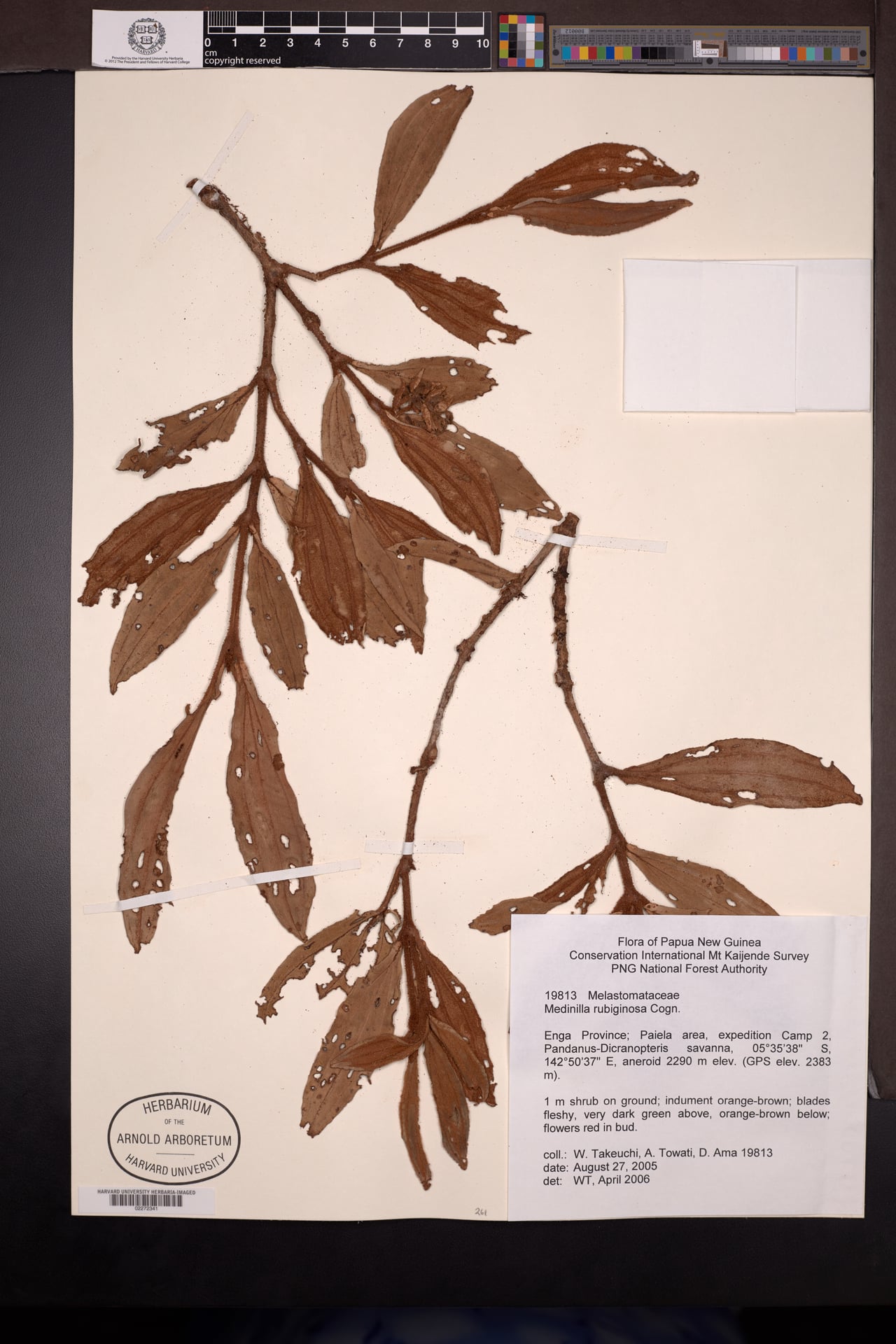
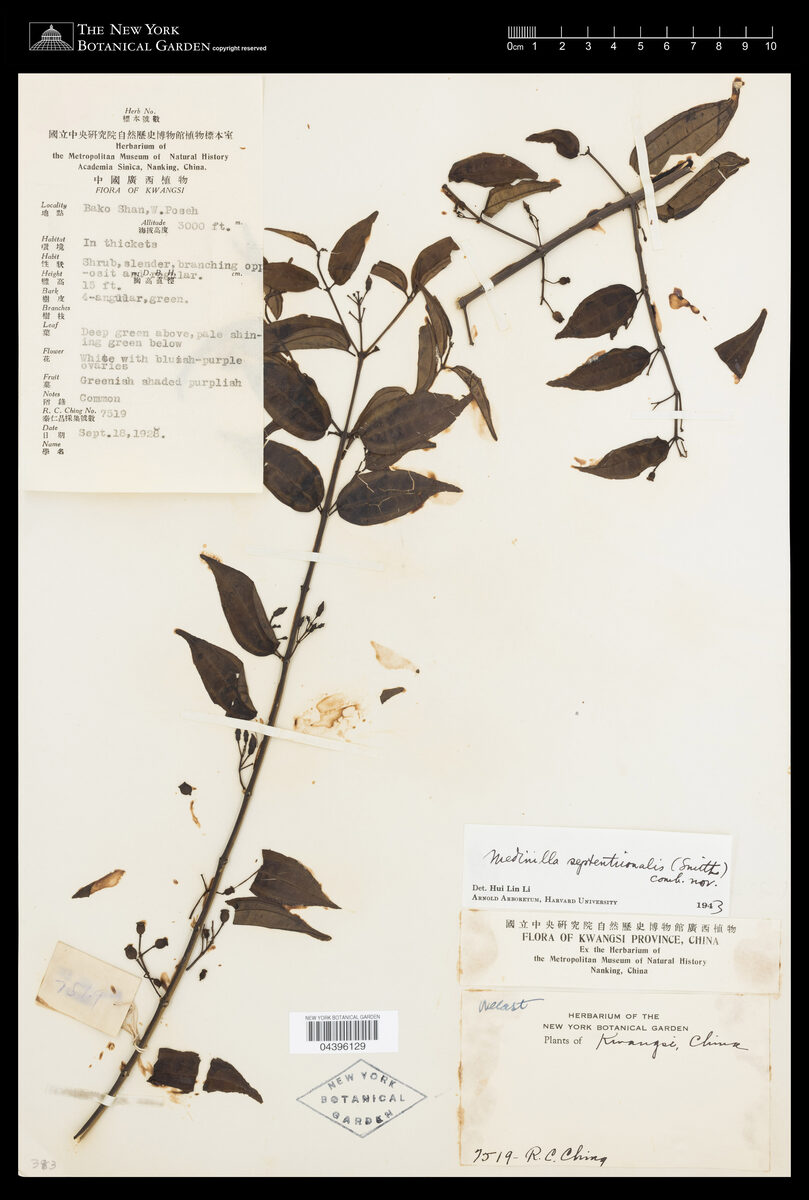
Pternandra caerulescens
Jack
Cursed shade
gbif· cc-by
Royal Botanic Gardens, Kew
gbif· cc-by
Royal Botanic Gardens, Kew
gbif· cc-by
Royal Botanic Gardens, Kew
Description
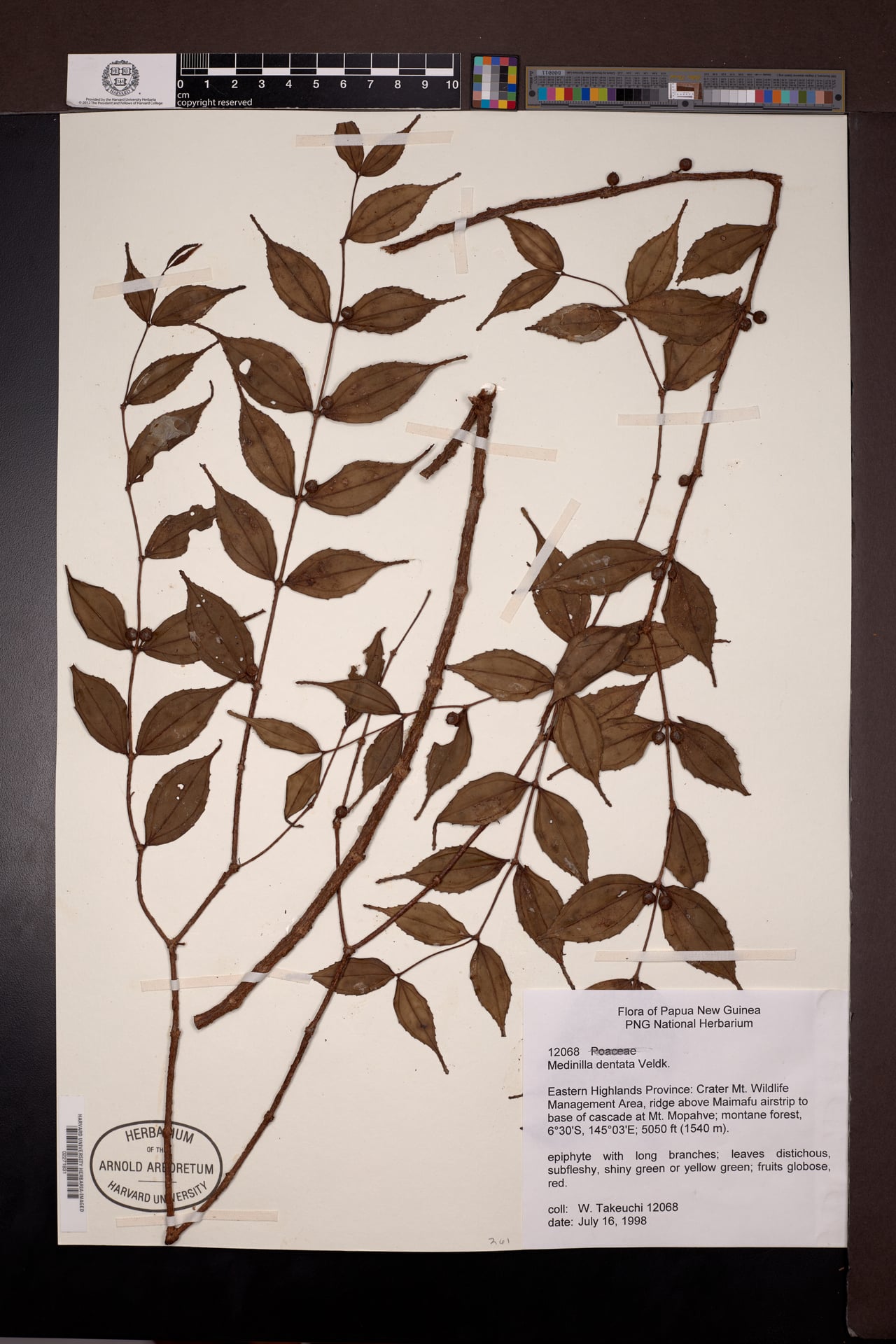
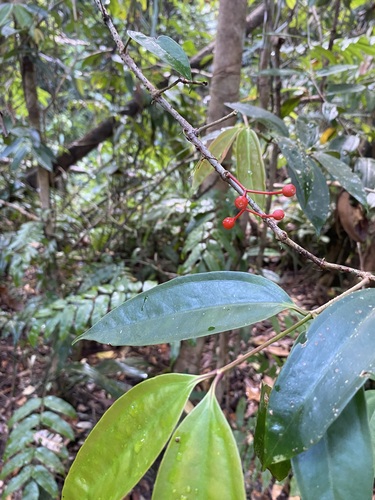
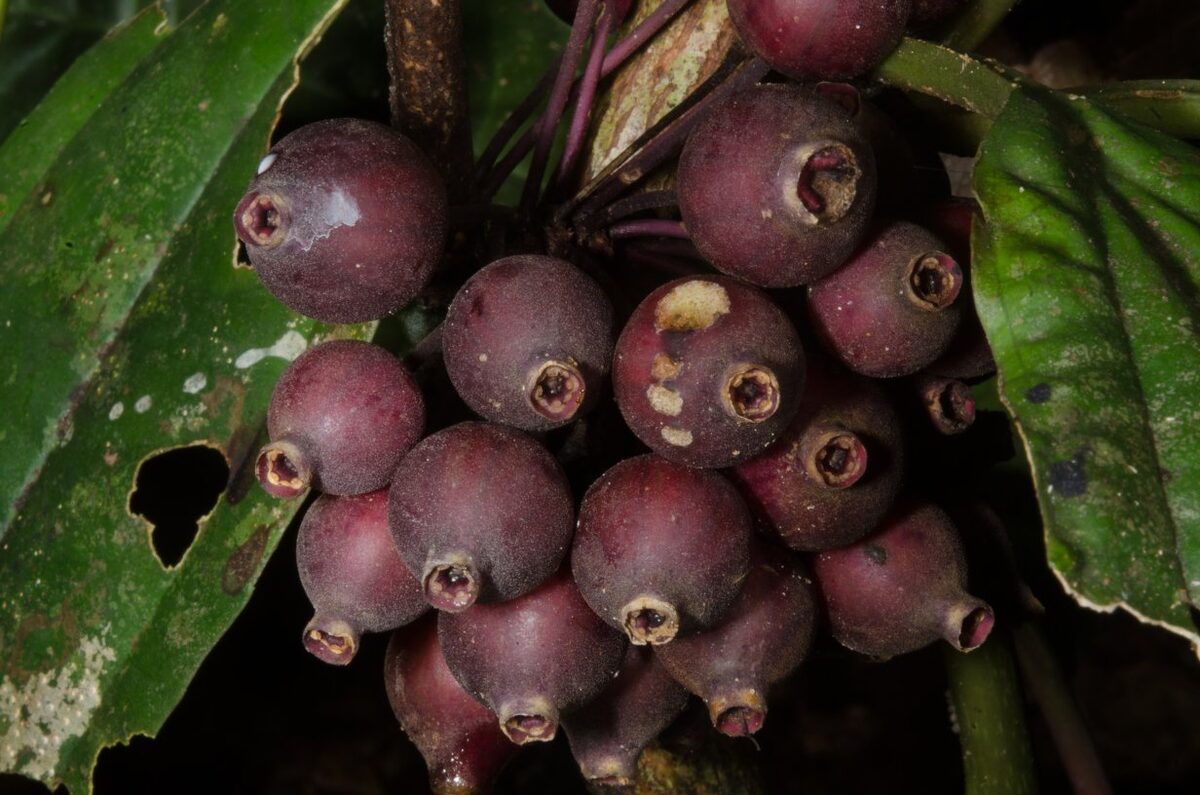
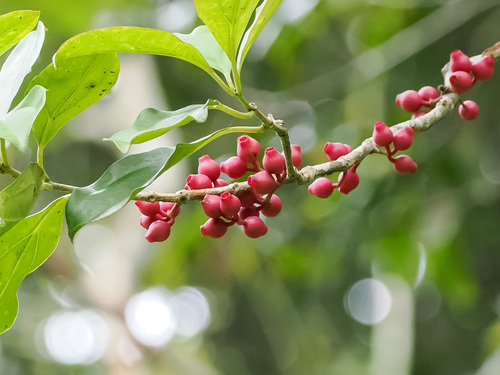
A tree. It grows 16-30 m tall. The trunk can be 30 cm across. The leaves are opposite. The leaves are 7-10 cm long by 4-5 cm wide. Young leaves are purplish. The flowers are in clusters in the axils of leaves. The fruit are round and 1 cm long by 1 cm wide. They are purple to black.
Edible Uses
The fruit may be edible, though this is uncertain.
Medicinal Uses
The branches make excellent firewood, and the roots are used in Cambodian local medicine to treat sexual diseases. Amongst villagers living around the Bung Khong Long Non-Hunting Area, of Bueng Khong Long District, northeastern Thailand, the young leaves are eaten as fresh vegetables in March and April, and the ripe fruits are eaten from April to November. Amongst Kuy- and Khmer-speaking people living in the same villages in Stung Treng and Preah Vihear provinces of north-central Cambodia, the small tree is used as source of medicine.
Distribution
It is a tropical plant. It grows in rainforest and freshwater swamp forest.
Where It Grows
Asia, Australia, Cambodia, Indochina, Malaysia, New Guinea, SE Asia, Singapore, Thailand,
Cultivation
It is grown by seeds.
Synonyms
Also Known As
Changketbrak, Bunut, Bunut Paya, Kalek banyak anak, Kelat Biru, Lidah Katak, Nipis Kulit, Sial Menahun
References (1)
- Turreira Garcia, N., et al, 2017, Ethnobotanical knowledgeof the Kuy and Khmer people in Prey Lang, Cambodia. Cambodian Journal of Natural History 2017 (1): 76-101