Colocasia esculenta
(L.) Schott
Taro
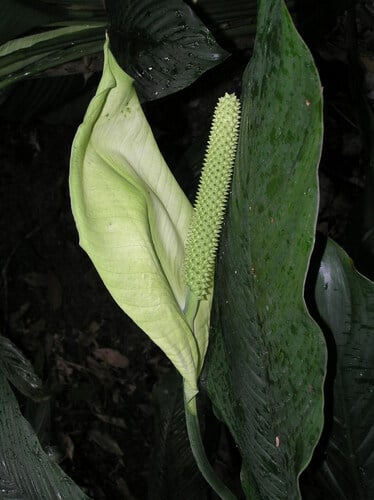
iNaturalist· cc-by-nc-sa
(c) Kuan-Chieh (Chuck) Hung, some rights reserved (CC BY-NC-SA), uploaded by Kuan-Chieh (Chuck) Hung
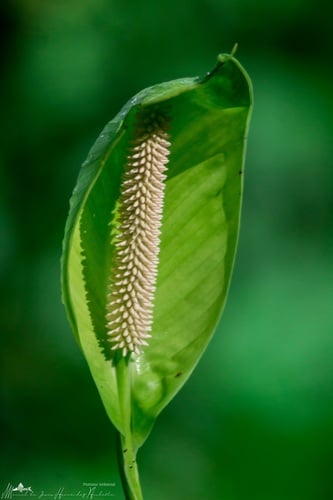
iNaturalist· cc-by-nc
(c) Connie Lin, some rights reserved (CC BY-NC), uploaded by Connie Lin
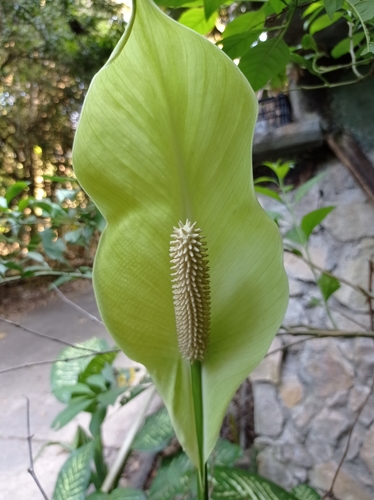
iNaturalist· cc-by-nc-sa
(c) harshithjv, some rights reserved (CC BY-NC-SA), uploaded by harshithjv
Summary
Fast-growing evergreen perennial reaching 1m tall and wide. Hardy to UK zone 9. Insect-pollinated, self-fertile flowers; noted for attracting wildlife. Accommodates light sandy, medium loamy, and heavy clay soils, tolerating very acidic and saline conditions. Grows in semi-shade or full sun; prefers moist to wet soil across mildly acidic to neutral pH range.
Description
This plant has large flat leaves on the end of upright leaf stalks. It grows up to 1 m high. The leaf stalk or petiole joins the leaf towards the centre of the leaf. The leaves are 20-50 cm long. Near the ground a thickened rounded corm is produced. Around this plant their is normally a ring of small plants called suckers. Many different varieties occur. If left to maturity, a lily type flower is produced in the centre of the plant. It has a spathe 15-30 cm long which is rolled inwards. The flowers are yellow and fused along the stalk. There are many named cultivated varieties. Taro comes in two basic forms. The Dasheen type Colocasia esculenta var. esculenta and Colocasia esculenta var. antiquorum or the Eddoe type. The basic difference is the adaptation of the Eddoe type to storage and survival in seasonally dry places, while the dasheen type needs to be maintained in a more or less continuously growing vegetative stage. These are now recognised as separate species names.
Edible Uses
The corms are edible when thoroughly cooked and can be boiled, baked or fried much like potatoes. They work well in savoury dishes such as soups and curries, or in sweet preparations with coconut milk and sugar. They can also be dried and grated to produce a flour. The corm is a good source of starch with very small starch grains that are easily digestible; this starch is used to make baby food that is considered non-allergenic. Tubers are typically up to 30 cm long and about 15 cm in diameter. The corm must be properly cooked before eating to address the toxicity concerns noted below. Young leaves of some taro varieties are grown specifically for their nutritious foliage; they can be used to wrap other foods for baking or cooked as spinach, but must always be cooked first to destroy calcium oxalate crystals. The stems are also edible — peeled, cut into pieces and boiled in stews, they taste and look somewhat like celery.
Traditional Uses
The corms, petioles and leaves are all edible after cooking. The leaves are also dried and stored. The leaves are used for sarma in Turkey. They are rolled around a filling of rice or minced meat. The flowers are also cooked as a vegetable. CAUTION Some varieties burn the throat due to oxalate crystals. To remove these soak in baking soda for 2 hours then boiled for 60 minutes. Tamarind is used for this purpose in India. Fresh leaves can be stored for 4-5 days. Leaves and stalks can be dried and stored.
Medicinal Uses
The plant is antibacterial and hypotensive. A decoction of the leaves is drunk to promote menstruation. A decoction combined with parts of other plants is taken to relieve stomach problems and to treat cysts. In New Guinea, leaves are heated over a fire and applied as a poultice to boils. The sap of the leaf stalk is used to treat conjunctivitis. The scraped stem, combined with parts of other plants, is used to stimulate appetite. The plant is also used to treat wounds.
Known Hazards
Calcium oxalate crystals present in the leaves and corms require thorough cooking before consumption.
Distribution
It is a tropical plant. Taro grows from sea level up to about 2300 m altitude in the tropics. It grows well in humid places. It can stand damp soil and grow under light shade. It grows in wetlands. In Nepal it grows up to 1300 m altitude. It suits hardiness zones 9-12. In Yunnan.
Where It Grows
Afghanistan, Africa, Algeria, American Samoa, Andamans, Angola, Antigua and Barbuda, Argentina, Asia, Australia, Bangladesh, Barbados, Benin, Bermuda, Bhutan, Bolivia, Botswana, Bougainville, Brazil, Burkina Faso, Burundi, Cambodia, Cameroon, Canada, Canary Is., Cape Verde, Caribbean, Caroline Islands, Central Africa, Central African Republic, CAR, Central America, Chad, China, Chuuk, Colombia, Comoros, Congo DR, Congo R, Cook islands, Costa Rica, Côte d'Ivoire, Cuba, Dominican Republic, East Africa, East Timor, Easter Island, Ecuador, Egypt, Equatorial-Guinea, Eswatini, Ethiopia, Europe, Fiji, French Polynesia, FSM, Gabon, Gambia, Ghana, Grenada, Guam, Guatemala, Guiana, Guianas, Guinea, Guinée, Guinea-Bissau, Guyana, Haiti, Hawaii, Himalayas, Honduras, India, Indochina, Indonesia, Italy, Ivory Coast, Jamaica, Japan, Kenya, Kiribati, Korea, Laos, Liberia, Madagascar, Malawi, Malaysia, Maldives, Mali, Mariana Islands, Marquesas, Marshall Islands, Mauritius, Mediterranean, Micronesia, Mozambique, Myanmar, Nauru, Nepal, New Caledonia, Nicaragua, Niger, Nigeria, Niue, Norfolk Island, North Africa, North America, Northeastern India, Pacific, Pakistan, Palau, Papua New Guinea, PNG, Paraguay, Peru, Philippines, Pohnpei, Polynesia, Portugal, Puerto Rico, Rotuma, Rwanda, Sahel, Samoa, Sao Tome and Principe, SE Asia*, Senegal, Seychelles, Sierra Leone, Sikkim Singapore, Slovenia, Solomon Islands, South Africa, Southern Africa, South America, South Sudan, Spain, Sri Lanka, St Helena, St Lucia, St. Vincent and Grenadines, Sudan, Suriname, Swaziland, Tahiti, Taiwan, Tanzania, Thailand, Tibet, Timor-Leste, Tokelau, Togo, Tonga, Tunisia, Turkey, Türkiye, Tuvalu, Uganda, Uruguay, USA, Vanuatu, Vatican, Venezuela, Vietnam, Wallis & Futuna, West Africa, West Indies, West Papua, West Indies, Yap, Zambia, Zimbabwe,
Cultivation
Taro can be planted from cormels or from the top of the central corm. Other sections of the corm could also be used but this is not commonly done. Flowering of taro and seed production can lead to new cultivars. Flowering can be promoted by the use of gibberellic acid. The general growth pattern is for an increase in top growth, in terms of leaf number, leaf area and petiole length, to continue for about 6 months under tropical lowland conditions then for each of these to decrease and tuber storage to continue to increase. Corm weight increases significantly from 5 to 11 months. Starch content also increases with time but protein content declines over the corm development period. Taro can be grown under flooded conditions but root rots develop if the water becomes stagnant. For flooded cultivation, the land is cleared, ploughed, cultivated and puddled. The aim is to get a field that is flat with embankments allowing the impounding of water. Planting is done into 2-5 cm of standing water. For dryland taro, the soil is prepared by digging, unless a fresh bush fallow is used where the natural friability of the soil allows plants to be put into the undug soil in a small hole that is prepared. Plants are put into a hole 5-7 cm deep or deeper. Mulching to conserve moisture and reduce weed growth in beneficial. Setts from corms normally give higher yield than that from cormels. The greater leaf area and root production may be responsible for this. Setts of about 150 g are optimum. The time of planting is primarily determined by the availability of moisture. Planting is done shortly after the rainfall has become regular, if seasonally distinct wet and dry seasons occur. Higher rainfall, higher temperatures, and higher hours of sunlight, enhance production and determine seasonality of production. Evapotranspiration for flooded taro averages about 4 mm per day, ranging from 1.5 to 7.2 mm, with a total of about 1200 mm for the crop. Intermittent moisture can result in irregular shaped corms. Flooding has been found to be more effective than sprinkler irrigation, or furrow irrigation. Increased suckering, giving greater leaf area, seems to be the reason for this. Taro is sensitive to weed competition throughout most of its growth, but it is more critical during early growth up to 3 - 4 months. About 7-9 weedings are required, to keep the crop clean under tropical lowland conditions, where flooding is not used. Due to the decrease in height and leaf area towards the end of the growth cycle when starch accumulation in the corms is maximum, weed competition and weed control are again significant. Mechanical weeding needs to be shallow to avoid damaging the superficial taro roots. A range of herbicides have been recommended in various situations. Taro produces the highest dry matter yield under full sunlight, but it can still grow under moderate shade. Under shaded conditions it grows more slowly and develops less cormels. They require good moisture conditions and have little tolerance for drought. Taro residue has an allelopathic factor which can reduce the germination and growth of other plants, for example, beans. Taro tends to demand high fertility, and is responsive to additional NPK fertiliser. Higher doses of K increases starch content and higher doses of N increases protein content. Both N and K applications increase oxalic acid content of the tubers. Spacing affects total yield, and marketable, harvestable yield, of corms. Close spacing increases the corm yield per area, and the shoot yield per area, but decreases the corm yield per plant, and the contribution of sucker corms, to the yield. Where spacings of 30 cm x 30 cm are used, giving about 110,000 plants per hectare, a very large amount of planting material is required, which reduces the net return per unit of planting material. A spacing of 60 cm x 60 cm in more common. Wider spacings of 90 cm x 90 cm reduces overall yield.
Propagation
Seed is possible but this is a cultivated species unlikely to breed true, and plants rarely produce fertile seed. Division is the main propagation method, using suckers or corms. Small unmarketable corms weighing 60–150g from healthy, productive plants are typically used; larger corms can be cut into sections. Other planting material includes the apical 1–2 cm of the main corm with 15–20 cm of leaf stalk attached, side suckers growing from the main corm, or in Ghana, young suckers or mature setts cut from harvested corms. All planting material must come from healthy plants. Cormels are planted at a depth of 50–75 mm.
Other Uses
Taro can be used in agroforestry systems as a water-loving crop in wetland areas, improving soil moisture retention. It is also grown as an ornamental and used as animal fodder. The plant can provide some habitat value — corms and leaves may be consumed by wildlife, and dense foliage and leaf litter can offer shelter for invertebrates.
Production
Crops mature in 6-18 months. Yields of 5-15 tonnes per hectare are probably average.
Other Information
It is a commercially cultivated vegetable. It has been a very important food plant in Papua New Guinea. In some areas it is still important but in other areas it has declined because of insect and disease problems. Leaves are sold in local markets.
Notes
Leaf stalks have 3.1 mg per 100 g dry weight and 1.7 mg fresh weight of alpha-tocopherol (Vitamin E). There are 8 Colocasia species. Taro tru Taro tru (Colocasia esculenta ). This taro is grown by most people in the Southern Highlands even if only in small numbers. It needs to have a fertile soil, so people grow it around houses where they can compost their rubbish. In Tari they grow it on the fertile soil that they have dug out of the drains. Other people grow it in the moist fertile corner of their garden. The leaves and the underground corm are eaten. It is replanted from the top piece of the corm, It suffers badly from the black taro beetle and its larvae which eat the corm. Fortunately the two serious diseases that are ruining many taro crops on the coast (taro blight and taro virus) do not cause damage in the Southern Highlands. Taro tru can be recognised because the leaf stalk joins onto the centre of the leaf blade.
Nutrition
| Part | Moisture | kJ | kcal | Protein | Vit A | Vit C | Iron | Zinc |
|---|---|---|---|---|---|---|---|---|
| Root | 66.8 | 1231 | 294 | 1.96 | 3 | 5 | 0.68 | 3.2 |
| Root | 72 | 443 | 106 | 2 | — | 6 | 1.1 | 1.7 |
| Leaves | 85 | 210 | 50 | 5 | 57 | 90 | 0.62 | 0.7 |
| Leaf Stalks | 93 | 101 | 24 | 0.5 | 180 | 13 | 0.9 | — |
| Leaves - cooked | 92.2 | 100 | 24 | 2.7 | 424 | 35.5 | 1.2 | 0.2 |
| Root | 59 | — | — | — | — | — | — | — |
| Leaves | 85.9 | — | — | — | 55 | — | 34.2 | — |
Synonyms
Also Known As
Aaki, Aba, Abalong, Achin, Aga, Akasi, Alo, Alu, Amadumbe, Amankani, Ang, Ange, Aro mwora, Arui, Arvi, Ba, Baal, Bahlip, Bal, Barbados eddoe, Bari, Biu o, Boka, Bon kachu, Bon van, Bo rui, Brobe, Bu laiche, Bwet, Chamadumpa, Chawa, Chemagadda, Chonque, Chou Bouton, Coco, Colulu, Curcas, Dagmay, Dalo, Danchi, Dehiala, Detaro, Dhopa, Diefele, Doko, Dow, Dsehi, Ebitekyere, Eddoe, Ega, Eze, Furedhdhe ala, Gaba, Gabha, Gabi, Gablos, Gadda kanda, Gahala, Gahula, Ghuiya, Ghuniya, Ghuya, Gimbi, Gingu, Golegez, Goodarree, Guagui, Gui, Gusum thaso, Gwamba, Gwasa, Henchichebu, Henru ke-ik, Hom, Hou min deng, Ikoko odo, Imo, Inhame, Ioth, Ishu koko, Jibabwai, Kachaloo, Kachalu, Kachchi, Kachu, Kake alo, Kake, Kalakasu, Kalo, Kandala, Karkal, Karkalo, Karoonay kilangu, Kattuchembu, Keladi, Kesavina beru, Khoai au nu'oc trang, Kieze, Kochai, Kochailal, Kochaimati, Kochu, Kochur mukhi, Koko, Kola kochu, Kolia kochu, Kolkas, Kollithalu, Kolokasi, Kopare, Kotak, Krachkoko, Kuchu, Kuhtak, Kukau, Lam pal, Langa, Lang henru, Lango, Lati, Lheng basar, Linsa, Logbui, Lubingan, Ma, Madere, Madumbe, Makoma, Mal, Malanga, Malangay, Malangu, Mane, Mangani, Maniango, Mattu midolodolo, Mbwet, Mi, Mileken, Moa, Mon nuoc, Mudhumbe, Mwitu, Nau, Ngaglin, Ngolo, Nkase, Numbole, Oburagoi, Ocumo culin, Oni, Opela, Ot, Pai, Papula, Pel kapa, Phueak, Pidaalu, Pindalu, Pidanlu, Pising, Pon-song, Pueta, Pwet, Qolqas, Quiquisque, Rebol, Sambu, Saonjo, Saonjorano, Saru, Satoim, Sawa, Seppankizhangu, Seru ara, Sewa, Shamagadde, Shamakkilangu, Shemakkalengu, Shembu, Shriew, Sola kachu, Sulur keladi, Suni, Suni agaga, Ta, Tabul, Tadala, Ta dogwa, Tagwamba, Taioba, Talas, Taleus, Talo, Tango, Taro kalo, Tato, Tayoba, Te taororo, Te taorourour, Thagong, Thalu, Thaso, Thaso gwswm, Thoks, Tikowounkofanti, Timoukan'te, Tra'w, Ttimba, Ttimpa, Tuka, Ule mankani, Utamchap, Vika, Woot, Yu-tao, Yekontenko
References (289)
- Taro references.
- Abbiw, D.K., 1990, Useful Plants of Ghana. West African uses of wild and cultivated plants. Intermediate Technology Publications and the Royal Botanic Gardens, Kew. p 29
- Achigan-Dako, E, et al (Eds), 2009, Catalogue of Traditional Vegetables in Benin. International Foundation for Science.
- Addis, G., et al, 2005, Ethnobotanical Study of Edible Wild Plants in Some Selected Districts of Ethiopia. Human Ecology, Vol. 33, No. 1, pp. 83-118
- Ali, A. M. S., 2005, Homegardens in Smallholder Farming Systems: Examples from Bangladesh. Human Ecology, Vol. 33, No. 2 pp. 245-270
Show all 289 references Hide references
- Amagloh, F. K. & Nyarko, E. S., 2012, Mineral Nutrient Content of Commonly Consumed Leafy Vegetables in Northern Ghana. African Hournal of Food, Agriculture, Nutrition and Development. Vol. 12(3): p 6397
- Ambasta, S.P. (Ed.), 2000, The Useful Plants of India. CSIR India. p 137
- Anderson, E. F., 1993, Plants and people of the Golden Triangle. Dioscorides Press. p 207
- Ara, R. I. T., 2015, Leafy Vegetables in Bangladesh. Photon eBooks. p 55
- Arinathan, V., et al, 2007, Wild edibles used by Palliyars of the western Ghats, Tamil Nadu. Indian Journal of Traditional Knowledge. 6(1) pp 163-168
- Aryal, K. P., et al, 2018, Diversity and use of wild and non-cultivated edible plants in the Western Himalaya. Journal of Ethnobiology and Ethnomedicine (2018) 14:10
- Asprilla-Perea, J., & Diaz-Puente, J.M., 2018, Traditional use of wild edible food in rural territories within tropical forest zones: A case study from the northwestern Colombia. New Trends and Issues Proceedings on Humanities and Social Sciences [Online]. 5(1), 162–181.
- Azam, F. M. S., et al, 2014, Are Famine Food Plants Also Ethnomedicinal Plants? An Ethnomedicinal Appraisal of Famine Food Plants of Two Districts of Bangladesh. Evidence-Based Complementary and Alternative Medicine Volume 2014, Article ID 741712, 28 pages
- Baa-Poku, F. & Asante, I. K., 2020, Use of Neglected and Underutilized Crop Species (NUCS) in some farming communities in the Upper Afram and Upper Dayi River Basins in Ghana. International Journal of Technology and Management Research 5 (2): 48-63
- Balkrishna, A., et al, 2022, Indigenous Uses of Plants among Forest-dependent Communities of Seijosa, Arunachal Pradesh. International Journal of Economic Plants 2022, 9(1):064-080
- Bandyopadhyay, S. et al, 2009, Wild edible plants of Koch Bihar district, West Bengal. Natural Products Radiance 8(1) 64-72
- Bandyopadhyay, S., et al, 2012, A Census of Wild Edible Plants from Howrah District, West Bengal, India. Proceedings of UGC sponsored National Seminar 2012
- Banerjee, A., et al, 2013, Ethnobotanical Documentation of Some Wild Edible Plants in Bankura District, West Bengal, India. The Journal of Ethnobiology and Traditional Medicine. Photon 120 (2013) 585-590
- BARC, 2016, State of Biodiversity for Food and Agriculture in Bangladesh. Bangladesh Agricultural Research Council.
- Barfod, A. S. & Kvist, L. P., 1996, Comparative Ethnobotanical Studies of the Amerindian Groups in Coastal Ecuador. Biologiske Skrifter 46. Copenhagen. p 76
- Baro, D., Baruah, S. and Borthukar, S. K. 2015, Documentation on wild vegetables of Baksa district, BTAD (Assam). Scholars Research Library. Archives of Applied Science Research, 2015, 7 (9):19-27
- Bernal, R., et al, (Eds), 2016, Catalogo de Plantas y Liquenes de Colombia, Volumen 2, Magnoliaceae a Zygophyllaceae. Universidad Nacional de Colombia. p 2495
- BHARGAVA (As Colocasia himalensis)
- Barrau, J., 1976, Subsistence Agriculture in Polynesia and Micronesia. Bernice P. Bishop Museu, Bulletin 223 Honolulu Hawaii. Kraus reprint. p 39
- Bennett, B. C., 1990, Useful Plants of Amazonian Ecuador. US Agency for International Development. Fifth Progress Report. New York Botanical Gardens. p 40
- Berihun, T. & Molla, E., 2017, Study on the Diversity and Use of Wild Edible Plants in Bullen District Northwest Ethiopia. Hindawi Journal of Botany. Article ID 8383468
- Bernholt, H. et al, 2009, Plant species richness and diversity in urban and peri-urban gardens of Niamey, Niger. Agroforestry Systems 77:159-179
- Bhatia, H., et al, 2018, Traditionally used wild edible plants of district Udhampur, J&K, India. Journal of Ethnobiology and Ethnomedicine (2018) 14:73
- Bianchini, F., Corbetta, F., and Pistoia, M., 1975, Fruits of the Earth. Cassell. p 220
- Bindon, P., 1996, Useful Bush Plants. Western Australian Museum. p 88.
- Bird, B.K., 1982, Bibliography of taro and other edible aroids. (Supplement:1977-1982). Univ of Hawaii.
- Bodner, C. C. and Gereau, R. E., 1988, A Contribution to Bontoc Ethnobotany. Economic Botany, 43(2): 307-369
- Boedecker, J., et al, 2014, Dietary contribution of Wild Edible Plants to women’s diets in the buffer zone around the Lama forest, Benin – an underutilized potential. Food Sec. 6:833–849
- Bohra, N., et al, 2017, Ethnobotany of wild edible plants traditionally used by the local people in the Ramnagar regions from Nainital District, Uttarakhand, India. Biolife 5(1): 12-19
- Borrell, O.W., 1989, An Annotated Checklist of the Flora of Kairiru Island, New Guinea. Marcellin College, Victoria Australia. p 15
- Bourret, D., 1981, Bonnes-Plantes de Nouvelle-Caledonie et des Loyaute. ORSTOM. p 50
- Brickell, C. (Ed.), 1999, The Royal Horticultural Society A-Z Encyclopedia of Garden Plants. Convent Garden Books. p 288
- Brouk, B., 1975, Plants Consumed by Man. Academic Press, London. p 140
- Burkill, I.H., 1966, A Dictionary of the Economic Products of the Malay Peninsula. Ministry of Agriculture and Cooperatives, Kuala Lumpur, Malaysia. Vol 1 (A-H) p 647
- Cabalion, P. and Morat, P., 1983, Introduction le vegetation, la flore et aux noms vernaculaires de l'ile de Pentcoste (Vanuatu), In: Journal d'agriculture traditionnelle et de botanique appliquee JATBA Vol. 30, 3-4
- Cao, Y., et al, 2020, Ethnobotanical study on wild edible plants used by three trans-boundary ethnic groups in Jiangcheng County, Pu’er, Southwest China. Journal of Ethnobiology and Ethnomedicine (2020) 16:66
- Chai, P. P. K. (Ed), et al, 2000, A checklist of Flora, Fauna, Food and Medicinal Plants. Lanjak Entimau Wildlife Sanctuary, Sarawak. Forestry Malaysia & ITTO. p 159
- Chandrakumar, P., et al, 2015, Ethnobotanical studies of wild edible plants of Gond, Halba and Kawar tribes of Salekasa Taluka, Gondia District, Maharashtra State, India. International Research Journal of Pharmacy 6(8)
- Chandra,S.(ed)., 1984, Edible Aroids. Clarendon Press, Oxford.
- Cheifetz, A., (ed), 1999, 500 popular vegetables, herbs, fruits and nuts for Australian Gardeners. Random House p 56
- Cheng, Z., et al, 2022, Ethnobotanical study on wild edible plants used by Dulong people in northwestern Yunnan, China. Journal of Ethnobiology and Ethnomedicine (2022) 18:3
- Chin, H. F., 1999, Malaysian Vegetables in Colour. Tropical Press. p 57
- Ching, L. S. & Mohamed, S., 2001, Alpha-Tocopherol Content in 62 Edible Tropical Plants. J. Agric. Food Chem. 2001, 49, 3101−3105
- Chowdery, T., et al, 2014, Wild edible plants of Uttar Dinajpur District, West Bengal. Life Science Leaflets. 47:pp 20-36 http://lifesciencesleaflets.ning.com
- Chowdhury, A. & Das, A. P., 2014, Conservation through sustainable utilization of wetland leafy vegetables of Terai and Duars, West Bengal, India. International Journal of Advanced Life Sciences (IJALS), 7(4) p 654
- Chowdhury, M. & Mukherjee, R., 2012, Wild Edible Plants Consumed by Local Communities of Maldah of West Bengal, India. Indian J.Sci.Res.3(2) : 163-170 (Also as Colocasia nymphaeifolia)
- Cobley, L.S. (rev. Steele, W.M.) 2nd Ed., 1976, An Introduction to the Botany of Tropical Crops. Longmans. p 123
- Coe, F. G. and Anderson, G. J., 1999, Ethnobotany of the Sumu (Ulwa) of Southeastern Nicaragua and Comparisons with Miskitu Plant Lore. Economic Botany Vol. 53. No. 4. pp. 363-386
- Crawford, I. M., 1982, Traditional Aboriginal Plant Resources in the Kalumburu Area: Aspects in Ethno-economics. Records of the Western Australian Museum Supplement No. 15 (var. antiquorum)
- Cribb, A.B. & J.W., 1976, Wild Food in Australia, Fontana. p 147
- Cundall, P., (ed.), 2004, Gardening Australia: flora: the gardener's bible. ABC Books. p 400
- D'Ambrosio, U., & Puri, R. K., 2016, Foodways in transition: food plants, diet and local perceptions of change in a Costa Rican Ngäbe community. Journal of Ethnobiology and Ethnomedicine (2016) 12:3 p 22
- Dangol, D. R. et al, 2017, Wild Edible Plants in Nepal. Proceedings of 2nd National Workshop on CUAOGR, 2017.
- Dansi, A., et al, 2008, Traditional leafy vegetables and their use in the Benin Republic. Genet Resour Crop Evol (2008) 55:1239–1256
- Deb, D., et al, 2013, Wild Edible Plants and Their Utilization in Traditional Recipes of Tripura, Northeast India. Advances in Biological Research 7(5):203-211
- Deka, N. & Devi, N., 2015, Wild edible aquatic and marshland angiosperms of Baka district, BTC area, Assam, India. Asian J. Plant Sci. Res. 5(1):32-48
- Demise, S. & Asfaw, Z., 2020, Ethno Botanical Study of Wild Edible Plants in Adola District, Southern, Ethiopia. International Journal of Research and Analytical Reviews (IJRAR) 7(2).
- de Polle, E., Plantas Silvestres Comestible de Guatemala. 1(1) Universidad de San Carlos de Guatemala.
- Devarkar, V. D., et al, 2011, Dietary and Medicinal Significance of Wild Vegetables from Osmanabad Region, Maharashtra (India). Life sciences Leaflets 11:317-332.
- Devi, O.S., P. Komor & D. Das, 2010, A checklist of traditional edible bio-resources from Ima markets of Imphal Valley, Manipur, India. Journal of Threatened Taxa 2(11): 1291-1296 (As Colocasia antiquorum)
- Dobriyal, M. J. R. & Dobriyal, R., 2014, Non Wood Forest Produce an Option for Ethnic Food and Nutritional Security in India. Int. J. of Usuf. Mngt. 15(1):17-37
- Dogan, Y., et al, 2015, Of the importance of a leaf: the ethnobotany of sarma in Turkey and the Balkans. Journal of Ethnobiology and Ethnomedicine, 11:56
- Duarte, M. C., et al, 2022, Diversity of Useful Plants in Cabo Verde Islands: A Biogeographic and Conservation Perspective. Plants 2022, 11, 1313 p 8
- Dutta, U., 2012, Wild Vegetables collected by the local communities from the Churang reserve of BTD, Assam. International Journal of Science and Advanced Technology. Vol. 2(4) p 120
- Eiadthong, W., et al, 2010, Management of the Emerald Triangle Protected Forests Complex. Botanical Consultant Technical Report. p 47
- Ekman Herbarium records Haiti
- Elliot, W.R., & Jones, D.L., 1984, Encyclopedia of Australian Plants suitable for cultivation. Vol 3. Lothian. p 59 (Also as antiquorum)
- Englberger, L., et al, 2006, Documentation of the traditional food system of Pohnpei. Indigenous People's food systems. Chp 6 p 119
- Ertug, F, Yenen Bitkiler. Resimli Türkiye Florası -I- Flora of Turkey - Ethnobotany supplement
- Esperanca, M. J., 1988. Surviving in the wild. A glance at the wild plants and their uses. Vol. 1. p 303
- Ethnobotany of Karbis. Chapter 4 in p 83
- Ethnobotany of Karen in Khun Tuen Noi Chiang Mai. http://khuntuennoi.myspecies
- Facciola, S., 1998, Cornucopia 2: a Source Book of Edible Plants. Kampong Publications, p 23
- FAO, 1993, Valor Nutritivo Y Usis en Alimantacion humana de Algunis Cultivos Autoctonos Subexplotados de Mesoamerica. FAO, Santiago, Chile. p 78
- Flora of Australia Volume 49, Oceanic Islands 1, Australian Government Publishing Service, Canberra. (1994) p 417
- Flora of the Venezuelan Guayana www.mobot.org
- Flora of Pakistan. www.eFloras.org
- Foo, J.T.S.(ed), 1996, A Guide to Common Vegetables. Singapore Science Foundation. p 14
- Fowler, D. G., 2007, Zambian Plants: Their Vernacular Names and Uses. Kew. p 64 (As antiquorum)
- Fox, F. W. & Young, M. E. N., 1982, Food from the Veld. Delta Books. p 94
- Franklin, J., Keppel, G., & Whistler, W., 2008, The vegetation and flora of Lakeba, Nayau and Aiwa Islands, Central Lau Group, Fiji. Micronesica 40(1/2): 169–225, 2008
- French, B.R., 1986, Food Plants of Papua New Guinea, A Compendium. Asia Pacific Science Foundation p 3
- French, B.R., 2010, Food Plants of Solomon Islands. A Compendium. Food Plants International Inc. p 8
- Furusawa, T., et al, 2014, Interaction between forest biodiversity and people's used of forest resources in Roviana, Solomon Islands: implications for biocultural conservation under socioeconomic changes. Journal of Ethnobiology and Ethnomedicine, 10:10
- Gangte, H. E., et al, 2013, Wild Edible Plants used by the Zou Tribe in Manipur, India. International Journal of Scientific and Research Publications, Volume 3, Issue 5
- Garcia, G. S. C., 2006, The mother-child nexus. Knowledge and valuation of wild food plants in Wayanad, Western Ghats, India. Journal of Ethnobiology and Ethnomedicine, 2:39
- Garde, M., et al, 2003, A Preliminary List of Kundedjnjenghmi Plant Names. Northern Land Council. (Arnhem Land, Australia)
- Gautam, R. S., et al, 2022, Ethnobotanical Review of Wild Edible Plants of Nepal. Journal of Natural History Museum Volume 32, 2021-22 p 104
- Ghosh, C. & Das A. P., 2011, Some useful and poisonous tea garden weeds from the Darjiling District of West Bengal, India. Pleione 5(1): 91 - 114
- Gillaumin, R., 1954, Les Plantes utiles des Nouvelles-Hebrides (fin et complement) In: Journal d'agriculture tropicale et de botanique appliquee Vol. 1, No. 10-12 pp 453-460 (As Colocasia antiquorum)
- Goode, P., 1989, Edible Plants of Uganda. FAO p 26
- Goode, P., 1989, Edible Plants of Uganda. FAO p 39
- Grubben, G. J. H. and Denton, O. A. (eds), 2004, Plant Resources of Tropical Africa 2. Vegetables. PROTA, Wageningen, Netherlands. p 208
- Guil-Guerrero, J. L., et al, 2001, Edible Wild Plants. in Recent Progress in Medicinal Plants Vol. 8 Sci. Tech publishing, Texas
- Guite, C., 2016, A study of wild edible plants associated with the Paite tribe of Manipur, India, International Journal of Current Research. Vol. 8, Issue, 11, pp. 40927-40932
- GUPTA (As Colocasia himalensis)
- Hariyadi, B., 2008, The Entwined Tree: Traditional Natural Resource Management of Serampas, Jambi, Indonesia. Ph. D thesis. Univ. or Hawaii. p 401
- Harkonen, M. & Vainio-Mattila, K., 1998, Some examples of Natural Products in the Eastern Arc Mountains. Journal of East African Natural History 87:265-278
- Harter, J.(Ed.), 1988, Plants. 2400 copyright free illustrations. Dover p 25.4, 27.2, 30.2, 32.4
- Henderson, C.P. and I.R.Hancock, 1988, A Guide to the Useful Plants of the Solomon Islands. Res. Dept. Min of Ag. & Lands. Honiara, Solomon Islands. p 28
- Hedrick, U.P., 1919, (Ed.), Sturtevant's edible plants of the world. p 211 (Also as Colocasia antiquorum)
- Henty, E.E., 1980, Harmful Plants in Papua New Guinea. Botany Bulletin No 12. Division Botany, Lae, Papua New Guinea. p 23
- Hide, R., et al, 1979, A checklist of some plants in the territory of the Sinasina Nimai (Simbai Province, Papua New Guinea), with notes on their uses. Department Anthropology, University of Aukland
- Hossain, U. & Rahman, A., 2018, Study and quantitative analysis of wild vegetable floral diversity available in Barisal district, Bangladesh. Asian J. Med. Biol. Res. 2018, 4 (4), 362-371
- Hussey, B.M.J., Keighery, G.J., Cousens, R.D., Dodd, J., Lloyd, S.G., 1997, Western Weeds. A guide to the weeds of Western Australia. Plant Protection Society of Western Australia. p 18
- Hu, Shiu-ying, 2005, Food Plants of China. The Chinese University Press. p 305
- Irawan, D., et al, 2006, Ethnobotanical study and nutrient potency of local traditional vegetables in Central Kalimantan. Tropics Vol. 15(4)
- Jabeen, A., et al, 2009, Indigenous uses of economically important flora of Margallah Hills National Park, Islamabad, Pakistan. African Journal of Biotechnology Vol. 8 (5), pp. 763-784
- Jacquat, C., 1990, Plants from the Markets of Thailand. D.K. Book House p 111
- Jain et al, 2011, Dietary Use and Conservation Concern of Edible Wetland Plants at Indo-Burma Hotspot: A Case Study from Northeast India. Journal of Ethnobiology and Ethnomedicine 7:29 p 6
- Japanese International Research Centre for Agricultural Science www.jircas.affrc.go.jp/project/value_addition/Vegetables
- Jardin, C., 1970, List of Foods Used In Africa, FAO Nutrition Information Document Series No 2.p 12, 68
- Jha, P. K., et al, 1996, Plant genetic resources of Nepal: A guide for plant breeders of agricultural, horticultural and forestry crops. Euphytica 87:189-210
- Johnson, N., 2002, Environmental Change in northern Thailand: Impact on Wild Edible Plant Availability. Ecology of Food and Nutrition, 41: 5, 373-399
- Jose, D. T. & Sasidharan, N., 2016, Checklist of wild edible plants of Aralam Wildlife sanctuary, Kerala, India. South Indian Journal Of Biological Sciences 2016; 2(1); 141‐144
- Joshi, N., et al, 2007, Traditional neglected vegetables of Nepal: Their sustainable utilization for meeting human needs. Tropentag 2007. Conference on International Agricultural Research for Development.
- Kar, A., 2004, Common wild vegetables of Aka tribe of Arunachal Pradesh. Indian Journal of Traditional Knowledge 3(3) pp 305-313
- Kar, A., et al, 2013, Wild Edible Plant Resources used by the Mizos of Mizoram, India. Kathmandu University Journal of Science, Engineering and Technology. Vol. 9, No. 1, July, 2013, 106-126
- Karthi, Sathya, & Salome, 2014, Uncultivated Edible Greens from Small Millet Farms Tamil Nadu India. IDRC
- Kay, D.E., 1973, Root Crops, Digest 2, Tropical Products Institute, London, p 168
- Kays, S. J., and Dias, J. C. S., 1995, Common Names of Commercially Cultivated Vegetables of the World in 15 languages. Economic Botany, Vol. 49, No. 2, pp. 115-152
- Kebebew, M. & Leta, G., 2016, Wild Edible Plant Bio-diversity and Utilization System in Nech Sar National Park, Ethiopia. International Journal of Bio-resource and Stress Management 2016, 7(4):885-896
- Kenneally, K.E., Edinger, D. C., and Willing T., 1996, Broome and Beyond, Plants and People of the Dampier Peninsula, Kimberley, Western Australia. Department of Conservation and Land Management. p 201
- Kew Plants of the World On line
- Khanal, R., et al, 2014, Documenting abundance and use of underutilized plant species in the mid hill region of Nepal. ECOPRINT 21: 63-71, 2014
- Kiple, K.F. & Ornelas, K.C., (eds), 2000, The Cambridge World History of Food. CUP p 1866
- Kiran, K. C., et al, 2019, Diversity and Seasonal Availability of Potential Wild Edible Plants from Vidarbha Region of Maharashtra State, India. Int.J.Curr.Microbiol.App.Sci (2019) 8(2): 1434-1446
- Kumar, G.M., & Shiddamallayya, N., 2014, Documentation of Wild Plant Tubers as Food Resources in Hassan District, Karnataka, International Journal of Applied Biology and Pharmaceutical Technology. 5(2) p 90
- Kumar, G. M. P & Nagayya, W., et al, 2016, Nutritional Analysis of Edible Wild Plants use by Hakki Pikki Tribes of Hassan District, Karnataka, India, Int J Pharm Pharm Sci, Vol 8, Issue 8, 390-393
- Kumar, S. A., Manus, D. & Mallika, M., 2018, Impact of non-timber forest products on Forest and in Livelihood Economy of the People of Adjoining Areas of Jalpaiguri Forest Division, West Bengal, India. Int. J. of Life Sciences, 2018; 6 (2):365-385
- Kuo, W. H. J., (Ed.) Taiwan's Ethnobotanical Database (1900-2000), http://tk.agron.ntu.edu.tw/ethnobot/DB1.htm
- Latham, P., 2004, Useful Plants of Bas-Congo province. Salvation Army & DFID p 91
- Larkcom, J., 1991, Oriental Vegetables, John Murray, London, p 122
- Lautenschläger, T., et al, 2018, First large-scale ethnobotanical survey in the province of Uíge, northern Angola. Journal of Ethnobiology and Ethnomedicine (2018) 14:51
- Lazarides, M. & Hince, B., 1993, Handbook of Economic Plants of Australia, CSIRO. p 63
- Leach, G.J., and Osborne, P.L., 1985, Freshwater Plants of Papua New Guinea. UPNG Press, p 89
- Lepofsky, D., 2003, The Ethnobotany of Cultivated Plants of the Maohi of the Society Islands. Economic Botany, Vol. 57, No. 1, pp. 73-92
- Lembaga Biologi Nasional, 1977, Ubi-Ubian, Balai Pustaka, Jakarta. p 70
- Lembogi Biologi Nasional, 1980, Sayur-sayuran. Balai Pustaka, Jakarta. p 106
- Li, S., et al, 2020, Monpa, memory, and change: an ethnobotanical study of plant use in Mêdog County, South-east Tibet, China. Journal of Ethnobiology and Ethnomedicine. (2020) 16:5 p 16
- Liefting, A., et al, Samoan plant names. http://en.wikipedia.org
- Lim, T. K., 2015, Edible Medicinal and Non Medicinal Plants. Volume 9, Modified Stems, Roots, Bulbs. Springer p 26
- Liu, Yi-tao, & Long, Chun-Lin, 2002, Studies on Edible Flowers Consumed by Ethnic Groups in Yunnan. Acta Botanica Yunnanica. 24(1):41-56
- Long, C., 2005, Swaziland's Flora - siSwati names and Uses http://www.sntc.org.sz/flora/ (As Colocasia antiquorum)
- Low, T., 1991, Wild Food Plants of Australia. Australian Nature FieldGuide, Angus & Robertson. p 55
- Luczaj, L., et al, 2021, Wild food plants and fungi sold in the markets of Luang Prabang, Lao PDR. Journal of Ethnobiology and Ethnomedicine (2021) 17:6
- Lyimo, M., et al, 2003, Identification and nutrient composition of indigenous vegetables of Tanzania. Plant Foods for Human Nutrition. 58: 85-92
- Maghirang, R. G., et al, 2018. Ethnobotanical Studies of Some Plants Commonly Used as Vegetables in Selected Provinces of the Philippines. Journal of Nature Studies. 17(2), 30-43.
- Maikhuri, R, K, and Gangwar, A. K., 1993, Ethnobiological Notes on the Khasi and Garo Tribes of Meghalaya, Northeast India, Economic Botany, Vol. 47, No. 4, pp. 345-357
- Malaisse, F., 1997, Se nourrir en floret claire africaine. Approche ecologique et nutritionnelle. CTA., p 59
- Manandhar, N.P., 2002, Plants and People of Nepal. Timber Press. Portland, Oregon. p 166
- Marandi, R. R. & Britto, S. J., 2015, Medicinal Properties of Edible Weeds of Crop Fields and Wild plants Eaten by Oraon Tribals of Latehar District, Jharkhand. International Journal of Life Science and Pharma Research. Vo. 5. (2) April 2015 (As Colocasia antiquorum)
- Martin, F.W., & Ruberte, R.M., 1979, Edible Leaves of the Tropics. Mayaguez, Puerto Rico p 23, 176
- Maundu, P. et al, 1999, Traditional Food Plants of Kenya. National Museum of Kenya. 288p (Also as antiquorum)
- Massal, E and Barrau, J., 1973, Food Plants of the South Sea Islands. SPC Technical Paper No 94. Nounea, New Caledonia. p 6-10
- May, R.J., 1984, Kaikai Aniani. A Guide to Bush Foods Markets and Culinary Arts of Papua New Guinea. Robert Brown and Associates. p 46
- Medhi, P. & Borthakur, S. K., 2012, Phytoresources from North Cachur Hills of Assam -3: Edible plants sold at Hflong market. Indian Journal or Natural Products and Resources. 3(1) pp 84-109
- Medhi, P., Sarma, A and Borthakur, S. K., 2014, Wild edible plants from the Dima Hasao district of Assam, India. Pleione 8(1): 133-148
- Mekbib, Y & Deressa, T., 2015, Exploration and collection of root and tuber crops in East Wollega and Ilu Ababora zones: Rescuing declining genetic resources. Indian Journal of Traditional Knowledge. Vol. 15(1), pp. 86-92
- Miguel, E., et al, 1989, A checklist of the cultivated plants of Cuba. Kulturpflanze 37. 1989, 211-357
- Milliken, W., Ethnobotany of the Yali of West Papua. Royal Botanic Garden, Edinburgh. p (near Baliem)
- Mishra, N., et al, 2016, Indigenous knowledge in utilization of wetland plants in Bhadrak district, Odisha, India. Indian Journal of Natural Products and Resources. Vol. 7(1) pp. 82-89
- Misra, R. C., et al, 2013, Genetic resources of wild tuberous food plants traditionally used in Similipal Biosphere Reserve, Odisha, India. Genetic Resources and Crop Evolution. Vol. 60 No. 2. Springer
- Misra, S., 2018, Ethno Botany and Nutritional Status of Some Edible Plants of South Odisha, India. International Journal of Advances in Agricultural Science and Technology, Vol.5 Issue.2, February- 2018, pg. 21-32
- Miya, M. S. & Gautum, D., 2021, Checklist of floral species at the Institute of Forestry, Pokhara Campus, Pokhara, Nepal. Journal of Institute of Forestry, Nepal 18 (2021) 133-177
- Molla, A., Ethiopian Plant Names. http://www.ethiopic.com/aplants.htm
- Morton, J.K., 1961, West African Lilies and Orchids. Longmans. p 49
- Murtem, G. & Chaudhrey, P., 2016, An ethnobotanical note on wild edible plants of Upper Eastern Himalaya, India. Brazilian Journal of Biological Sciences, 2016, v. 3, no. 5, p. 63-81
- Mutie, F. M., et al, 2023, Important Medicinal and Food Taxa (Orders and Families) in Kenya, Based on Three Quantitative Approaches. Plants 2023, 12, 1145
- Narayanan Ratheesh, M. K. et al, 2011, Wild edible plants used by the Kattunaikka, Paniya and Kuruma tribes of Wayanad District, Kerala, India. Journal of Medicinal Plants Research Vol. 5(15), pp. 3520-3529
- Narzary, H., et al, 2013, Wild Edible Vegetables Consumed by Bodo tribe of Kokrajhar District (Assam), North-East India. Archives of Applied Science Research, 5(5): 182-190
- Nombo, P. & Leach, J. 2010, Reite Plants: An Ethnobotanical Study in Tok Pisin and English. ANU press. p 104
- Norrington, L., & Campbell, C., 2001, Tropical Food Gardens. Bloomings Books. p 37
- Nyadanu, D., et al, 2015, Agro-biodiversity and challenges of on-farm conservation: the case of plant genetic resources of neglected and underutilized crop species in Ghana. Genet. Resourc. Crop Evol. 62(7):
- Ochse, J.J. et al, 1931, Vegetables of the Dutch East Indies. Asher reprint. p 51
- Ogle, B. M., et al, 2003, Food, Feed or Medicine: The Multiple Functions of Edible Wild Plants in Vietnam. Economic Botany 57(1): 103-117
- Ojelel, S., et al, 2019, Wild edible plants used by communities in and around selected forest reserves of Teso-Karamoja region, Uganda. Journal of Ethnobiology and Ethnomedicine (2019) 15:3
- Omawale, 1973, Guyana's edible plants. Guyana University, Georgetown p 95
- Onwueme, I.C., 1978, The Tropical Tuber Crops. Wiley, p 199
- Oomen, H.A.P.C., & Grubben, G.J.H., 1978, Tropical Leaf Vegetables in Human Nutrition, Communication 69, Department of Agricultural research, RTI Amsterdam, p 36, 66, 68, 80, 81, 101, 103
- Owen, S., 1993, Indonesian Food and Cookery, INDIRA reprints. p 85
- Paczkowska, G. & Chapman, A.R., 2000, The Western Australian Flora. A Descriptive Catalogue. Western Australian Herbarium. p 36
- Pagag, K. & Borthakur, S.K., 2012, Wild edible wetland plants from Lakhimpur district of Assam, India. Pleione 6(2): 322 - 327
- Parham, B. E. V., 1972, Plants of Samoa. New Zealand Department of Scientific and Industrial Research. Information Series. No. 85 p 118
- Peduruhewa, P. S., et al, 2021, Potential of Underutilized Wild Edible Plants as the Food for the Future – A Review. Journal of Food Security, Vol. 9, No. 4, 136-147
- Peekel, P.G., 1984, (Translation E.E.Henty), Flora of the Bismarck Archipelago for Naturalists, Division of Botany, Lae, PNG. p 75, 73
- Patiri, B. & Borah, A., 2007, Wild Edible Plants of Assam. Geethaki Publishers. p 157
- Peduruhewa, P. S., et al, 2021, Potential of Underutilized Wild Edible Plants as the Food for the Future – A Review. Journal of Food Security, Vol. 9, No. 4, 136-147
- Pegu, R., et al, 2013, Ethnobotanical study of Wild Edible Plants in Poba Reserved Forest, Assam, India. Research Journal of Agriculture and Forestry Sciences 1(3):1-10
- Phangchopi, U., et al, 2015, Diversity of wild edible plants in Marat Longri Wildlife Sanctuary, Assam. Indian Journal of Natural Products and Resources Vol. 6(4), December 2015 pp. 305-313
- Phon, P., 2000, Plants used in Cambodia. © Pauline Dy Phon, Phnom Penh, Cambodia. p (As antiquorum)
- Plants of Haiti Smithsonian Institute http://botany.si.edu
- Plucknett, D. L., et al, 1970, Taro (Colocasia esculenta ), Field Crop Abstracts 23:413-423
- Prafulla, S., 2017, Wild Food Diversity of Nawegaon-Nagzira Tiger Reserve in Gondia-Bhandara district of Maharashtra, India. Int. J. of Life Sciences, 2017, Vol. 5 (4): 620-626
- Purseglove, J.W., 1972, Tropical Crops. Monocotyledons. Longmans p 61
- Plucknett, D.L., Edible Aroids, in Simmonds, N.W., (Ed.), 1979, Evolution of Crop Plants. Longman. p 10
- Pradheep, K., et al, 2016, Wild edible plants used by Konyak tribe in Mon district of Nagaland: Survey and inventorisation. Indian Journal of Natural Products and Resources. Vol 7(1) pp 74-81
- PROSEA (Plant Resources of South East Asia) handbook, Volume 9, 1996, Plants yielding non seed carbohydrates.
- Rajapaksha, U., 1998, Traditional Food Plants in Sri Lanka. HARTI, Sri Lanka. p 81
- Ramachandran,V. S., & Udhayavani, C., 2013, Knowledge and uses of wild edible plants by Paniyas and Kurumbas of Western Nilgiris, Tamil Nadu. Indian Journal of Natural Products and Resources. 4(4) December 2013, pp 412-418
- Rao, M. L. S., et al, 2014, Indigenous Plant Foods which are commonly consumed by the tribal communities in Dumbriguda Area of Visakhapatnam District, Andhra Pradesh, India. Biolife. Vol 2, Issue 3
- Raponda-Walker, A & Sillans, R., 1961, Les Plantes Utiles du Gabon. Editions Paul Lechevalier, Paris. p 93
- Rashid, H. E., 1977, Geography of Bangladesh. Westview. p 264 (As Calocasia antiquorum)
- Razanameharizaka, J., et al, 2022, Catalogue Legumes Traditionnels de Madagascar. Université d’Antananarivo, Antananarivo (101), Madagascar. Vol. 1. p 19 (Also as Colocasia antiquorum)
- Reddy, B. M., 2012, Wild edible plants of Chandrapur district, Maharashtra, India. Indian Journal of Natural Products and Resources. 3(1) pp 110-117
- RIRDC, 2010, New Root Vegetables fo the Native Food Industry, Australian Government RIRDC Publication 9/161
- Roa, J. A. G. & Boada, D. S. G., 2018, Fundación para el Fortalecimiento de la Fruticultura y Plantas Alimenticias no Convencionales en Colombia.
- Robins, J., 1996, Wild Lime. Cooking from the Bush food garden. Allen & Unwin p 158
- Romanowski, N., 2007, Edible Water Gardens. Hyland House. p 52
- Rubaihayo, E. B., Conservation and use of traditional vegetables in Uganda. Bioversity International.
- Ruiters-Welcome, A. K., 2019, Food plants of southern Africa. Ph.D. thesis. Univ. of Johannesburg p 28
- Safo Kantaka, O., 2004. Colocasia esculenta (L.) Schott. [Internet] Record from Protabase. Grubben, G.J.H. & Denton, O.A. (Editors). PROTA (Plant Resources of Tropical Africa), Wageningen, Netherlands. < http://database.prota.org/search.htm>. Accessed 15 October 2009.
- Saikia, M., 2015, Wild edible vegetables consumed by Assamese people of Dhemaji District of Assam, NE India and their medicinal values. Archives of Applied Science Research, 2015, 7 (5):102-109
- Sakar, A. & Das, A. P., 2018, The traditional knowledge on edible wild leafy vegetables of Rabha Tribe in Duars of North Bengal: a potential reinforcement to food security. Pleione 12(2): 275 - 281. 2018.
- Salako, V. K. et al, 2013, Home gardens: an assessment of their biodiversity and potential contribution to conservation of threatened species and crop wild relatives in Benin. Genet Resour Crop Evol
- Sarma, H., et al, 2010, Updated Estimates of Wild Edible and Threatened Plants of Assam: A Meta-analysis. International Journal of Botany 6(4): 414-423
- Sawian, J. T., et al, 2007, Wild edible plants of Meghalaya, North-east India. Natural Product Radiance Vol. 6(5): p 415
- Schneider, E., 2001, Vegetables from Amaranth to Zucchini: The essential reference. HarperCollins. p 651
- H. Schott & S. L. Endlicher, Melet. bot. 18. 1832
- Segnon, A. C. & Achigan-Dako, E. G., 2014, Comparative analysis of diversity and utilization of edible plants in arid and semi-arid areas in Benin. Journal of Ethnobiology and Ethnomedicine 2014, 10:80
- Shah, S. K., 2014, Dietary contribution of underutilized minor crops and indigenous plants collected from uncultivated lands and forests in Nepal. in Promotion of Underutilized Indigenous Food Resources for Food Security and Nutrition in Asia and Pacific. FAO. Bangkok p 64 (As Colocasia antiquorum)
- Shaw,D.E., et al, 1979, Virus diseases of taro in Papua New Guinea. PNG Ag J. 30(4):71-97.
- Shin, T., et al, 2018, Traditional knowledge of wild edible plants with special emphasis on medicinal uses in Southern Shan State, Myanmar. Journal of Ethnobiology and Ethnomedicine (2018) 14:48
- SHORTT (As Colocasia nymphæfolia)
- Shrestha, S., 2021, Wild Edible Plants of Dhankuta, Eastern Nepal. Rupantaran : A Multidisciplinary Journal Vol. V : pp 100-109, September, 2021 p 103
- Singh, A. G., Panthi, M. P., & Tewari, D. D., 2012, Wild Plants Used as Vegetable in Rupandehi District of Nepal and their Ethnomedicinal Importance. J. Nat. Hist. Mus. Vol. 26, 2012, 111-125
- Singh, H.B., Arora R.K.,1978, Wild edible Plants of India. Indian Council of Agricultural Research, New Delhi. p11, 22
- Smith, K., 1998. Growing Uncommon Fruits and Vegetables. New Holland. p 70
- Solomon, C., 2001, Encyclopedia of Asian Food. New Holland. p 375
- Song, M., et al, 2013, Traditional knowledge of wild edible plants in Jeju Island, Korea. Indian Journal of Traditional Knowledge. 12(2) pp 177-194
- Staples, G.W. and Herbst, D.R., 2005, A tropical Garden Flora. Bishop Museum Press, Honolulu, Hawaii. p 603
- Stephens, K.M., & Dowling, R.M., 2002, Wetland Plants of Queensland. A field guide. CSIRO p 7
- Stone, B. C., 1970, The Flora of Guam. A Manual for the Identification of the Vascular Plants of the Island. Micronesica. Journal of the University of Guam. p 120
- Sujanapal, P., & Sankaran, K. V., 2016, Common Plants of Maldives. FAO & Kerala FRI, p 94
- Sukarya, D. G., (Ed.) 2013, 3,500 Plant Species of the Botanic Gardens of Indonesia. LIPI p 1091
- Sukenti, K., et al, 2016, Ethnobotanical study on local cuisine of the Sasak tribe in Lombok Island, Indonesia. Journal of Ethnic Foods. 3 (2016) 189-200 p 198
- Suksri, S., et al, 2005, Ethnobotany in Bung Khong Long Non-Hunting Area, Northeast Thailand. Kasetsart J., (Nat. Sci) 39: 519-533
- Sujarwo, W., et al, 2016, Traditional knowledge of wild and semi-wild edible plants used in Bali (Indonesia) to maintain biological and cultural diversity. Plant Biosystems, 2016, Vol. 150, No. 5, 971-976
- Swapna, M. M. et al, 2011, A review on the medicinal and edible aspects of aquatic and wetland plants of India. J. Med. Plants Res. 5 (33) pp. 7163-7176
- Termote, C., et al, 2011, Eating from the wild: Turumbu, Mbole and Bali traditional knowledge of non-cultivated edible plants, District Tshopo, DRCongo, Gen Resourc Crop Evol. 58:585-618
- Termote, C., 2012, Wild edible plant use in Tshopo District, Democratic Republic of Congo. Universiteit Gent. p 69
- Termote, C., et al, 2014, Assessing the potential of wild foods to reduce the cost of a nutritionally adequate diet: An example from eastern Baringo District, Kenya. Food and Nutrition Bulletin, vol. 35, no. 4
- Teron, R. & Borthakur, S. K., 2016, Edible Medicines: An Exploration of Medicinal Plants in Dietary Practices of Karbi Tribal Population of Assam, Northeast India. In Mondal, N. & Sen, J.(Ed.) Nutrition and Health among tribal populations of India. p 149
- Terra, G.J.A., 1973, Tropical Vegetables. Communication 54e Royal Tropical Institute, Amsterdam, p 21, 22
- Thaman, R.R., 1976, The Tongan Agricultural System, University of the South Pacific, Suva, Fiji. p 391
- Thaman, R. R., et al, 1994, The Flora of Nauru. Atoll Research Bulletin No. 392. Smithsonian Institute p 40
- Thaman, R. R, 2016, The flora of Tuvalu. Atoll Research Bulletin No. 611. Smithsonian Institute p 38
- Thakur, D., et al, 2017, Why they eat, what they eat: patterns of wild edible plants consumption in a tribal area of Western Himalaya. Journal of Ethnobiology and Ethnomedicine (2017) 13:70
- Thapa, L. B., et al, 2014, Wild Edible Plants used by endangered and Indigenous Raji Tribe in Western Nepal. International Journal of Applied Sciences and Biotechnology. Vol 2(3):243-252
- Tindall, H.D., & Williams, J.T., 1977, Tropical Vegetables and their Genetic Resources, International Board for Plant Genetic Resources, Rome, p 102
- Tindall, H.D., 1983, Vegetables in the tropics. Macmillan p. 52
- Torre, de la L., et al, 2008, Enciclopedia de las Plantas Útiles del Ecuador. Herbario QCA. Pontificia Universidad Católica del Ecuador. p 184
- Tredgold, M.H., 1986, Food Plants of Zimbabwe. Mambo Press. p 42
- Trimanto, & Hapsari L., 2016, Botanical survey in thirteen montane forests of Bawean Island Nature Reserve, East Java Indonesia: Conservation status, bioprospecting and potential tourism. Biodiversitas 17: 832-846.
- Tsering, J., et al, 2017, Ethnobotanical appraisal on wild edible plants used by the Monpa community of Arunchal Pradesh. Indian Journal of Traditional Knowledge. Vol 16(4), October 2017, pp 626-637
- Tsherig, K., 2012, Edible Wild Plants of Bhutan and their contribution to Food and Nutrition Security. Ministry of Ag. and Forests, Bhutan. www.fao.org
- Ulian, T., et al, 2020, Unlocking plant resources to support food security and promote sustainable agriculture. Plants, People, Planet. 2020;2:421–445.
- Uprety, Y., et al, 2012, Diversity of use and local knowledge of wild edible plant resources in Nepal. Journal of Ethnobotany and Ethnomedicine 8:16
- USDA, ARS, National Genetic Resources Program. Germplasm Resources Information Network - (GRIN). [Online Database] National Germplasm Resources Laboratory, Beltsville, Maryland. Available: www.ars-grin.gov/cgi-bin/npgs/html/econ.pl (10 April 2000)
- Vainio-Mattila, K., 2000, Wild vegetables used by the Sambaa in the Usumbara Mountains, NE Tanzania. Ann. Bot. Fennici 37:57-67
- Vander Velde, N, 2003, The Vascular Plants of Majuro Atoll, Republic of the Marshall Islands. Atoll research Bulletin. No. 503. Smithsonian Institute. p 28
- van Wyk, B., 2005, Food Plants of the World. An illustrated guide. Timber press. p 150
- van Wyk, Be., & Gericke, N., 2007, People's plants. A Guide to Useful Plants of Southern Africa. Briza. p 82
- Vickery, M.L. and Vickery, B., 1979, Plant Products of Tropical Africa, Macmillan. p 18
- Walter, A. & Lebot, V., 2007, Gardens of Oceania. ACIAR Monograph No. 122 p. 64
- Wang, J.K.,(ed), 1983, Taro: a review of Colocasia esculenta and its potentials, Univ. of Hawaii Press, Honolulu, Hawaii. p418
- Welcome, A. K. & Van Wyk, B.-E., 2019, An inventory and analysis of the food plants of southern Africa. South African Journal of Botany 122 (2019) 136–179
- Wheeler, J.R.(ed.), 1992, Flora of the Kimberley Region. CALM, Western Australian Herbarium, p 981
- Whistler, W. A., 1988, Ethnobotany of Tokelau: The Plants, Their Tokelau Names, and Their Uses. Economic Botany 42(2): 155-176
- Wiersema, J. H. & Leon, B., 2013, World Economic Plants. A Standard Reference CRC Press. 2nd Ed. p 190
- Wild edible plants of Himachal Pradesh
- Williams, C.N., Chew, W.Y., and Rajaratnam, J.A., 1989, Tree and Field Crops of the Wetter Regions of the Tropics. Longman, p 210
- Williamson, J., 2005, Useful Plants of Malawi. 3rd. Edition. Mdadzi Book Trust. p 73
- Wiriadinata, H., 1995, Ethnobotany of Economic Plants in the Baliem Valley, Jayawijaya, Irian Jaya, Indonesian Institute of Science, Bogor, Indonesia
- Woodward, P., 2000, Asian Herbs and Vegetables. Hyland House. p 56
- World Checklist of Useful Plant Species 2020. Royal Botanic Gardens, Kew
- www.zimbabweflora.co.zw 2011
- Xu, You-Kai, et al, 2004, Wild Vegetable Resources and Market Survey in Xishuangbanna, Southwest China. Economic Botany. 58(4): 647-667.
- Yuncker, T. G., 1943, The Flora of Niue Island. Bernice P. Bishop Museum Bulletin 178 p 28
- Yuncker, T.G., 1959, Plants of Tonga, Bernice P. Bishop Museum, Hawaii, Bulletin 220. p 75
- Zeven, A. C. & de West, J. M. J., 1982, Dictionary of cultivated plants and their regions of diversity. Wageningen. p 32, 49, 71
- Zhang, Y., et al, 2014, Diversity of wetland plants used traditionally in China: a literature review. Journal of Ethnobiology and Ethnomedicine. 10:72
- Zizka, G., 1991, Flowering Plants of Easter Island. Palmarum Hortus Francofurtensis
- Zuchowski W., 2007, Tropical Plants of Costa Rica. A Zona Tropical Publication, Comstock Publishing. p 167