Geissospermum laeve
(Vell.) Miers
Tringuaba
iNaturalist· cc-by-nc
(c) Geovane Siqueira, some rights reserved (CC BY-NC), uploaded by Geovane Siqueira
iNaturalist· cc-by-nc
(c) Geovane Siqueira, some rights reserved (CC BY-NC), uploaded by Geovane Siqueira
iNaturalist· cc-by-nc
(c) Geovane Siqueira, some rights reserved (CC BY-NC), uploaded by Geovane Siqueira
Description
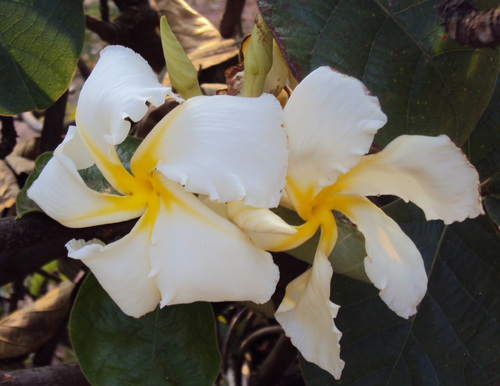
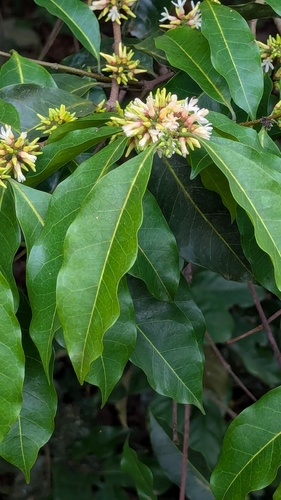
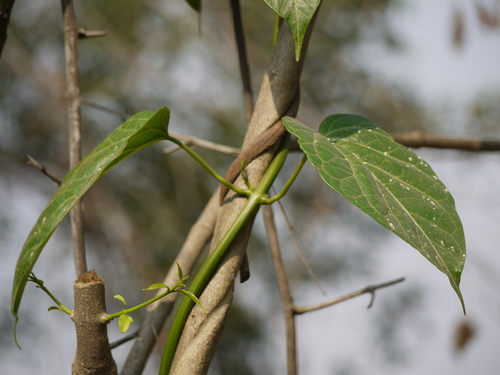
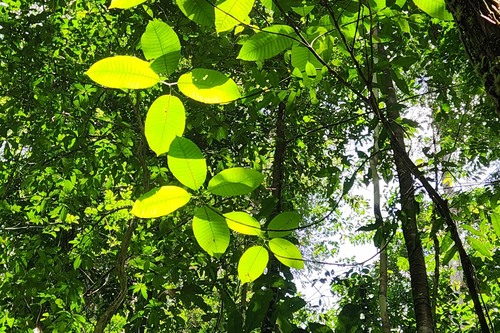
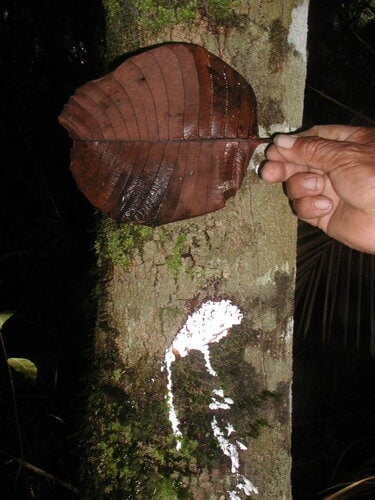
A tree. It grows 5-16 m tall. It can be 30 m tall. The trunk can be 15-100 cm across. The bark is light brown. The leaves are narrowly oval and 13-15 cm long by 4-5 cm wide. The fruit are follicles 10-15 cm long by 4-5 cm wide. The seeds are 3 cm long by 1.5 cm wide.
Edible Uses
The fruit is eaten, though it is notably bitter.
Traditional Uses
The fruit is bitter.
This uses section is brief — help expand it
Medicinal Uses
The bark is astringent, febrifuge, tonic and vermifuge. As a tincture in alcohol, it is used in the treatment of malaria; as a decoction it is used to treat diarrhoea, internal parasites in children, infections of glans penis, diabetes, fever, stomach worms, itches. The bark contains an indolic alkaloid, known as geissospermine, which has been shown to be hypotensive, as well as a depressant of the respiration and of the cardiac action. It can stop the functions of the central nervous system. The seed is bitter.
Known Hazards
The wood contains the alkaloid geissospermine, a paralyzing poison that can stop the functions of the central nervous system.
Distribution
It is a tropical plant. It grows in moist but not flooded forest.
Where It Grows
Brazil, Ecuador, Guianas, Guyana, South America,
Cultivation
Succeeds in a sunny position or dappled shade. Newly planted young plants usually establish themselves and grow away moderately well. The tree has a great regenerative capacity when felled, even if subject to fire.
Propagation
Seed - it does not require pre-treatment, being best sown as soon as it is ripe in a nursery seedbed in light shade. A germination rate of more than 50% is usually achieved within 30 - 50 days.
Other Uses
The wood has a fine and medium texture; is straight-grained; moderately heavy; with good mechanical properties and of medium durability. It is good for general constructions, domestic utensils and tool handles.
Production
In Guyana plants flower in August and fruit in January.
Synonyms
Also Known As
Pillchi kaspi
References (3)
- Allorge-Boiteau, L., Flora of the Guianas. 140 Apocynaceae p 97
- Torre, de la L., et al, 2008, Enciclopedia de las Plantas Útiles del Ecuador. Herbario QCA. Pontificia Universidad Católica del Ecuador. p 173
- www.colecionandofrutas.org