Cocculus orbiculatus
(L.) DC.
Queen coralbead
iNaturalist· cc-by-nc
(c) MP Zhou, some rights reserved (CC BY-NC)
iNaturalist· cc-by-nc
(c) MP Zhou, some rights reserved (CC BY-NC)
iNaturalist· cc-by-nc
(c) 梁士明, some rights reserved (CC BY-NC)
Summary
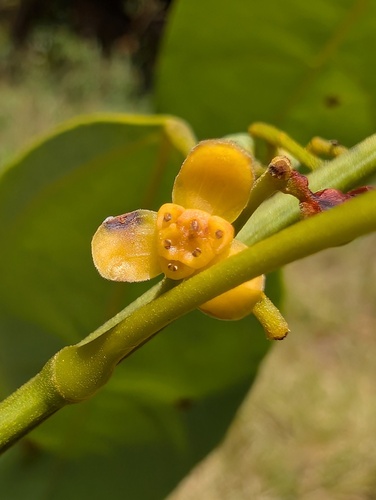
Deciduous climbing vine reaching 4 meters tall. Flowers in August with seeds ripening by October. Monoecious with male and female flowers on the same plant. Grows in light sandy, medium loamy, or heavy clay soils with good drainage. Tolerates mildly acidic to basic pH levels. Adapts to semi-shade or full sun and prefers consistently moist soil. Hardy to UK zone 7.
Description
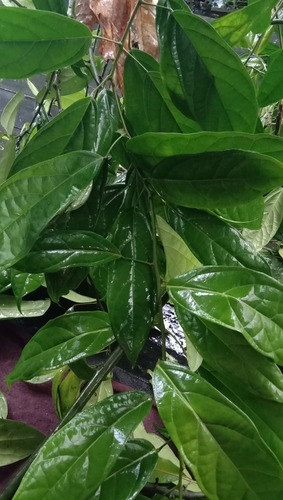
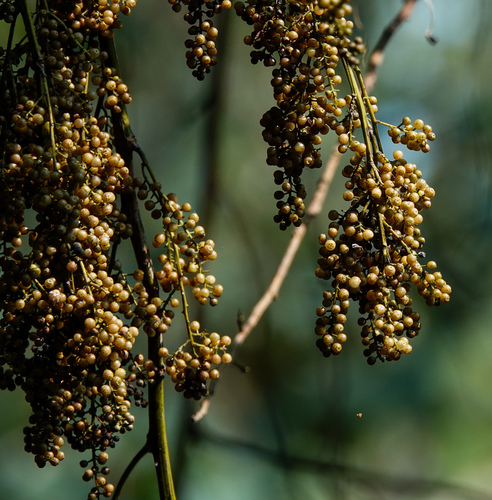
A woody vine. It grows 4 m long. It loses its leaves during the year. The leaves vary in shape. They are oval and 3-8 cm long. The fruit are black.
Edible Uses
The leaves can be cooked and eaten, though they are considered an emergency food used only when other options are unavailable. One report suggests the root may also be edible.
Medicinal Uses
The root is anodyne, antiphlogistic, antirheumatic, carminative, depurative, diuretic, and vermifuge, and is used to treat rheumatic arthritis, oedema, and oliguria. It has also demonstrated antibacterial and anti-amoebic activity. A decoction made from the stems is used in treating asthma, bronchitis, and paralysis.
Distribution
It is a subtropical plant. It grows beside streams and up to 1,000 m above sea level. In Yunnan. It suits hardiness zones 6-9.
Where It Grows
Asia, China, Hawaii, Himalayas, India, Indochina, Indonesia, Japan, Korea, Laos, Malaysia, Mauritius, Nepal, Pacific, Philippines, SE Asia, Thailand, USA, Vietnam,
Propagation
Sow seed as soon as it is ripe in a greenhouse; stored seed should be sown as soon as possible. Prick seedlings into individual pots once large enough to handle and grow on under glass for at least their first winter. Plant out in late spring or early summer after the last expected frosts. Root cuttings can be taken in December in a greenhouse. Division can be done during the dormant season. Cuttings of half-ripe wood can be taken in July or August in a frame.
Other Uses
The bleached tendrils are used as an ornamental infill in basket making. The plant contains cocculoidine, a compound with insecticidal activity.
Notes
There are about 8 Cocculus species.
Synonyms
Also Known As
Heimanye
References (6)
- Hwang, H., et al, 2013, A Study on the Flora of 15 Islands in the Western Sea of Jeollanamdo Province, Korea. Journal of Asia-Pacific Biodiversity Vol. 6, No. 2 281-310 (As Cocculus trilobus)
- Hwang, HS, et al, 2014, Distribution characteristics of plant in the Ungseokbong Mountain, Gyeongsangnam-do, Korea. Journal of Asia-Pacific Biodiversity. 7(2014) e164-e178 (As Cocculus trilobus)
- Kang, Y., et al, 2012, Wild food plants and wild edible fungi in two valleys on the Qinling Mountains (Shaanxi, central China) Journal of Ethnobiology and Ethnomedicine; 9:26 (As Cocculus trilobus)
- Plants for a Future database, The Field, Penpol, Lostwithiel, Cornwall, PL22 0NG, UK. http://www.scs.leeds.ac.uk/pfaf/
- World Checklist of Useful Plant Species 2020. Royal Botanic Gardens, Kew
Show all 6 references Hide references
- www.efloras.org Flora of China Volume 7