Coccoloba uvifera
(L.) L.
Sea grape
iNaturalist· cc-by-nc
(c) Keith Bradley, some rights reserved (CC BY-NC)
iNaturalist· cc-by-nc
(c) Keith Bradley, some rights reserved (CC BY-NC)
iNaturalist· cc-by-nc
(c) Keith Bradley, some rights reserved (CC BY-NC)
Summary
Source: WikipediaCoccoloba uvifera is a species of tree and flowering plant in the buckwheat family, Polygonaceae. Its common names include seagrape and baygrape. It is native to coastal beaches throughout tropical America and the Caribbean. It has edible fruit, among other uses.
Description
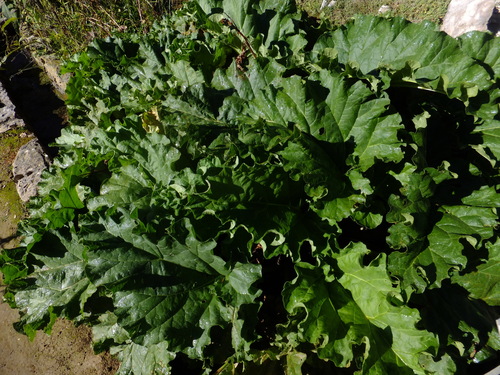
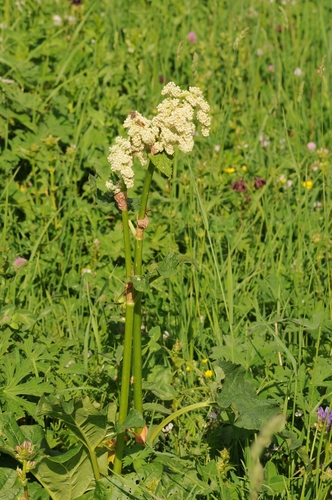
A medium to large evergreen tree. It grows 6-15 m high and spreads to 3 m across. The stem is erect and woody and branching. The bark is pale and blotchy. The leaves are glossy green and almost round, but heart shaped at the base. They are rounded at the tip, and leathery. The leaves can be 10-27 cm long by 12-25 cm wide. Often male and female flowers are on separate trees. The flowers are white and have a scent. Flowers occur in clusters, with flowers on equal length flower stalks along a central stem. These are 15-30 cm long. The fruit hang in clusters. They are small and round and white or purple. They are grape like and edible. The flesh is juicy and thin. The seed is hard and nut-like.
Edible Uses
The fruits are eaten fresh or used to make jam, jelly, wine, drinks, soups, and syrups. The fruit is sold in markets.
Traditional Uses
The fruit are used for jam, jelly or wine. They are also used in drinks, soups and syrups. Fruit can be eaten fresh.
This uses section is brief — help expand it
Medicinal Uses
Coccoloba uvifera is a popular ornamental plant in south Florida yards. It serves as a dune stabilizer and protective habitat for small animals. Tall sea grape plants behind beaches help prevent sea turtles from being distracted by lights from nearby buildings. The sap has been used for dyeing and tanning leather. The wood has occasionally been used in furniture, as firewood, or for making charcoal. The fruits of the sea grape may be eaten raw, cooked into jellies and jams, or fermented into sea grape wine. The leaves of the sea grape can be made into a tea and honey bees can make a certain type of honey with the nectar of the sea grape flowers. In other places native to sea grapes, various parts of the plant are used for medicinal purposes. For example, in Puerto Rico and the Caribbean the roots and bark of the plants are used in traditional medicine, while in the Yucatán peninsula tea made from the bark of sea grape mixed with alcohol is used for ulcers. In French Guiana, a juice made from the whole plant called Jamaica kino, is used to treat diarrhea and dysentery.
Distribution
A tropical plant. It is native to tropical America. It can tolerate wind and salt. It has reasonable drought tolerance and can grow in damp soils. It prefers light, well-drained soils in an open sunny position. It is frost tender. Plants normally grow near beaches along sea shores. It adapts well to sandy soils. In Brisbane Botanical Gardens. It suits hardiness zones 10-12.
Where It Grows
Africa, Anguilla, Asia, Australia, Antigua and Barbuda, Aruba, Bahamas, Barbados, Belize, Bermuda, Caribbean, Cayman Islands, Central America, China, Colombia, Cook Islands, Costa Rica, Cuba, Dominica, Dominican Republic, East Africa, Ecuador, El Salvador, Ghana, Grenada, Guadeloupe, Guatemala, Guiana, Guianas, Guyana, Haiti, Hawaii, Honduras, India, Indochina, Indonesia, Jamaica*, Kiribati, Lesser Antilles*, Maldives, Marquesas, Martinique, Mexico*, Montserrat, Myanmar, Nauru, Nicaragua, North America, Pacific, Papua New Guinea, PNG, Panama, Philippines, Puerto Rico, SE Asia, Senegal, South America, St. Kitts and Nevis, St. Vincent and Grenadines, Suriname, Taiwan, Tanzania, Thailand, Trinidad, Turks & Caicos, Tuvalu, USA, Venezuela, Vietnam, Virgin Islands, West Africa, West Indies*,
Cultivation
Plants are grown by seed. They can also be grown by cuttings or layering.
Propagation
Seed - sow in containers at 20°c. Greenwood cuttings Air layering.
Other Uses
A red astringent substance called W. Indian kino (a tannin?) is extracted from the bark and used in tanning and dyeing. A dye is obtained from the peel of the fruit. The heartwood is reddish-brown, occasionally with nearly black linear markings, which give it a pleasing effect in cabinet work; the fairly thick band of sapwood is a very light red. The wood is very close-grained, very hard, strong and very heavy, but very susceptible to attack by dry-wood termites. It takes an excellent polish. When available in sufficient sizes, it is highly valued for cabinet work, furniture making and wood carving. A popular fuel wood. Plants are very tolerant of pruning and can be grown as a hedge. A valuable hedge and windbreak plant for coastal areas. The tree is a natural pioneer within its native range and, especially with its various uses, would make a very good candidate as a pioneer plant for restoring coastal woodlands and establishing woodland gardens.
Production
It is a moderately fast growing tree. Fruit are produced in 3-4 years. The fruit do not ripen at the same time, so often a cloth is spread under the tree and ripe fruit collected as they fall when the branches are shaken.
Other Information
The fruit are sold in markets.
Notes
There are 120 Coccoloba species. In Botanical Gardens in Slovenia presumably in a hot house.
Nutrition
| Part | Moisture | kJ | kcal | Protein | Vit A | Vit C | Iron | Zinc |
|---|---|---|---|---|---|---|---|---|
| Fruit | 79.1 | 305 | 73 | 1.4 | — | 17 | 1.2 | — |
Synonyms
Also Known As
Carnero, Jamaican kino, Khrut thale, Kino, Matora, Meybiskadhuru gas, Nho bien, Papaturro, Platter leaf, Pohon anggur laut, Schusterdruif, Shore grape, Sistri-droifi, Uva caleta, Uva de playa, Uva de praia, Uvero
References (52)
- Abbiw, D.K., 1990, Useful Plants of Ghana. West African uses of wild and cultivated plants. Intermediate Technology Publications and the Royal Botanic Gardens, Kew. p 42
- Ambasta, S.P. (Ed.), 2000, The Useful Plants of India. CSIR India. p 133
- Barwick, M., 2004, Tropical and Subtropical Trees. A Worldwide Encyclopedic Guide. Thames and Hudson p 122
- Bodkin, F., 1991, Encyclopedia Botanica. Cornstalk publishing, p 269
- Burkill, H. M., 1985, The useful plants of west tropical Africa, Vol. 4. Kew.
Show all 52 references Hide references
- Chizmar Fernandez, C., et al, 2009, Plantas comestibles de Centroamerica. Instituto de Biodiversidad, Costa Rica. p 260
- Coe, F. G., and Anderson, G. J., 1996, Ethnobotany of the Garifuna of Eastern Nicaragua. Economic Botany 50(1) pp 71-107
- Coe, F. G. and Anderson, G. J., 1999, Ethnobotany of the Sumu (Ulwa) of Southeastern Nicaragua and Comparisons with Miskitu Plant Lore. Economic Botany Vol. 53. No. 4. pp. 363-386
- Condit, R., et al, 2011, Trees of Panama and Costa Rica. Princeton Field Guides. p 370
- Coronel, R.E., 1982, Fruit Collections in the Philippines. IBPGR Newsletter p 6
- Cundall, P., (ed.), 2004, Gardening Australia: flora: the gardener's bible. ABC Books. p 396
- Darley, J. J., 1993, Know and Enjoy Tropical Fruit. P & S Publishers. p 133
- Ekman Herbarium records Haiti
- Elias, T. S. & Dykeman P. A., 1990, Edible Wild Plants. A North American Field guide. Sterling, New York p 197
- Esperanca, M. J., 1988. Surviving in the wild. A glance at the wild plants and their uses. Vol. 2. p 215
- Etherington, K., & Imwold, D., (Eds), 2001, Botanica's Trees & Shrubs. The illustrated A-Z of over 8500 trees and shrubs. Random House, Australia. p 218
- Facciola, S., 1998, Cornucopia 2: a Source Book of Edible Plants. Kampong Publications, p 184
- Flowerdew, B., 2000, Complete Fruit Book. Kyle Cathie Ltd., London. p 163
- Grandtner, M. M. & Chevrette, J., 2013, Dictionary of Trees, Volume 2: South America: Nomenclature, Taxonomy and Ecology. Academic Press p 149
- Hedrick, U.P., 1919, (Ed.), Sturtevant's edible plants of the world. p 206
- Heywood, V.H., Brummitt, R.K., Culham, A., and Seberg, O., 2007, Flowering Plant Families of the World. Royal Botanical Gardens, Kew. p 264
- Hibbert, M., 2002, The Aussie Plant Finder 2002, Florilegium. p 71
- Hu, Shiu-ying, 2005, Food Plants of China. The Chinese University Press. p 370
- Jardin, C., 1970, List of Foods Used In Africa, FAO Nutrition Information Document Series No 2.p 129
- Kiple, K.F. & Ornelas, K.C., (eds), 2000, The Cambridge World History of Food. CUP p 1849
- Little, E. L. & Wadsworth, F. H., 1964, Common Trees of Puerto Rico and the Virgin Islands. USDA Agriculture Handbook No. 249
- Llamas, K.A., 2003, Tropical Flowering Plants. Timber Press. p 318
- Lopez-Diago, D. & Garcia, N., 2021, Wild edible fruits of Colombia. Biota ColomBiana 22 (2) p 48
- Lyle, S., 2006, Discovering fruit and nuts. Land Links. p 146
- Martin, F. W., et al, 1987, Perennial Edible Fruits of the Tropics. USDA Handbook 642 p 52
- May, R.J., 1984, Kaikai Aniani. A Guide to Bush Foods Markets and Culinary Arts of Papua New Guinea. Robert Brown and Associates. p 81
- McLaughlin, J., Woody and Herbaceus Plants Native to Haiti. University of Florida. p 15
- Miguel, E., et al, 1989, A checklist of the cultivated plants of Cuba. Kulturpflanze 37. 1989, 211-357
- Omawale, 1973, Guyana's edible plants. Guyana University, Georgetown p 41
- Pham-Hoang Ho, 1999, An Illustrated Flora of Vietnam. Nha Xuat Ban Tre. p 755
- Piedra-Malagón, E. M., et al, 2022, Edible native plants of the Gulf of Mexico Province. Biodiversity Data Journal 10: e80565 p 27
- Plants of Haiti Smithsonian Institute http://botany.si.edu/antilles/West Indies
- PROSEA (Plant Resources of South East Asia) handbook, Volume 2, 1991, Edible fruits and nuts.
- Roa, J. A. G. & Boada, D. S. G., 2018, Fundación para el Fortalecimiento de la Fruticultura y Plantas Alimenticias no Convencionales en Colombia.
- Segura, S., et al, 2018, The edible fruit species in Mexico. Genet Resour Crop Evol (2018) 65:1767–1793
- Smith, N., Mori, S.A., et al, 2004, Flowering Plants of the Neotropics. Princeton. p 310
- Staples, G.W. and Herbst, D.R., 2005, A tropical Garden Flora. Bishop Museum Press, Honolulu, Hawaii. p 463 (Drawing)
- Sujanapal, P., & Sankaran, K. V., 2016, Common Plants of Maldives. FAO & Kerala FRI, p 91
- Sukarya, D. G., (Ed.) 2013, 3,500 Plant Species of the Botanic Gardens of Indonesia. LIPI p 206
- Syst. nat. ed. 10, 2:1007. 1759
- Thaman, R. R., 1987, Plants of Kiribati: A listing and analysis of vernacular names. Atoll Research Bulletin No. 296
- Thaman, R. R., et al, 1994, The Flora of Nauru. Atoll Research Bulletin No. 392. Smithsonian Institute p 182
- USDA, ARS, National Genetic Resources Program. Germplasm Resources Information Network - (GRIN). [Online Database] National Germplasm Resources Laboratory, Beltsville, Maryland. Available: www.ars-grin.gov/cgi-bin/npgs/html/econ.pl (10 April 2000)
- van Roosmalen, M.G.M., 1985, Fruits of the Guianan Flora. Utrecht Univ. & Wageningen Univ. p 364
- Wiersema, J. H. & Leon, B., 2013, World Economic Plants. A Standard Reference CRC Press. 2nd Ed. p 188
- World Checklist of Useful Plant Species 2020. Royal Botanic Gardens, Kew
- Zuchowski W., 2007, Tropical Plants of Costa Rica. A Zona Tropical Publication, Comstock Publishing. p 348