Clerodendrum trichotomum
Thunb.
Chou Wu Tong, Harlequin Glory-bower, Harlequin Glorybower
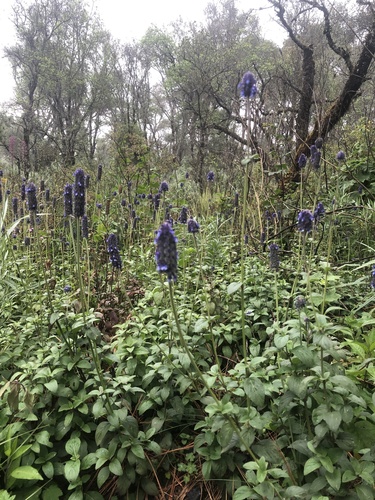
iNaturalist· cc-by-nc
(c) Lijin Huang (紫楝), some rights reserved (CC BY-NC), uploaded by Lijin Huang (紫楝)
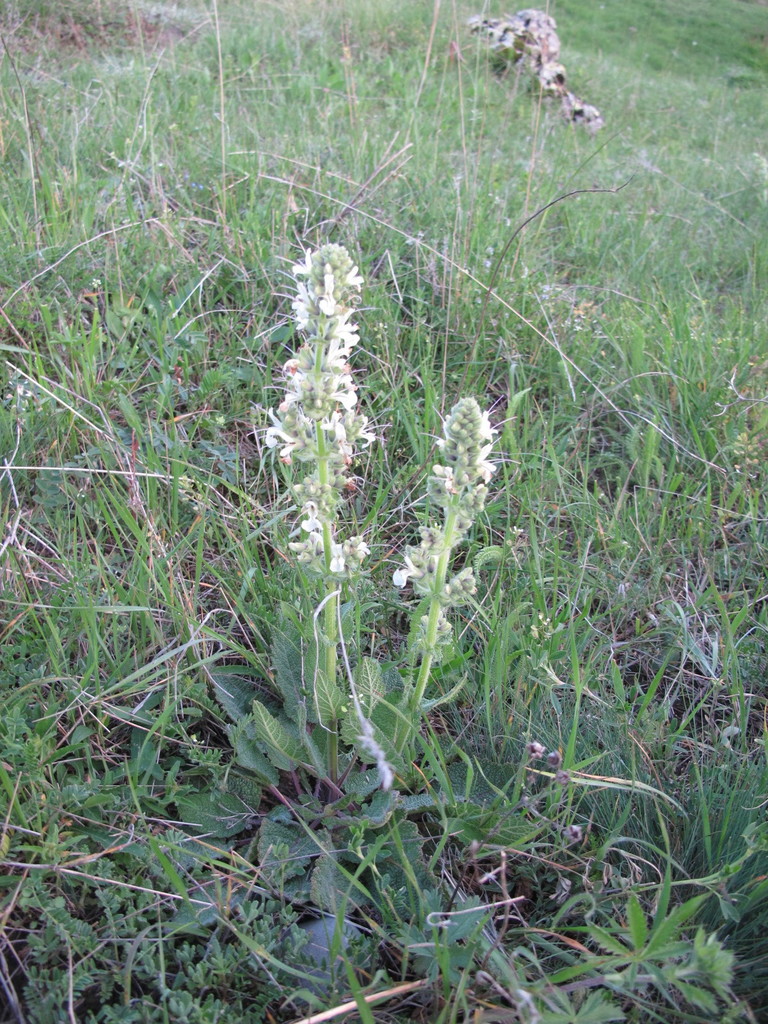
iNaturalist· cc-by-nc
(c) Stargazer, some rights reserved (CC BY-NC), uploaded by Stargazer
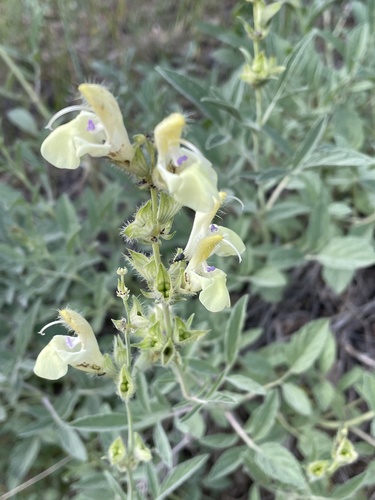
iNaturalist· cc-by-nc
(c) emanon, some rights reserved (CC BY-NC), uploaded by emanon
Summary
Source: WikipediaClerodendrum trichotomum, the harlequin glorybower, glorytree or peanut butter tree, is a species of flowering plant in the family Lamiaceae. It is native to China, Korea, Taiwan, Japan, India, and the Philippines. It is cultivated for its fragrant flowers, autumn color, and ornamental berries, which contain the novel blue pigment trichotomine.
Description
A small tree. It loses its leaves during the year. It grows 4.5-6 m high. It forms suckers. It has sparse branches and the lower branches droop. The leaves are thin and downy. The flowers are in clusters at the branch tips. They are white but turn pink. The fruit are small and blue. They are cupped in enlarged red calyces.
Edible Uses
Young sprouts and leaves - cooked. The leaves of species in this genus usually have a bitter flavour and are often eaten at least as much for their tonic affect upon the digestive system as for any appeal to the taste buds.
Traditional Uses
The young leaves are eaten or used to wrap food.
This uses section is brief — help expand it
Medicinal Uses
The leaves are mildly analgesic, antipruritic, hypotensive and sedative. They are used externally for dermatitis and internally for hypertension, rheumatoid arthritis, joint pain, numbness and paralysis. In a clinical trial of 171 people, the blood pressure of 81% dropped significantly, though this effect reversed when treatment was stopped. The plant is normally used alongside Bidens bipinnata, and when combined with Siegesbeckia pubescens it acts as an anti-inflammatory. The roots and leaves are antirheumatic and hypotensive; a decoction is used to treat rheumatoid arthritis and hypertension. Pounded seed is used to kill lice.
Distribution
It is a tropical plant. It is frost hardy. It is best in a well-drained, moist soil. It suits hardiness zones 10-12.
Where It Grows
Asia, Australia, Britain, China*, Europe, Japan*, Korea, SE Asia, Slovenia, Tibet,
Cultivation
Succeeds in a sunny position in ordinary garden soil but prefers a fertile humus-rich well-drained loam. The soil must not be allowed to dry out in the growing season. Requires a position sheltered from cold drying winds. Plants are generally hardy to about -15°c, they succeed outdoors at Kew though the branches are pithy and are apt to die back in winter. The sub-species C. trichotomum fargesii. (Dode.)Rehder. is somewhat hardier, tolerating temperatures down to about -20°c. Plants produce the occasional sucker. The leaves have a heavy unpleasant odour when crushed. Flowers are produced on the current seasons growth and are sweetly scented.
Propagation
Seed is best sown as soon as possible in a greenhouse. Germination can be erratic but usually takes place within 20–60 days at 20°c. Prick seedlings into individual pots when large enough to handle and grow on in the greenhouse for at least their first winter. Plant out in late spring or early summer after the last expected frosts. Root cuttings 6–8cm long can be taken in December in a greenhouse with a high success rate. Division of suckers can be done in the dormant season and is very straightforward — divisions can be planted directly into their permanent positions if required.
Other Uses
Pounded seed is used as a parasiticide against lice.
Notes
There are about 400 Clerodendrum species.
Also Known As
Choumudan, Choulaohan, Navadni usodnik, Nurijangnamu
References (14)
- Bodkin, F., 1991, Encyclopedia Botanica. Cornstalk publishing, p 267
- Chen, B. & Qiu, Z., Consumer's Attitudes towards Edible Wild Plants, Ishikawa Prefecture, Japan. p 23 www.hindawi.com/journals/ijfr/aip/872413.pdf
- Cundall, P., (ed.), 2004, Gardening Australia: flora: the gardener's bible. ABC Books. p 393
- Etherington, K., & Imwold, D., (Eds), 2001, Botanica's Trees & Shrubs. The illustrated A-Z of over 8500 trees and shrubs. Random House, Australia. p 216
- Hibbert, M., 2002, The Aussie Plant Finder 2002, Florilegium. p 70
Show all 14 references Hide references
- Hwang, H., et al, 2013, A Study on the Flora of 15 Islands in the Western Sea of Jeollanamdo Province, Korea. Journal of Asia-Pacific Biodiversity Vol. 6, No. 2 281-310
- Hwang, HS, et al, 2014, Distribution characteristics of plant in the Ungseokbong Mountain, Gyeongsangnam-do, Korea. Journal of Asia-Pacific Biodiversity. 7(2014) e164-e178
- Kang, Y., et al, 2012, Wild food plants and wild edible fungi in two valleys on the Qinling Mountains (Shaanxi, central China) Journal of Ethnobiology and Ethnomedicine; 9:26
- Lord, E.E., & Willis, J.H., 1999, Shrubs and Trees for Australian gardens. Lothian. p 216
- Nova Acta Regiae Soc. Sci. Upsal. 3:201. 1780
- Ong, H. G., et al, 2015, Ethnobotany of the wild edible plants gathered in Ulleung Island, South Korea. Genet Resourc Crop Evol. Springer
- Plants for a Future database, The Field, Penpol, Lostwithiel, Cornwall, PL22 0NG, UK. http://www.scs.leeds.ac.uk/pfaf/
- Ryan, S., 2008, Dicksonia. Rare Plants Manual. Hyland House. p 14
- Young, J., (Ed.), 2001, Botanica's Pocket Trees and Shrubs. Random House. p 255