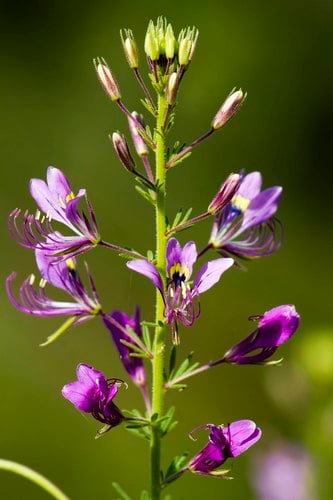
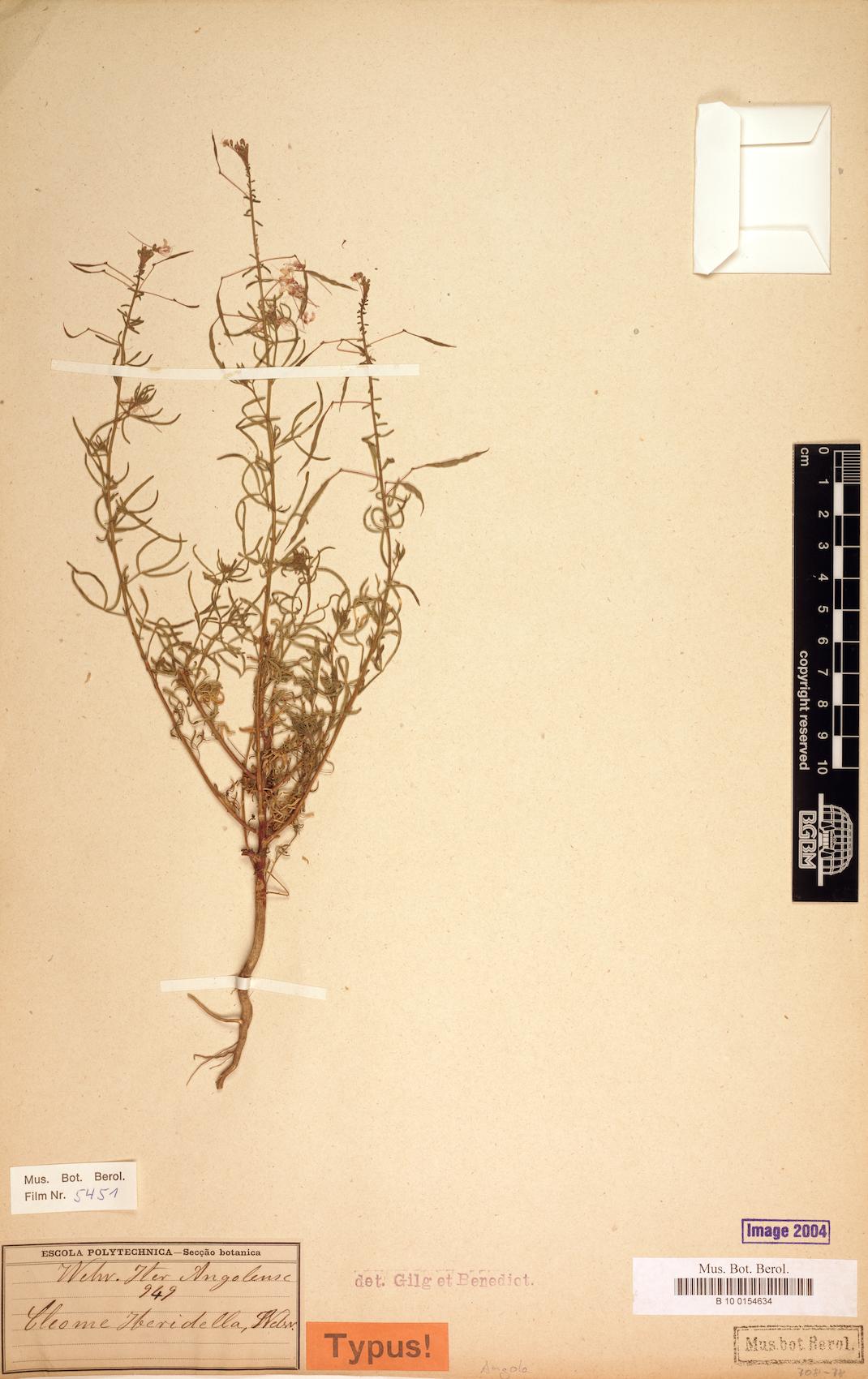
Cleomella serrulata
(Pursh.) Roalson & J. C. Hall
Rocky mountain beeplant
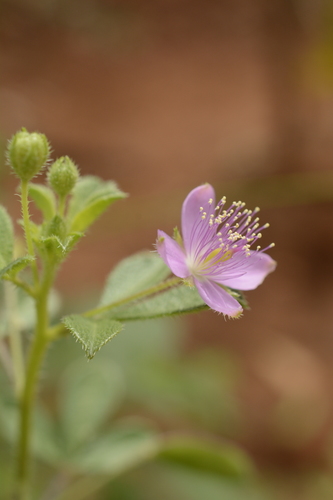
iNaturalist· cc-by-nc
(c) Rozetta Locksa, some rights reserved (CC BY-NC), uploaded by Rozetta Locksa
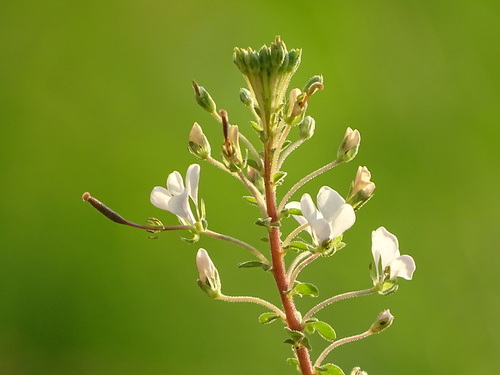
iNaturalist· cc-by-nc
(c) elle1701, some rights reserved (CC BY-NC)
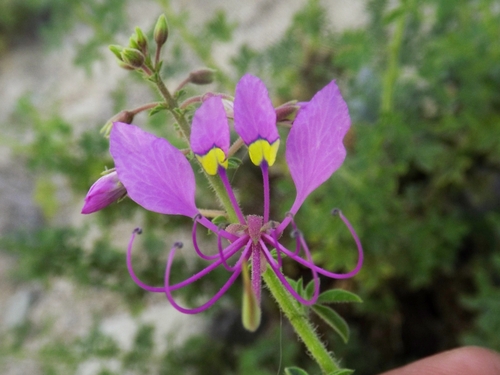
iNaturalist· cc-by-nc-sa
(c) Razzu Engen, some rights reserved (CC BY-NC-SA)
Summary
Source: WikipediaCleomella serrulata (syns. Cleome serrulata and Peritoma serrulata), commonly known as Rocky Mountain beeplant/beeweed, stinking-clover, bee spider-flower, skunk weed, Navajo spinach, and guaco, is a species of annual plant in the genus Cleomella. Many species of insects are attracted to it, especially bees, which helps in the pollination of nearby plants. It is native to southern Canada and the western and central United States. The plant has often been used for food, to make dyes for paint, and as a treatment in traditional medicine.
Description
An annual herb growing to about 1 m tall, found in temperate regions on sandy soils in plains and lower mountain areas.
This description is brief — help expand it
Edible Uses
Young leaves, shoots, and flowers are eaten as a potherb after being boiled in several changes of water. Seeds can be ground into meal for porridge or bread. Seedpods can be boiled and eaten.
Traditional Uses
Young leaves, shoots and flowers are eaten as a potherb. They are first boiled in several changes of water. The seeds can be ground into meal for porridge or bread. The seedpods can be boiled and eaten.
Medicinal Uses
Cleomella serrulata has been used in the southwestern United States as a food, medicine, and dye since prehistoric times and is one of very few wild foods still in use. As food, its seeds can be eaten raw or cooked, or dried and ground into meal for use as a mush. The tender leaves, flowers and shoots can be cooked and eaten as a cooked vegetable or added to cornmeal porridge. Among the Zuni, the leaves gathered in large quantities and hung indoors to dry for winter use. The young leaves are cooked with corn strongly flavored with chili peppers. To reduce its bitter taste, pieces of iron or rust were sometimes added to the cooking pot. Animals rarely feed on this plant because of its disagreeable taste and odor. Nitrate poisoning can result if too much is consumed. Birds do eat the seeds, and the plant provides good cover for land reclamation and upland birds. The Tewa and other Southwestern United States tribes often included Cleome serrulata as a 'fourth sister' in the Three Sisters agriculture system because it attracts bees to help pollinate the beans and squash. In traditional Native American and frontier medicine, an infusion of the plant is used to treat stomach troubles and fevers, and poultices made from it can be used on the eyes. As a dye, the plant can be boiled down until it is reduced to a thick, black syrup; this was used as a binder in pigments for painting black-on-white pottery at least as long ago as 900-1300 by the Ancestral Puebloans. The Navajo still use it to make yellow-green dye for their rugs and blankets. Plant paste is used with black mineral paint to color sticks of plume offerings to anthropic gods, and the whole plant except for the root is used in pottery decorations.
Distribution
It is a temperate plant. It is often on sandy soils in plains and lower mountain regions. It is damaged by frost. It can grow on a range of wel-drained soils. It can tolerate light shade. It can be in dry or moist soils.
Where It Grows
North America, USA,
Cultivation
It can be grown from seeds. Seeds need to be very shallowly planted. Seedlings can be transplanted.
Notes
There are about 150 Cleome species.
References (11)
- Beckstrom-Sternberg, Stephen M., and James A. Duke. "The Foodplant Database." http://probe.nalusda.gov:8300/cgi-bin/browse/foodplantdb.(ACEDB version 4.0 - data version July 1994) (As Cleome serrulata)
- CURTIN, (As Cleome serrulata)
- Etkin, N.L. (Ed.), 1994, Eating on the Wild Side, Univ. of Arizona. p 70 (As Cleome serrulata)
- Facciola, S., 1998, Cornucopia 2: a Source Book of Edible Plants. Kampong Publications, p 78 (As Cleome integrifolia)
- Fl. Amer. sept. 2:441. 1813-1814 (As Cleome serrulata)
Show all 11 references Hide references
- Kermath, B. M., et al, 2014, Food Plants in the Americas: A survey of the domesticated, cultivated and wild plants used for Human food in North, Central and South America and the Caribbean. On line draft. p 243 (As Cleome serrulata)
- KRENETSKY, (As Cleome serrulata)
- MINNIS, (As Cleome serrulata)
- Plants for a Future database, The Field, Penpol, Lostwithiel, Cornwall, PL22 0NG, UK. http://www.pfaf.org (As Cleome serrulata)
- VESTAL, (As Cleome serrulata)
- World Checklist of Useful Plant Species 2020. Royal Botanic Gardens, Kew