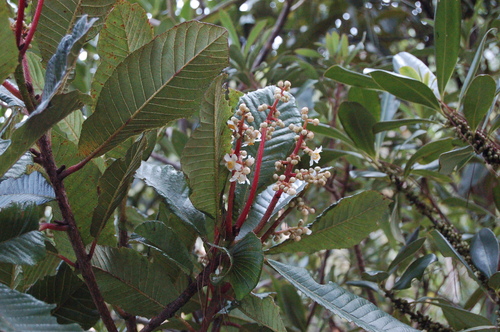
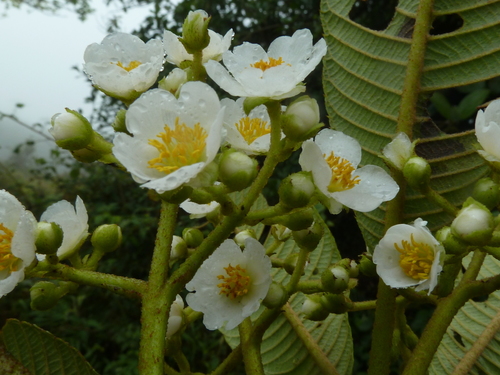
Actinidia coriacea
(Finet & Gagnep.) Dunn
Leather-leaved actinidia
iNaturalist· cc-by-nc
(c) 綾蛾Actias, some rights reserved (CC BY-NC)
iNaturalist· cc-by-nc
(c) 江国彬, some rights reserved (CC BY-NC)
iNaturalist· cc-by-nc
(c) 江国彬, some rights reserved (CC BY-NC)
Summary
An evergreen climbing vine reaching 8 m with hardy growth to UK zone 6. Year-round foliage with flowers appearing May to June. Dioecious species requiring both male and female plants for seed; not self-fertile and pollinated by bees and insects. Tolerates light sandy, medium loamy, and heavy clay soils across mildly acidic to basic pH ranges. Flourishes in semi-shade or full sun with preference for moist soil.
Description
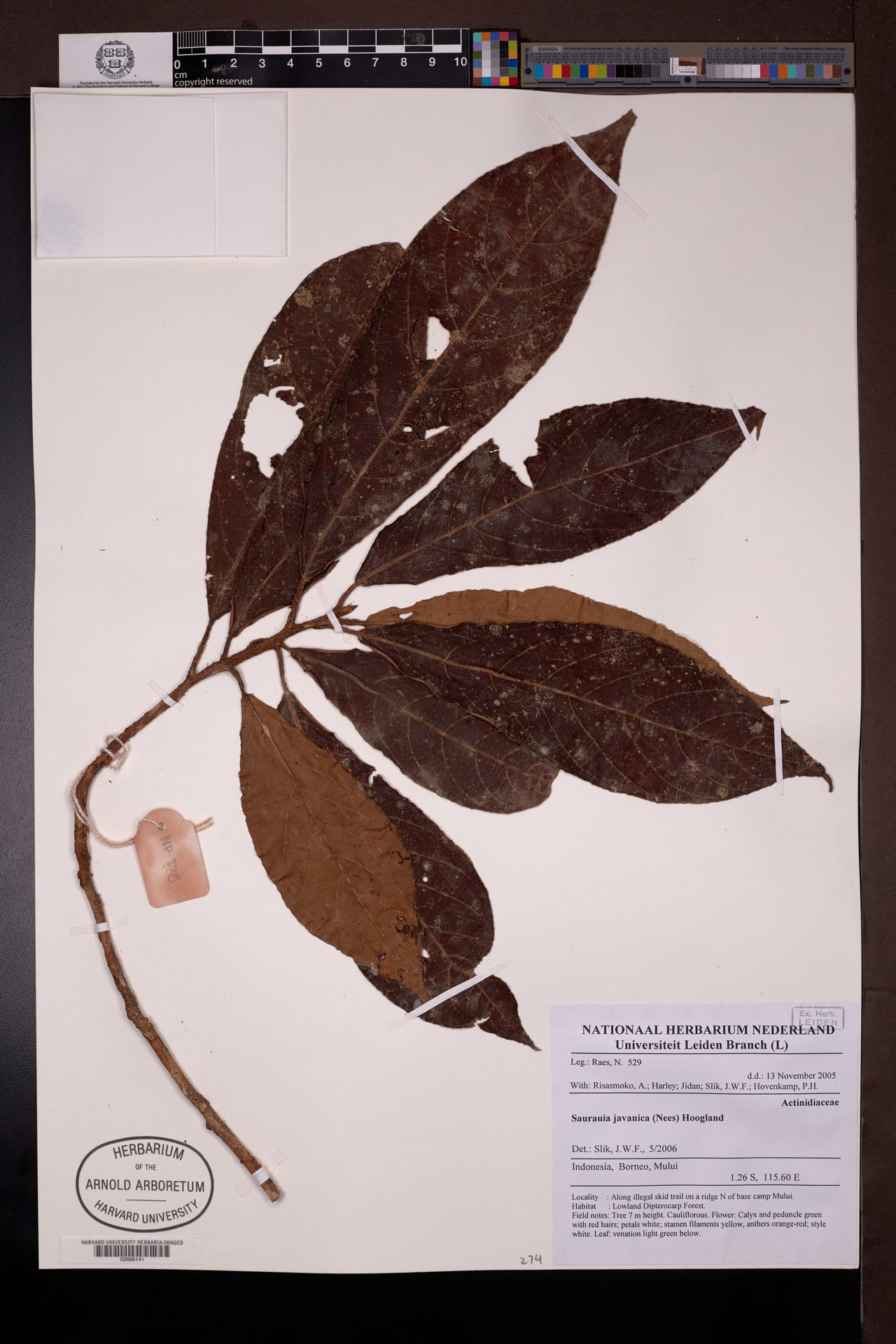
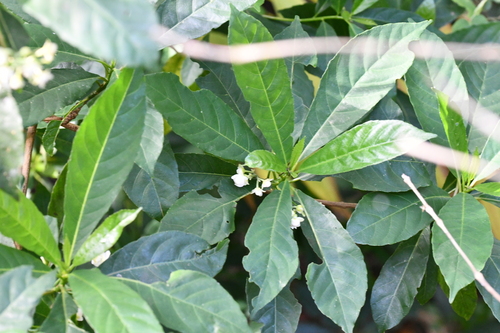
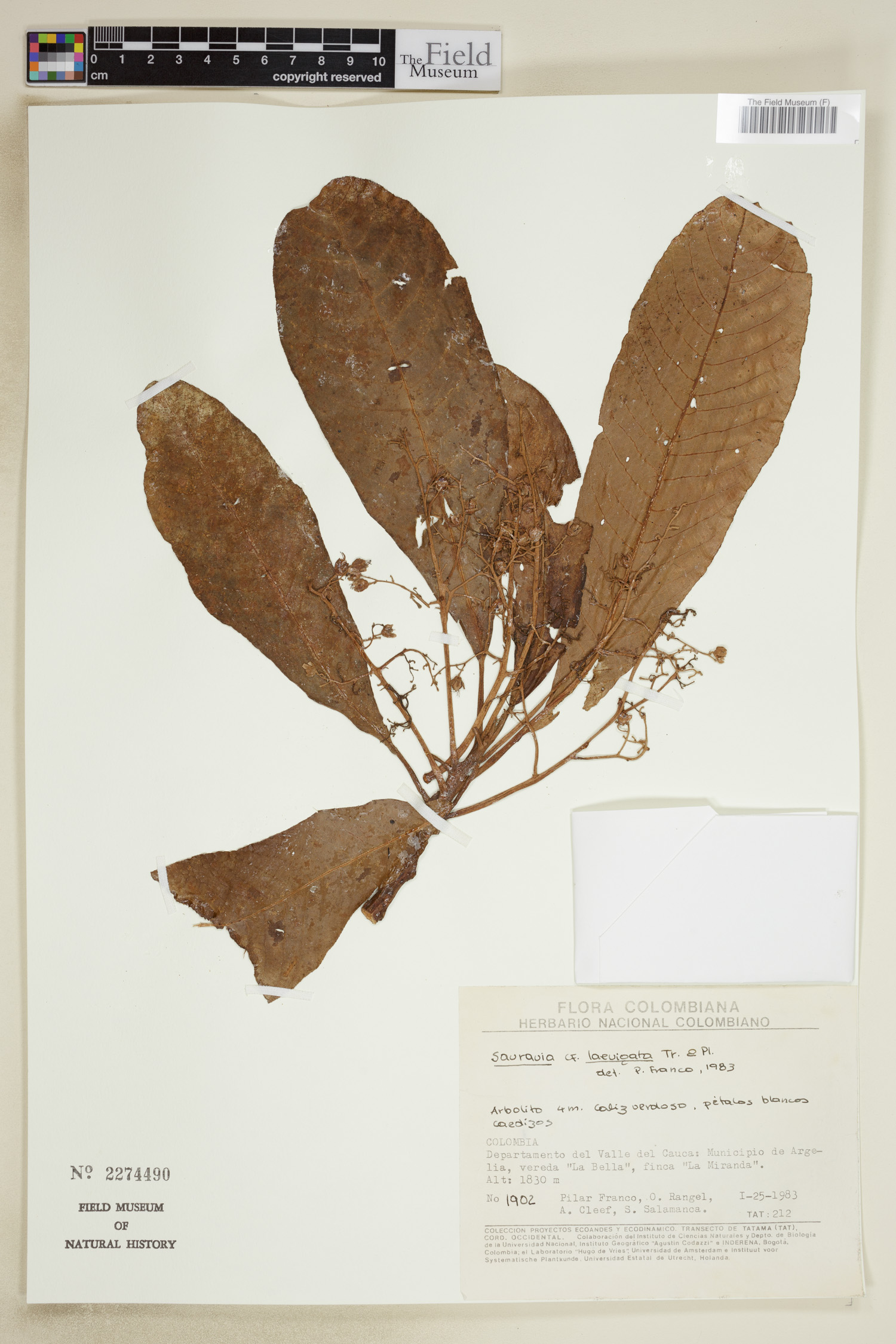
A climber. It loses its leaves during the year. It grows to 8 m long. The leaves are oval and 4-13 cm long by 2-4 cm wide. Male and female flowers occur on separate plants. The fruit is 2 cm long and contains many small seeds.
Edible Uses
The fruit can be eaten raw or cooked. It is small — up to 2cm long — but very juicy and full of seeds. The seeds are soft enough to eat along with the flesh.
Traditional Uses
The fruit is eaten raw or cooked.
This uses section is brief — help expand it
Medicinal Uses
None known
Distribution
It grows naturally in thickets between 200 - 1000 metres altitude from Kweichow and Szechuan to N.W. Yunnan Provinces in China. It has some frost resistance.
Where It Grows
Asia, China, Indochina, SE Asia, Vietnam,
Cultivation
It can be grown from seed or cuttings. Male and female plants must be grown if seed is required. Plants can be grown from seed. Fresh seed germinates in 2 - 3 months at 10°C and stored seed can take longer. Seedlings should be transplanted out when 30 cm tall and after the last frosts. (Most seedlings are male.) Plants can be grown from cuttings.
Propagation
Sow seed in spring in a greenhouse. Three months of stratification is recommended — either sow fresh seed in a cold frame as soon as it ripens in November, or stratify stored seed before spring sowing. Fresh seed germinates in 2–3 months at 10°C; stored seed may take longer. Once seedlings are large enough to handle, prick them out into individual pots and grow on in light shade in the greenhouse for at least their first winter. Plant out into permanent positions in late spring or early summer when plants are 30cm or more tall, after the last expected frosts. Note that most seedlings are male. Seedlings are prone to damping off and must be kept well ventilated. Softwood cuttings can be taken as soon as they are ready in spring, in a frame. Half-ripe cuttings can be taken in July/August in a frame, with a very high success rate. Ripe wood cuttings can be taken in October/November in a frame.
Other Uses
None known
Notes
There are 40-60 Actinidia species. The Actinidiaceae are a mainly tropical family.
Synonyms
Also Known As
Duongdao dai
References (7)
- Bircher, A. G. & Bircher, W. H., 2000, Encyclopedia of Fruit Trees and Edible Flowering Plants in Egypt and the Subtropics. AUC Press. p 9
- Hu, Shiu-ying, 2005, Food Plants of China. The Chinese University Press. p 551
- J. Linn. Soc., Bot. 39:405. 1911
- Lyle, S., 2006, Discovering fruit and nuts. Land Links. p 51
- Pham-Hoang Ho, 1999, An Illustrated Flora of Vietnam. Nha Xuat Ban Tre. p 408
Show all 7 references Hide references
- Plants for a Future database, The Field, Penpol, Lostwithiel, Cornwall, PL22 0NG, UK. http://www.scs.leeds.ac.uk/pfaf/
- Reis, S. V. and Lipp, F. L., 1982, New Plant Sources for Drugs and Foods from the New York Botanical Garden herbarium. Harvard. p 181