Citrus madurensis
Lour.
Calamondin, Calamandarin, Panama orange
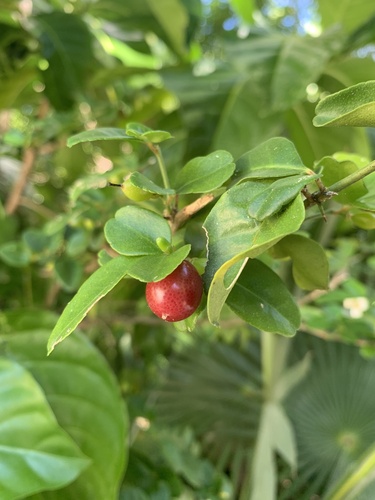
iNaturalist· cc-by-nc
(c) Steve Gallagher, some rights reserved (CC BY-NC)
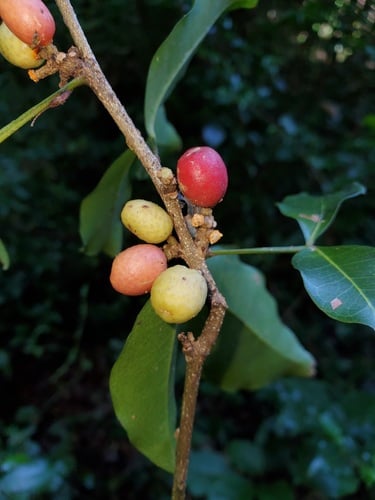
iNaturalist· cc-by-nc
(c) Steve Gallagher, some rights reserved (CC BY-NC)
iNaturalist· cc-by-nc
(c) Steve Gallagher, some rights reserved (CC BY-NC)
Description
A small tree. It grows 2 m tall. The leaves are 6.5 cm long by 3.2 cm wide. They are broadly oval and the edges are wavy. The leaf stalk has a very narrow wing. The flowers contain both sexes. The fruit is 30 mm long by 27 mm wide. The fruit is small, round, orange and sour. The skin peels off easily. The pulp is deep orange and acid.
Edible Uses
The fruit is eaten fresh; the skin peels off easily and the pulp is deep orange and acidic.
Distribution
A tropical plant. It is resistant to nematodes and can grow on limestone soils. It suits hardiness zones 9-11.
Where It Grows
Asia, Australia, China, Cuba, Indochina, Indonesia, Pacific, Pakistan, Philippines, SE Asia, Taiwan, West Indies,
Notes
There are 20 Citrus species. Several hybrids have been formed. This one is probably now Citrofortunella mitis
Synonyms
Also Known As
Naranjita de San Jose
References (11)
- Arora, R. K., 2014, Diversity in Underutilized Plant Species - An Asia-Pacific Perspective. Bioversity International. p 63
- Coronel, R.E., 1982, Fruit Collections in the Philippines. IBPGR Newsletter p 6
- Cundall, P., (ed.), 2004, Gardening Australia: flora: the gardener's bible. ABC Books. p 384
- Fl. cochinch. 2:467. 1790
- Flora of Pakistan. www.eFloras.org
Show all 11 references Hide references
- Hibbert, M., 2002, The Aussie Plant Finder 2002, Florilegium. p 68
- INFOODSUpdatedFGU-list.xls
- Khan, D. & Shaukat, S.S., 2006, The Fruits of Pakistan: Diversity, Distribution, Trends of Production and Use. Int. J. Biol. Biotech., 3(3):463-499
- Miguel, E., et al, 1989, A checklist of the cultivated plants of Cuba. Kulturpflanze 37. 1989, 211-357
- Morton, J. F., 1987, Fruits of Warm Climates. Wipf & Stock Publishers p 176
- USDA, ARS, National Genetic Resources Program. Germplasm Resources Information Network - (GRIN). [Online Database] National Germplasm Resources Laboratory, Beltsville, Maryland. Available: www.ars-grin.gov/cgi-bin/npgs/html/econ.pl (10 April 2000)