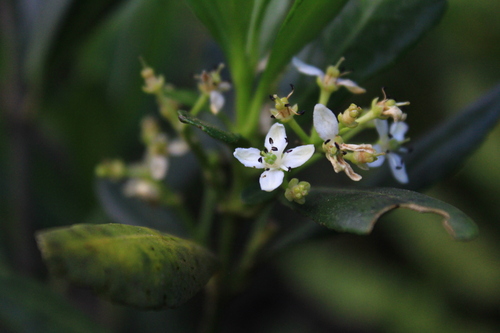
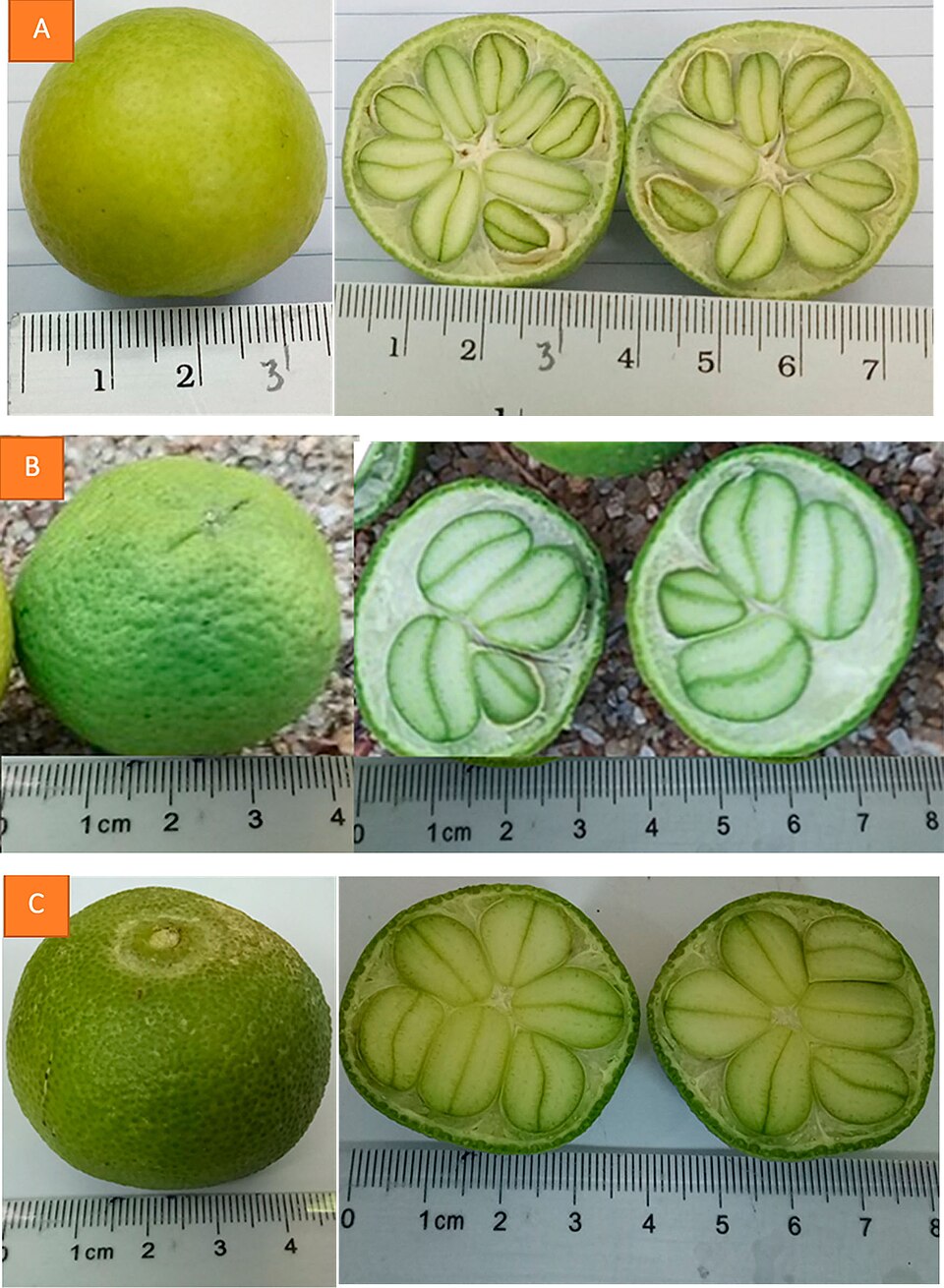
Citrus limettioides
Tanaka
Sweet lime
wikimedia· cc-by-sa
Wikimedia Commons - James Steakley
wikimedia· cc-by-sa
Wikimedia Commons - Franck Curk , Frédérique Ollitrault , Andrés Garcia-Lor , François Luro , Luis Navarre, Patrick Ollitrault
Description
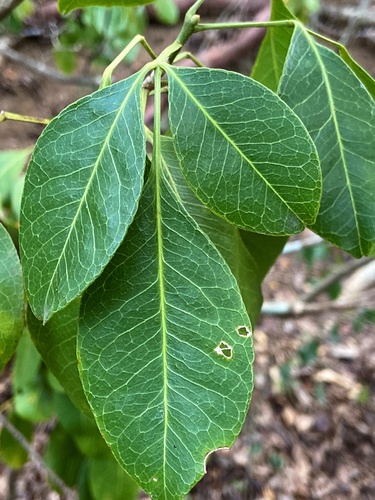
It is probably a hybrid between Mexican lime and sweet lemon. It grows 4-6 m tall. The leaves are serrated but like Tahitian lime. The leaf stalks are round. The leaves are 3-6 cm long. The fruit remain green even when ripe. The flesh is bright orange. The fruit are juicy and non-acid but slightly bitter. Flowers are self fertile and produce many fruit.
Edible Uses
The fruits are eaten fresh or cooked, used in preserves, and pressed for juice and drinks.
Traditional Uses
The fruit are eaten fresh or after cooking. They are also used in preserves. It is used for juice and drinks.
This uses section is brief — help expand it
Medicinal Uses
The fruit has medicinal properties. Citrus species contain a wide range of active ingredients and research is still underway in finding uses for them. They are rich in vitamin C, flavonoids, acids and volatile oils. They also contain coumarins such as bergapten which sensitizes the skin to sunlight. Bergapten is sometimes added to tanning preparations since it promotes pigmentation in the skin, though it can cause dermatitis or allergic responses in some people. Some of the plants more recent applications are as sources of anti-oxidants and chemical exfoliants in specialized cosmetics.
Distribution
A tropical plant. It grows in tropical climates. It can withstand frost.
Where It Grows
Asia, Australia, Brazil, Central America, Colombia, Costa Rica, India*, Indochina, Malaysia, Mediterranean, Mexico, North America, Peru, SE Asia, South America, Sri Lanka, Thailand, Vietnam,
Cultivation
It is grown from seed. It is usually grown from cuttings or air-layering.
Other Uses
An essential oil is obtained from the peel of the fruit. The plant is used as a rootstock for other Citrus species.
Other Information
It is popular in Central America.
Notes
There are 20 Citrus species. Several hybrids have been formed.
Synonyms
Also Known As
Gajanimbe, Gajanimma, Imbe, Jlimu malen, Kolumichangai, Lima Mithanebu, Lima-de-umbigo, Lima-doce, Lima dulce, Limau manis, Mithalimbu, Naran-kai, Nenumapandu, Palestine sweet lime, Pani dodna, Som khiew wan, Som kleang
References (14)
- Ambasta, S.P. (Ed.), 2000, The Useful Plants of India. CSIR India. p 128
- D'Ambrosio, U., & Puri, R. K., 2016, Foodways in transition: food plants, diet and local perceptions of change in a Costa Rican Ngäbe community. Journal of Ethnobiology and Ethnomedicine (2016) 12:3 p 27
- Facciola, S., 1998, Cornucopia 2: a Source Book of Edible Plants. Kampong Publications, p 217
- Hibbert, M., 2002, The Aussie Plant Finder 2002, Florilegium. p 68
- J. Indian Bot. Soc. 16:236. 1837
Show all 14 references Hide references
- Lorenzi, H., Bacher, L., Lacerda, M. & Sartori, S., 2006, Brazilian Fruits & Cultivated Exotics. Sao Paulo, Instituto Plantarum de Estuados da Flora Ltda. p 536
- Lyle, S., 2006, Discovering fruit and nuts. Land Links. p 137
- Morton, J. F., 1987, Fruits of Warm Climates. Wipf & Stock Publishers p 175
- Recher, P, 2001, Fruit Spirit Botanical Gardens Plant Index. www.nrg.com.au/~recher/ seedlist.html p 1
- Roa, J. A. G. & Boada, D. S. G., 2018, Fundación para el Fortalecimiento de la Fruticultura y Plantas Alimenticias no Convencionales en Colombia.
- Sharma, B.B., 2005, Growing fruits and vegetables. Publications Division. Ministry of Information and broadcasting. India. p 37
- Solomon, C., 2001, Encyclopedia of Asian Food. New Holland. p 221
- Tanaka,
- USDA, ARS, National Genetic Resources Program. Germplasm Resources Information Network - (GRIN). [Online Database] National Germplasm Resources Laboratory, Beltsville, Maryland. Available: www.ars-grin.gov/cgi-bin/npgs/html/econ.pl (10 April 2000)