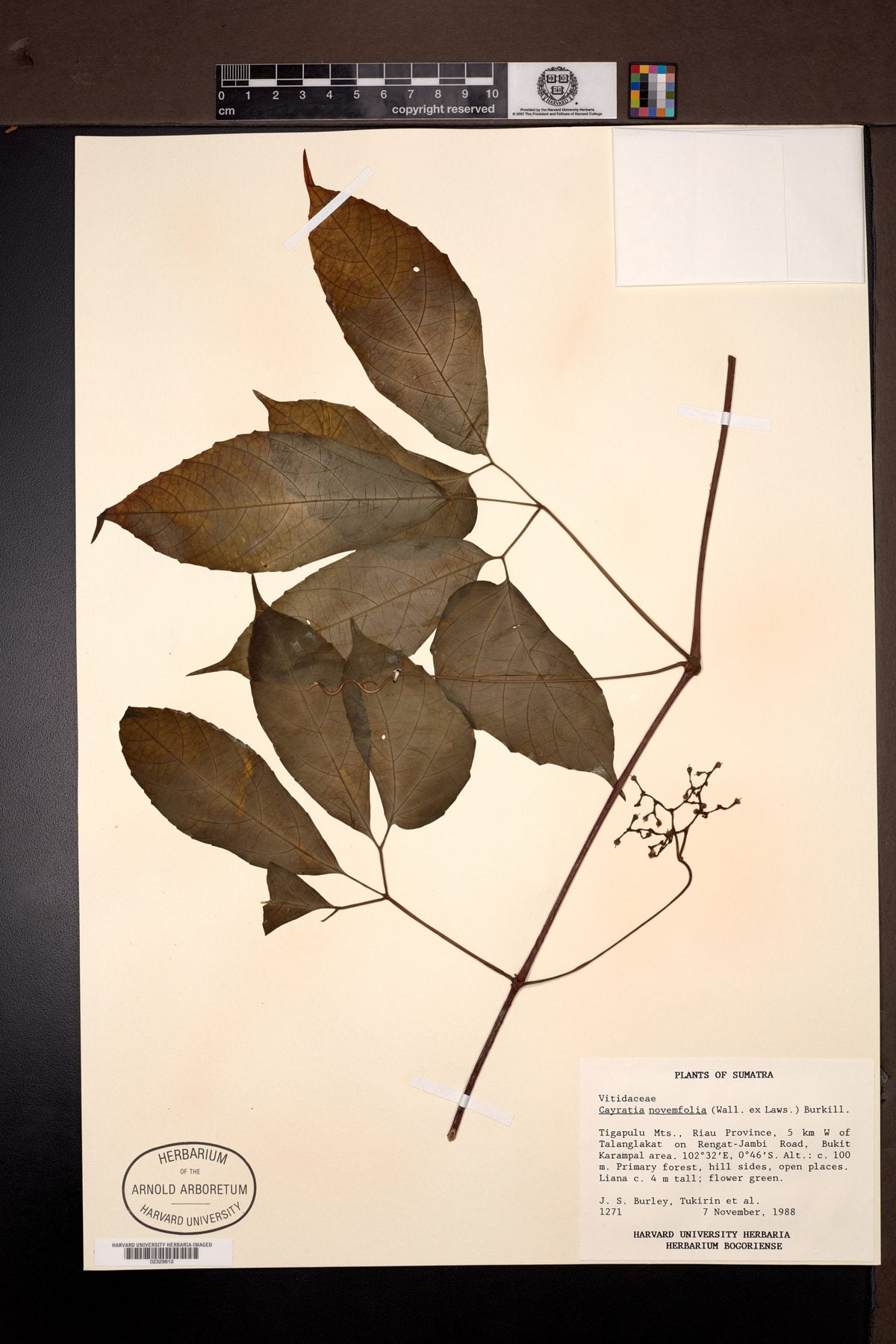
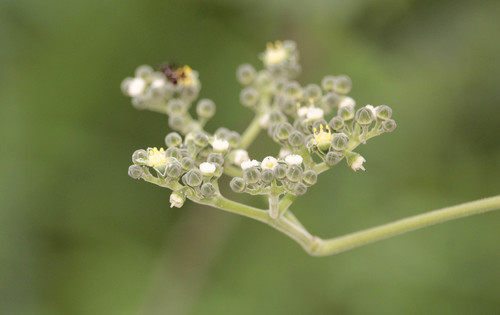
Cissus repens
Lam.
Native grape, Variegated grape
iNaturalist· cc-by-nc
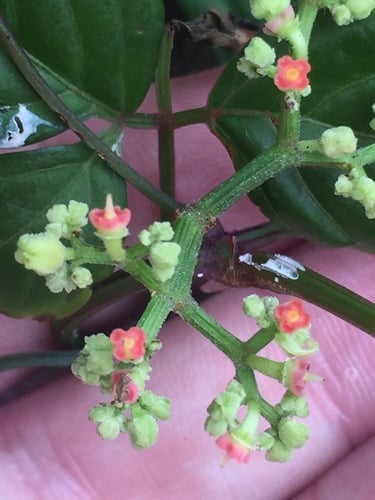
(c) JODY HSIEH, some rights reserved (CC BY-NC), uploaded by JODY HSIEH
iNaturalist· cc-by-nc
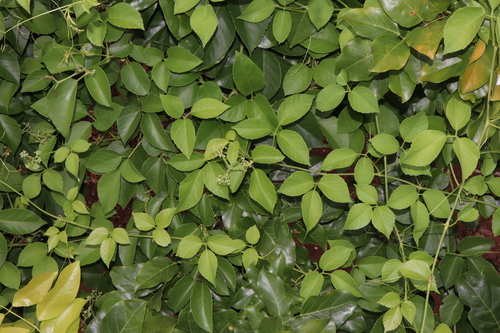
(c) Graham Bell, some rights reserved (CC BY-NC), uploaded by Graham Bell
iNaturalist· cc-by-nc
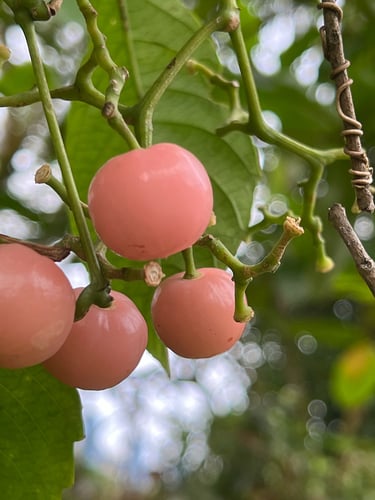
(c) Shin-Ming Ku, some rights reserved (CC BY-NC)
Summary
Source: WikipediaCissus repens is a species of tropical rainforest vine in the grape family. It is found in various parts of Asia including Malaysia. This vine is recorded as far south as Cape York Peninsula and the wet tropics region of north eastern Queensland, Australia. It has heart shaped leaves, near them on the stem is the tendril. The specific epithet repens is from the Latin, meaning “creeping”.
Description
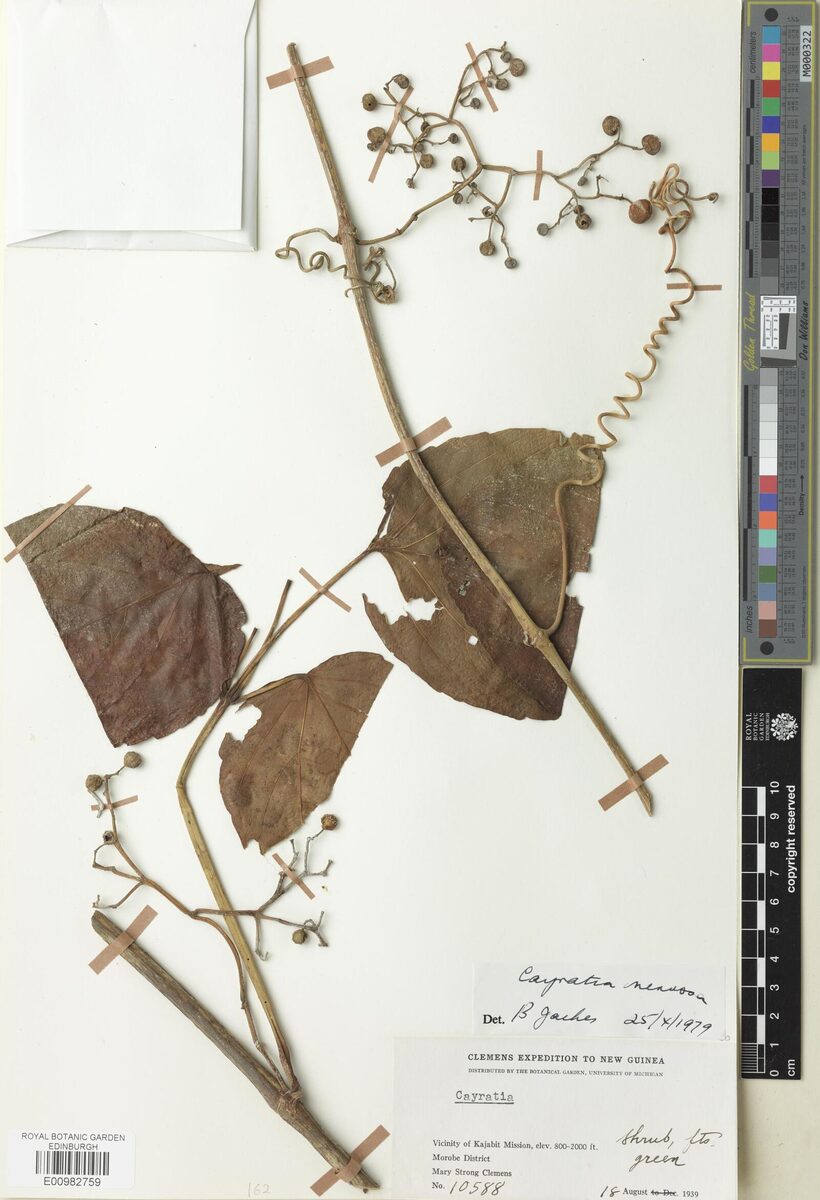
An evergreen vine. It will climb to 3-15 m high and spread to 3 m across. The stem is woody and it is a vigorous climber. Young shoots are shiny and dark purple. They are succulent. The leaves are 4-15 cm long by 3-8 cm wide. The leaves are bluish green and white on top and purple underneath. They are heart shaped. The flowers are yellow and in small clusters opposite the leaves. The fruit are black oval berries. They are about 1 cm across. They occur in bunches along the stem.
Edible Uses
The ripe fruit are eaten fresh though they produce a burning sensation in the throat and tongue; they are also sour. Young leaves are cooked and eaten in soups, or made into a tea-like drink. The stems are used in curries, and the roots are finely ground to add a spicy flavour to rice.
Traditional Uses
The ripe fruit are eaten but they burn the throat and tongue. The fruit are edible but sour. The young leaves are cooked and eaten. They are used in soups. The leaves are used to make a tea like drink. The stems are used in curries. The roots are cut into small pieces and finely ground and used to add a spicy flavour to rice.
Known Hazards
The ripe fruit burn the throat and tongue when eaten.
Distribution
It is a tropical plant. It prefers humus rich, well drained soils. It needs a protected, shaded position. It is drought and frost tender. It grows in cooler rainforests. It often spreads over the ground. In Assam it grows in the plains and hills up to 3,000 m above sea level. In Yunnan.
Where It Grows
Andamans, Asia, Australia, Bhutan, Cambodia, China, Himalayas, India, Indochina, Indonesia, Laos, Malaysia, Myanmar, Nepal, Northeastern India, Pacific, Papua New Guinea, PNG, Philippines, SE Asia, Sikkim, Taiwan, Thailand, Vietnam,
Cultivation
Plants are grown from stem cuttings which strike easily. They can also be grown from seed which germinate easily when fresh.
Production
Fruit are ripe in Australia from May to July. Flowers and fruit occur in India from February to March.
Notes
There are about 200-350 Cissus species. There are about 75 species in tropical America.
Synonyms
Also Known As
Akar kura, Arej hariang, Basil, Hariang arej, Hrui-pawl, Jia herap, Kalit-kalit, Kunchen-rik, Mei-ja-khajrap, Panilahera, Pureni, Purnia lahara, Qie-maaba, Sambung tulang, Song hie, Soru harjhora, Taruphakhe, Tarupakhu, Voe sannda
References (42)
- Ambasta, S.P. (Ed.), 2000, The Useful Plants of India. CSIR India. p 127
- Arora, R. K., 2014, Diversity in Underutilized Plant Species - An Asia-Pacific Perspective. Bioversity International. p 47
- Beasley, J., 2011, Plants of Tropical North Queensland - the compact guide. Footloose publications. p 122
- Bodkin, F., 1991, Encyclopedia Botanica. Cornstalk publishing, p 259
- Burkill, I.H., 1966, A Dictionary of the Economic Products of the Malay Peninsula. Ministry of Agriculture and Cooperatives, Kuala Lumpur, Malaysia. Vol 2 (I-Z) p 2287 (As Vitis repens)
Show all 42 references Hide references
- Cooper W & Cooper W T, 1994, Fruits of the Rain Forest. RD Press p 74
- Coronel, R.E., 1982, Fruit Collections in the Philippines. IBPGR Newsletter p 9
- Cribb, A.B. & J.W., 1976, Wild Food in Australia, Fontana. p 135
- Dobriyal, M. J. R. & Dobriyal, R., 2014, Non Wood Forest Produce an Option for Ethnic Food and Nutritional Security in India. Int. J. of Usuf. Mngt. 15(1):17-37
- Elliot, W.R., & Jones, D.L., 1984, Encyclopedia of Australian Plants suitable for cultivation. Vol 3. Lothian. p 40
- Encycl. 1:31. 1783
- Gangwar, A. K. & Ramakrishnan, P. S., 1990, Ethnobotanical Notes on Some Tribes of Arunachal Pradesh, Northeastern India. Economic Botany, Vol. 44, No. 1 pp. 94-105 (As Vitis repens)
- Ghosh, A, 2014, Survey of Ethno-medicinal Climbing plants in Andaman and Nicobar Islands, India. Int. J. of Pharm. Life Sci. 5(7): July, 2014:3671-3677
- Heyne, K., 1927, p 1009
- Hoe, V. B. & Siong, K. H., 1999, The nutritional value of indigenous fruit and vegetables in Sarawak. Asia Pacific J. Clin. Nutr. 8(1):24-31
- Jadhav, R., et al, 2015, Forest Foods of Northern Western Ghats: Mode of Consumption, Nutrition and Availability. Asian Agri-History Vol. 19, No. 4: 293-317
- Jones, D.L. & Gray, B., 1977, Australian Climbing Plants. Reed. p 90
- Kar, A., et al, 2013, Wild Edible Plant Resources used by the Mizos of Mizoram, India. Kathmandu University Journal of Science, Engineering and Technology. Vol. 9, No. 1, July, 2013, 106-126
- Kumar, Y J. et al, 1987, Further Contribution to the Ethnobotany of Meghalaya: Plants used by "War jaintia" of Jaintia Hill District. Econ. Tax. Bot. Vol 11 No. 1 pp 65- (As Vitis repens)
- Kumbhojkar, M.S. & Vartak, V.D., 1988, Ethnobotanical Studies on Wild Edible Grapes from Sacred Groves in Western Maharashtra. J. Econ. Tax. Bot. Vol. 12 No. 2 pp 257-263
- Martin, F.W. & Ruberte, R.M., 1979, Edible Leaves of the Tropics. Antillian College Press, Mayaguez, Puerto Rico. p 225
- Melzer, R. & Plumb, J., 2011, Plants of Capricornia. Belgamba, Rockhampton. p 394
- Mot So Rau Dai an Duoc O Vietnam. Wild edible Vegetables. Ha Noi 1994, p 214
- Murtem, G. & Chaudhrey, P., 2016, An ethnobotanical note on wild edible plants of Upper Eastern Himalaya, India. Brazilian Journal of Biological Sciences, 2016, v. 3, no. 5, p. 63-81.
- Ochse, J. J. et al, 1931, Vegetables of the Dutch East Indies. Asher reprint. p 728
- Patiri, B. & Borah, A., 2007, Wild Edible Plants of Assam. Geethaki Publishers. p 27
- Phon, P., 2000, Plants used in Cambodia. © Pauline Dy Phon, Phnom Penh, Cambodia. p 157
- Pradhan, R., et al, 2020, Potential Wild Edible Plants and its Significance in Livelihood of Indigenous People of Male Mahadeshwara Hills, Karnataka. Economic Affairs Vol. 64, No. 4 pp. 01-14
- Savita, et al, 2006, Studies on wild edible plants of ethnic people in east Sikkim. Asian J. of Bio Sci. (2006) Vol. 1 No. 2 : 117-125
- Sawian, J. T., et al, 2007, Wild edible plants of Meghalaya, North-east India. Natural Product Radiance Vol. 6(5): p 423 (As Vitis repens)
- Singh, H.B., Arora R.K.,1978, Wild edible Plants of India. Indian Council of Agricultural Research, New Delhi. p 22
- Srivastava, R. C., et al, 2010, Indigenous biodiversity of Apatani plateau: Learning on biolcultural knowledge of Apani tribe of Qrunachal Pradesh for sustainable livelihoods. Indian Journal of Traditional Knowledge 9(3): 432-442 (As Vitis repens)
- Sukarya, D. G., (Ed.) 2013, 3,500 Plant Species of the Botanic Gardens of Indonesia. LIPI p 912
- Sundriyal, M., et al, 1998, Wild edibles and other useful plants from the Sikkim Himalaya, India. Oecologia Montana 7:43-54
- Sundriyal, M., et al, 2004, Dietary Use of Wild Plant Resources in the Sikkim Himalaya, India. Economic Botany 58(4) pp 626-638
- Tamil herbs, 2007, Edible Plants of the Tropical Dry Evergreen Forest.
- Townsend, K., 1994, Across the Top. Gardening with Australian Plants in the tropics. Society for Growing Australian Plants, Townsville Branch Inc. p 133
- Vartak, V.D. and Kulkarni, D.K., 1987, Monsoon wild leafy vegetables from hilly regions of Pune and neighbouring districts, Maharashtra state. J. Econ. Tax. Bot. Vol. 11 No. 2 pp 331-335
- Wild edible plants of Himachal Pradesh
- Williams, K.A.W., 1999, Native Plants of Queensland Volume 4. Keith A.W. Williams North Ipswich, Australia. p 114
- World Checklist of Useful Plant Species 2020. Royal Botanic Gardens, Kew
- Xu, You-Kai, et al, 2004, Wild Vegetable Resources and Market Survey in Xishuangbanna, Southwest China. Economic Botany. 58(4): 647-667.