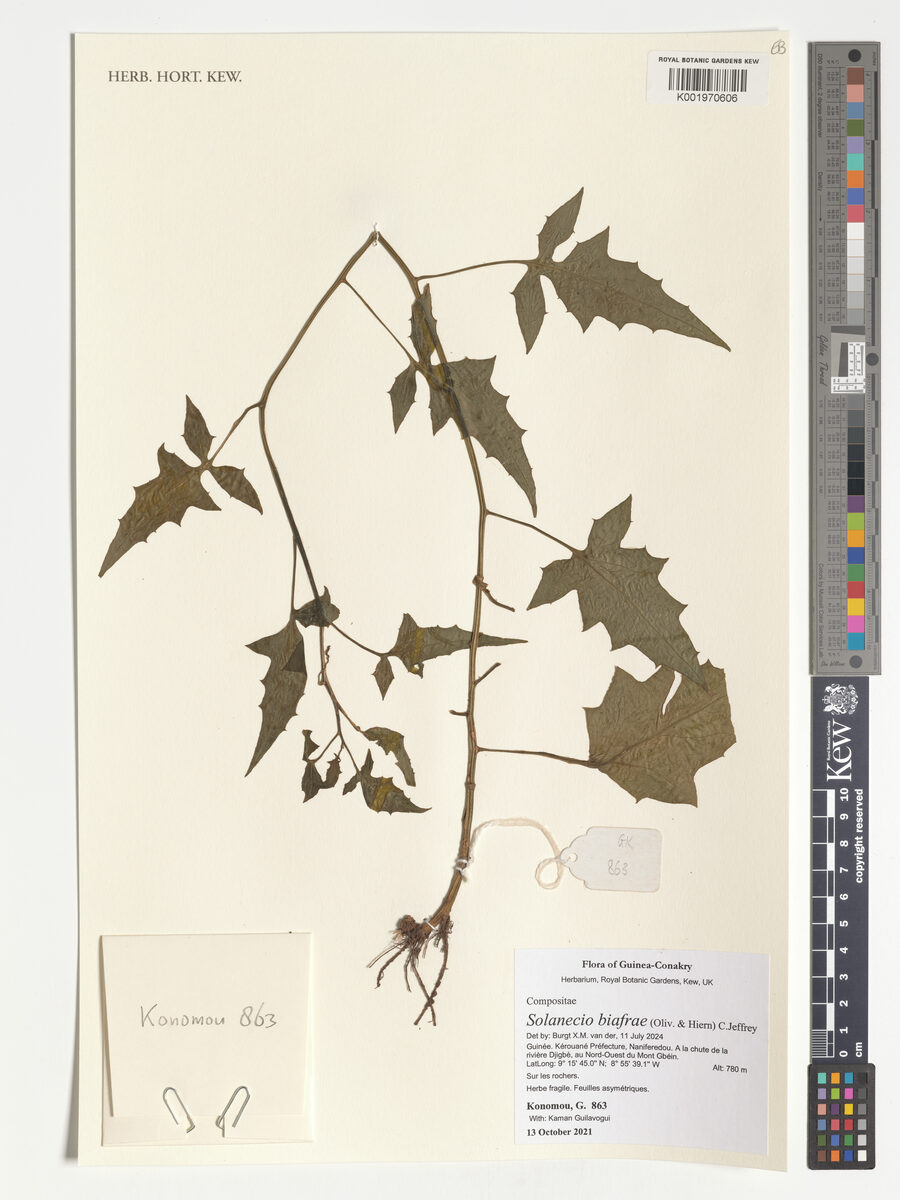
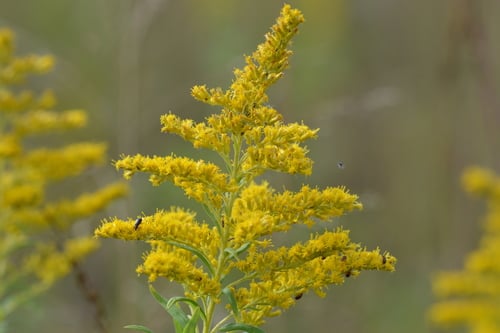
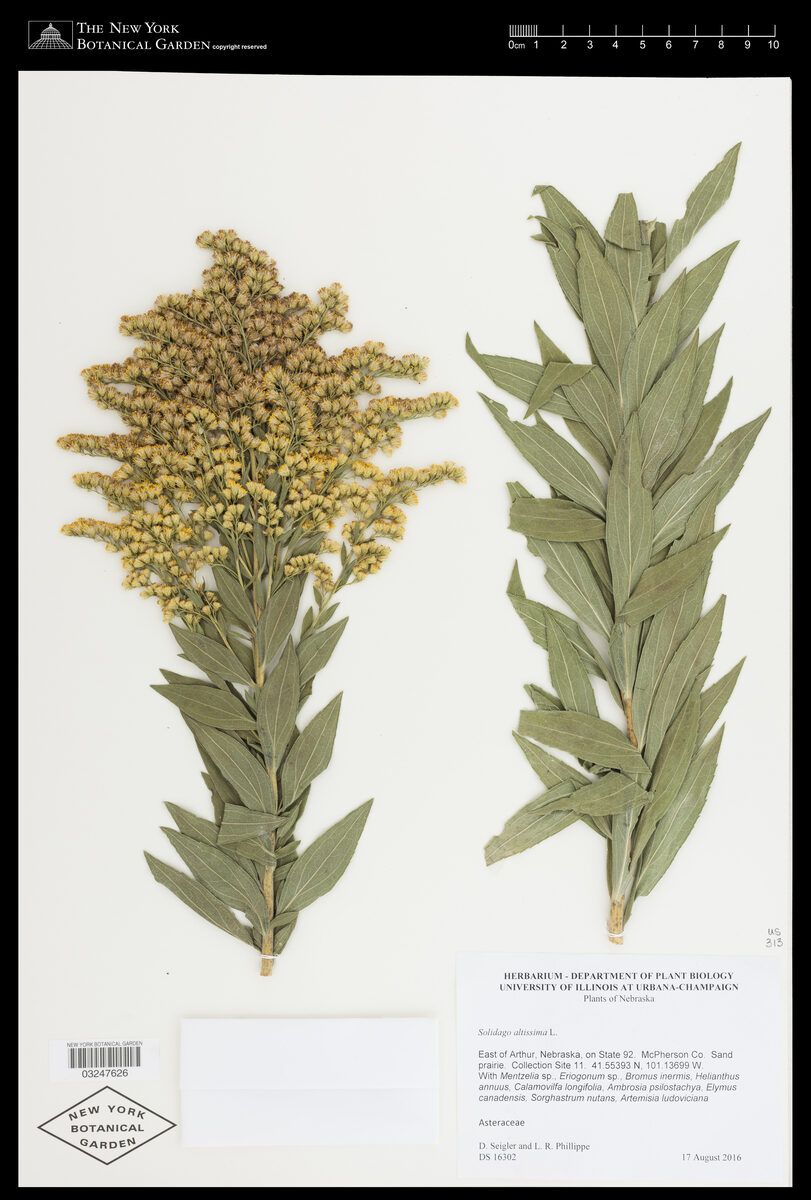
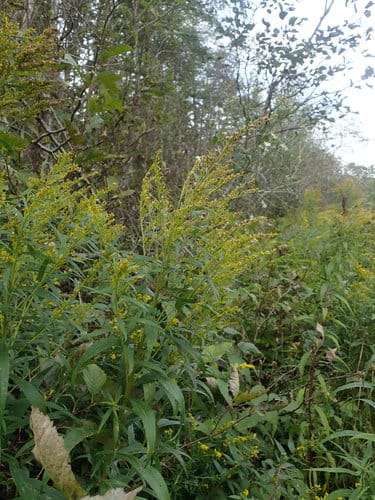
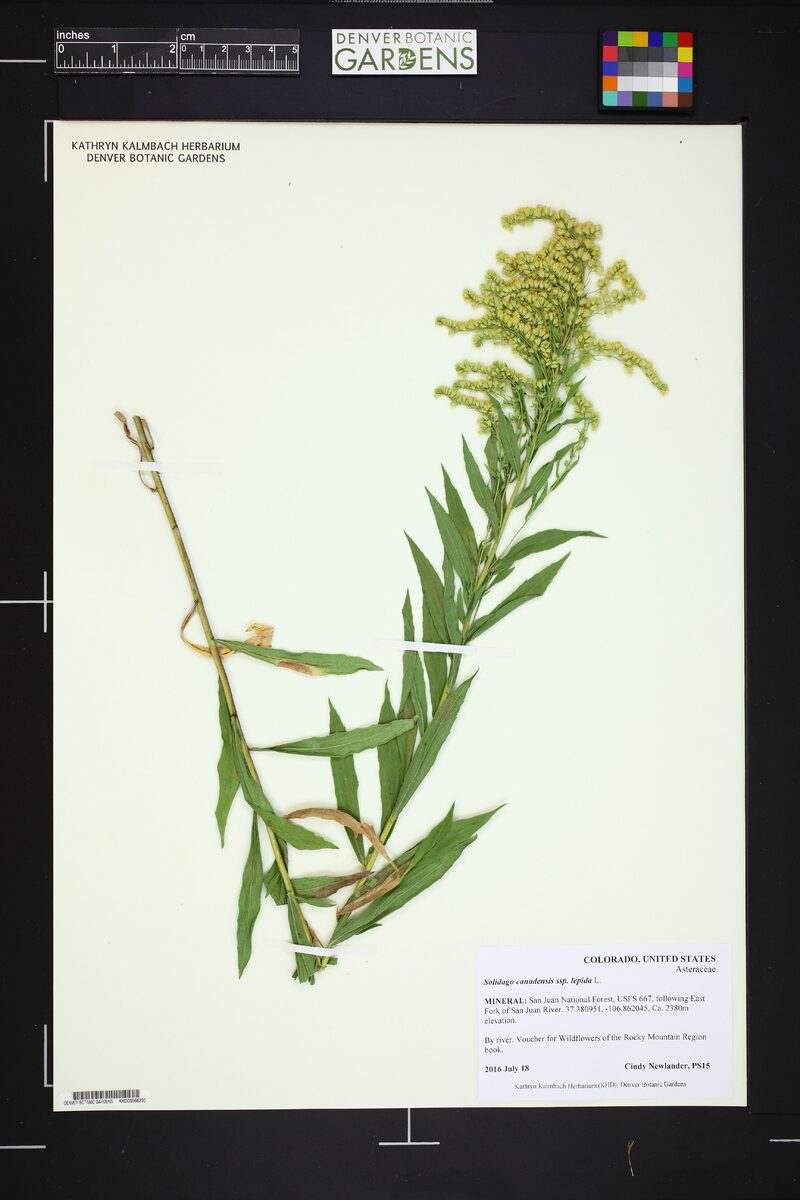
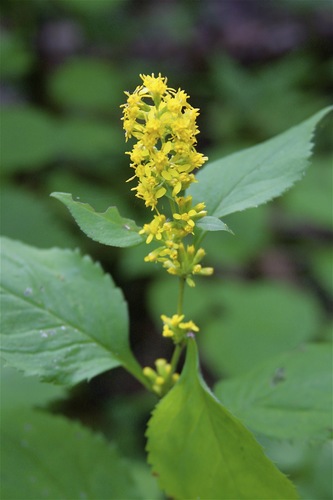
Solidago odora subsp. chapmanii
(A. Gray) Semple
iNaturalist· cc-by-sa
(c) Douglas Goldman, some rights reserved (CC BY-SA), uploaded by Douglas Goldman
iNaturalist· cc-by-nc
(c) Tom Palmer, some rights reserved (CC BY-NC), uploaded by Tom Palmer
iNaturalist· cc-by-nc
(c) lan, some rights reserved (CC BY-NC), uploaded by lan
Summary
Source: WikipediaSolidago odora, the sweet goldenrod, anisescented goldenrod or fragrant goldenrod, is a North American species of goldenrod within the family Asteraceae. The plant is native to the United States and Mexico, found in every coastal state from Veracruz to New Hampshire and as far inland as Ohio, Missouri, and Oklahoma. It flowers from July through October. It can be found in habitats such as live oak woodlands, loblolly pine-sweetgum stands, and slashpine savannas. Subspecies include: Solidago odora subsp. odora - most of species range Solidago odora subsp. chapmanii (Gray) Semple - Florida and Southern Georgia only As a traditional medicine, Solidago odora has a variety of ethnobotanical uses, especially by the Cherokee. The leaves, which smell of licorice when crushed, can be made into a tea.
Description
A herb in the Asteraceae family found in temperate regions.
This description is brief — help expand it
Edible Uses
The leaves are brewed as tea.
Distribution
It is a temperate plant.
Where It Grows
Canada, North America, USA,
References (1)
- Kermath, B. M., et al, 2014, Food Plants in the Americas: A survey of the domesticated, cultivated and wild plants used for Human food in North, Central and South America and the Caribbean. On line draft. p 828