Saurauia brachybotrys
Turcz.
iNaturalist· cc-by-nc-sa
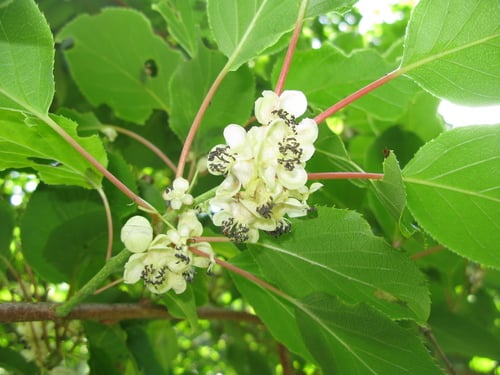
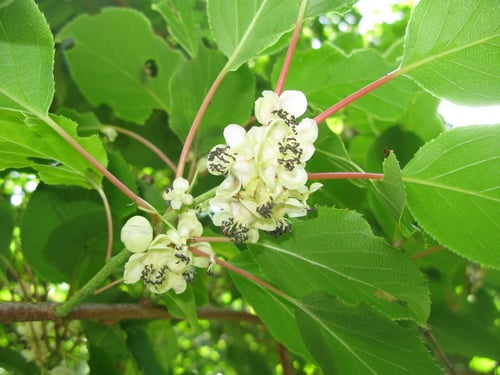
(c) Gabriel Camilo Jaramillo Giraldo, some rights reserved (CC BY-NC-SA), uploaded by Gabriel Camilo Jaramillo Giraldo
iNaturalist· cc-by-nc-sa
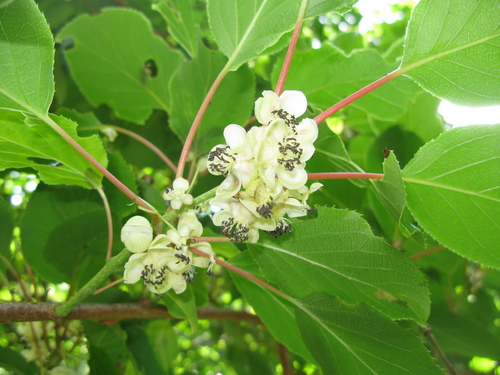
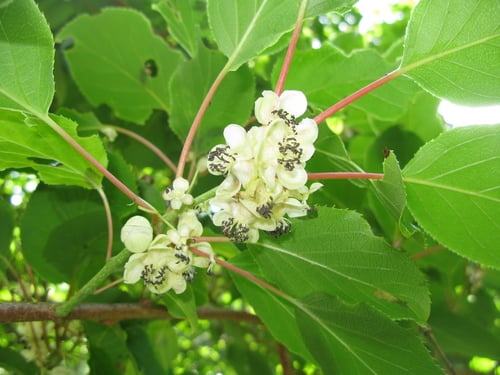
(c) Gabriel Camilo Jaramillo Giraldo, some rights reserved (CC BY-NC-SA)
Description
A shrub or tree. It grows 15 m tall. The trunk is 25 cm across. The leaves are crowded behind the tips of the small branches. The leaves have teeth along the edge. They are 15-30 cm long by 8-15 cm wide. They are dark green above. The flowers are in groups of 50-200. The fruit are green with a reddish tinge and round to oval and 15 mm across.
Edible Uses
Fruit - raw. A sweet, mucilaginous pulp. The green berries often have a purplish red tinge; globose to obovoid, they are up to 15mm in diameter.
Medicinal Uses
The pith of the stem is applied to snake bites to soothe, or even cure them. The bark is rasped to a powder, which is applied topically to sores to extract the pus.
Distribution
It is a tropical plant. It grows in wet mountain forest. It grows between 1,500-2,500 m above sea level.
Where It Grows
Colombia, Ecuador, South America, Venezuela,
Other Uses
We have no information on the wood of this species, but the following is a general description of the wood from species in this genus. The wood is little used, except locally for fuel. It is a pale reddish brown throughout; not attractive; lustre rather low; odourless and tasteless; rather light, but firm, tough, and strong; texture medium; grain straight; easy to cut, saws finely woolly, is rather hairy under the plane; probably not durable. Useful locally for general carpentry and interior construction.
Synonyms
Also Known As
Dulumoco, Moquillo, Yenesha, Yunush
References (3)
- Barfod, A. S. & Kvist, L. P., 1996, Comparative Ethnobotanical Studies of the Amerindian Groups in Coastal Ecuador. The Danish Academy of Sciences and Letters. p 76
- Kermath, B. M., et al, 2014, Food Plants in the Americas: A survey of the domesticated, cultivated and wild plants used for Human food in North, Central and South America and the Caribbean. On line draft. p 787
- Roa, J. A. G. & Boada, D. S. G., 2018, Fundación para el Fortalecimiento de la Fruticultura y Plantas Alimenticias no Convencionales en Colombia.