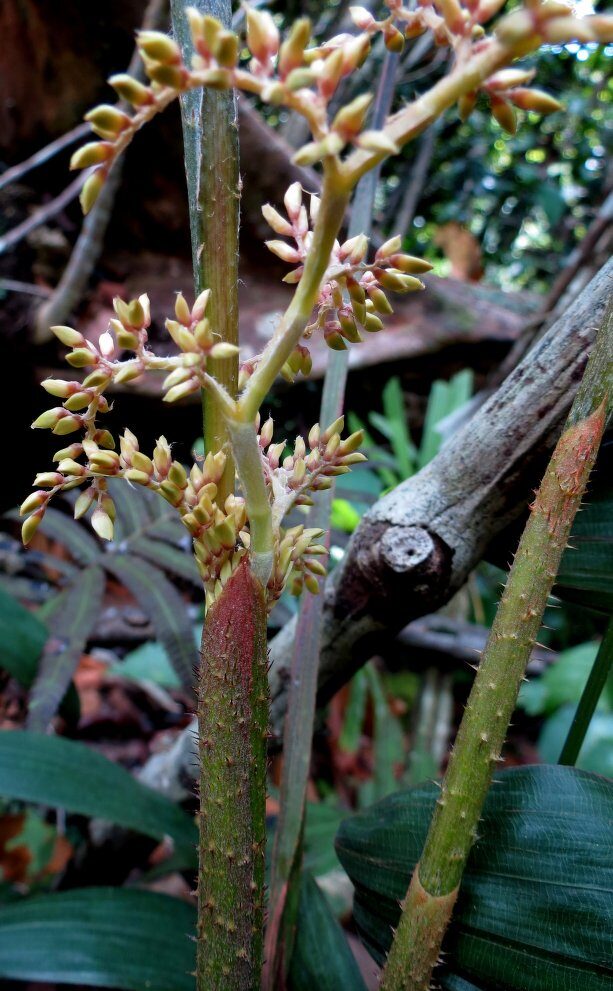
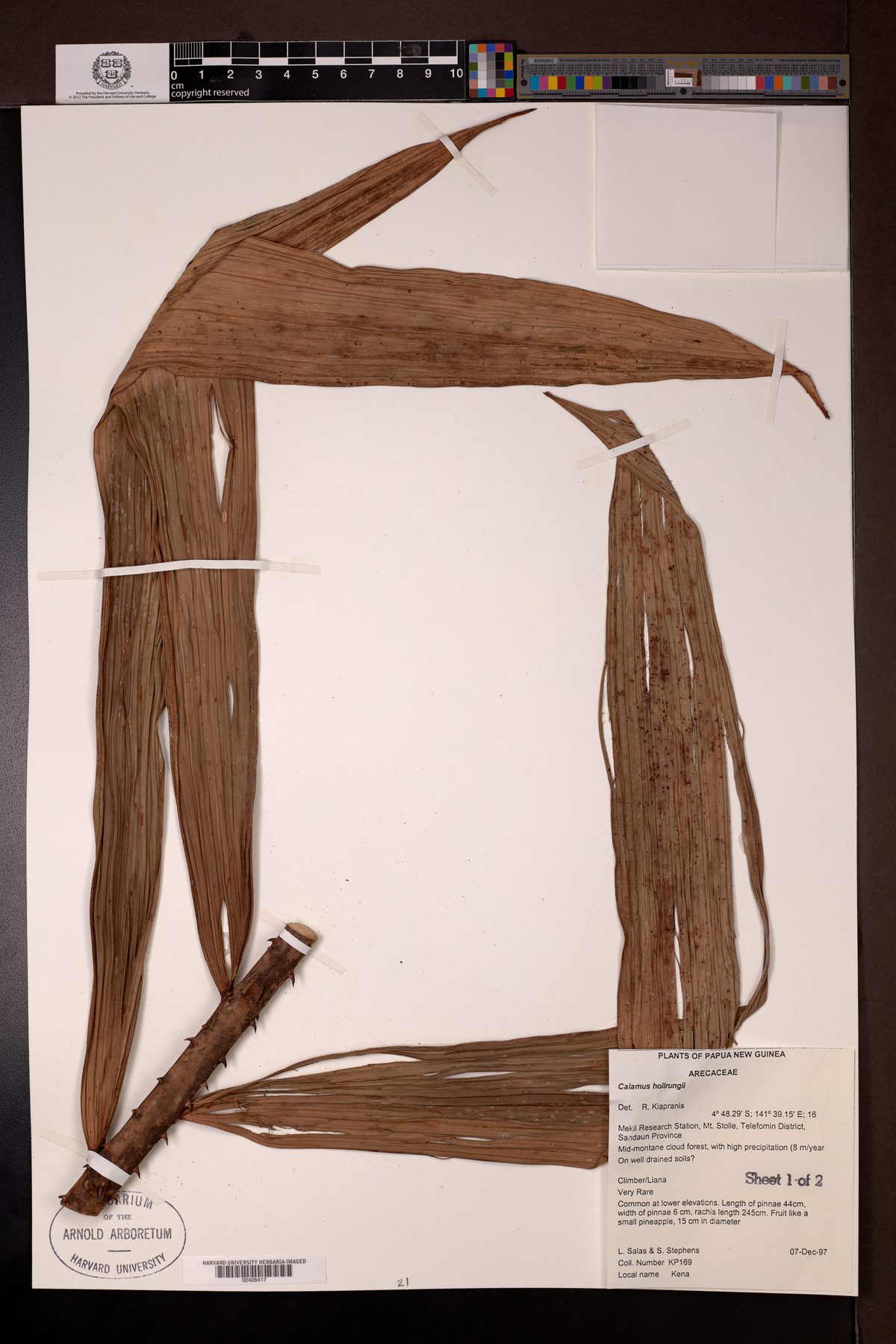
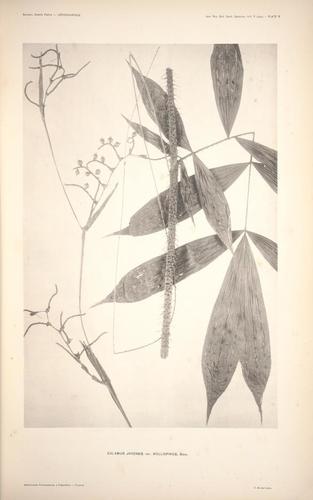
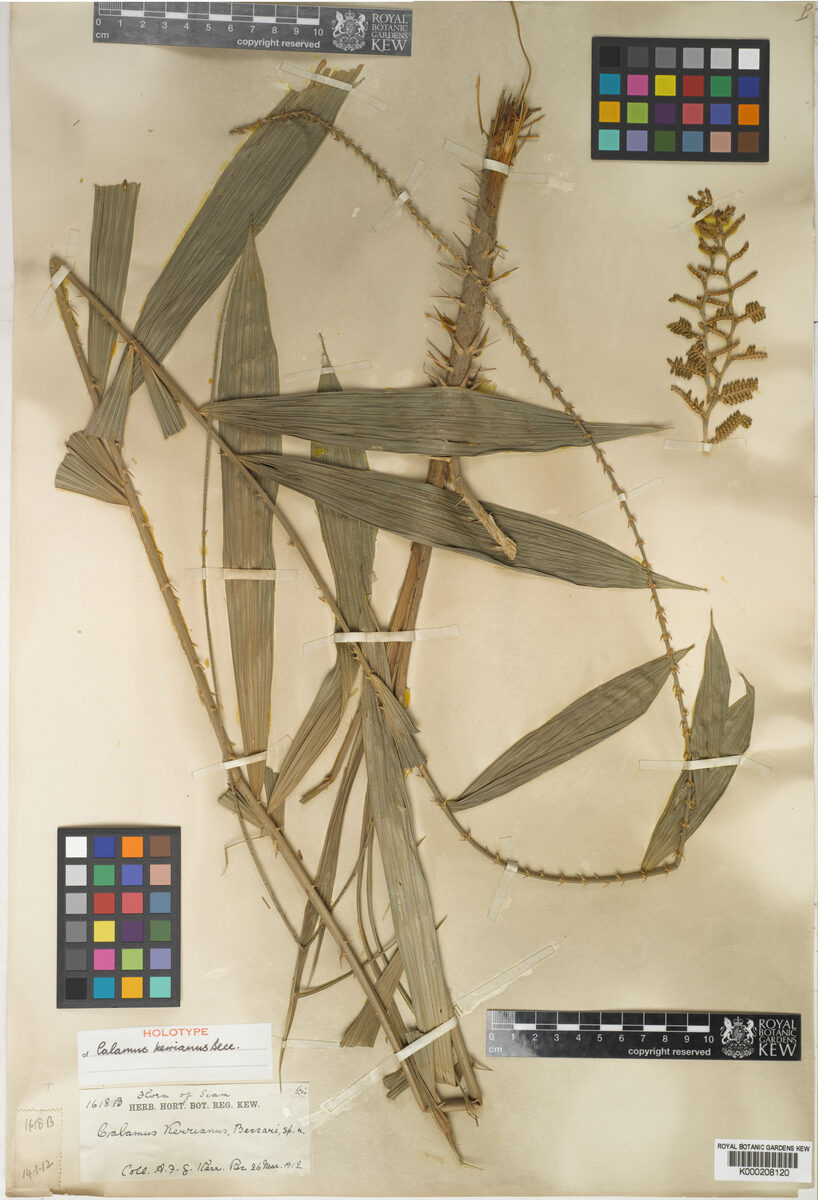
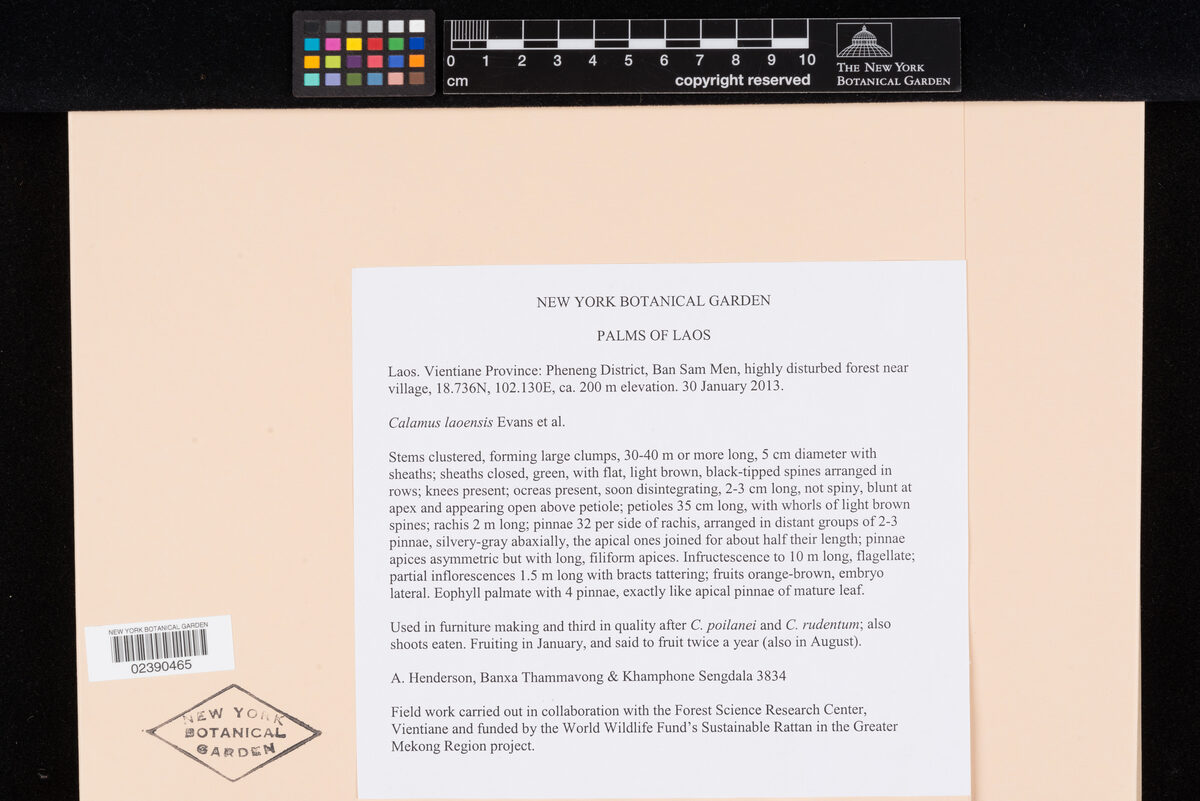
Salacca secunda
Griff.
gbif· cc-by
The New York Botanical Garden
gbif· cc-by
The New York Botanical Garden
gbif· cc-by
The New York Botanical Garden
Description
A tropical palm in the Arecaceae family. The plant produces young fruits with edible seeds and edible shoots.
This description is brief — help expand it
Edible Uses
The shoots are cooked and eaten. Young fruit seeds are eaten raw. The palm heart is also edible.
Traditional Uses
The shoots are cooked and eaten. The young fruit (seeds) are eaten raw.
This uses section is brief — help expand it
Distribution
It is a tropical plant.
Where It Grows
Asia, China, Himalayas, India, Indonesia, Myanmar, Northeastern India, SE Asia, Thailand,
Cultivation
A dioecious species, both male and female forms need to be grown if fruit and seed are required.
Other Uses
The leaves are commonly used for thatching.
Also Known As
Ko ho, Kothi, Ra, Sap, Tong nam, Yi-ngan
References (5)
- Dransfield, J., et al, 2004, A preliminary checklist to Thai Palms. Thai For. Bull. (Bot.) 32:32-72
- Kermath, B. M., et al, 2014, Food Plants in the Americas: A survey of the domesticated, cultivated and wild plants used for Human food in North, Central and South America and the Caribbean. On line draft. p 774
- Lungphi, P., Wangpan, T. & Tangjang, S., 2018, Wild edible plants and their additional uses by the Tangsa community living in the Changlang district of Arunachal Pradesh, India. Pleione 12(2): 151 - 164. 2018.
- Mozhui, R., et al, 2011, Wild edible fruits used by the tribals of Dimapur district of Nagaland, India. Pleione 5(1): 56 - 64
- Murtem, G. & Chaudhrey, P., 2016, An ethnobotanical note on wild edible plants of Upper Eastern Himalaya, India. Brazilian Journal of Biological Sciences, 2016, v. 3, no. 5, p. 63-81 (As Zalacca)