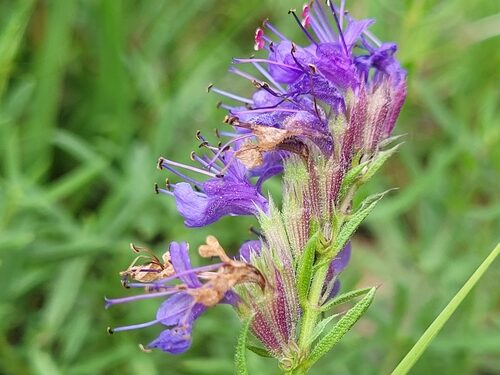
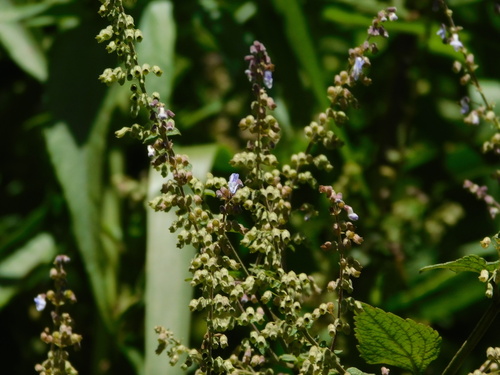
Sideritis hyssopifolia
L.
iNaturalist· cc-by-nc
(c) Nicolas Schwab, some rights reserved (CC BY-NC)
iNaturalist· cc-by-nc
(c) Nicolas Schwab, some rights reserved (CC BY-NC)
iNaturalist· cc-by-nc
(c) Nicolas Schwab, some rights reserved (CC BY-NC)
Summary
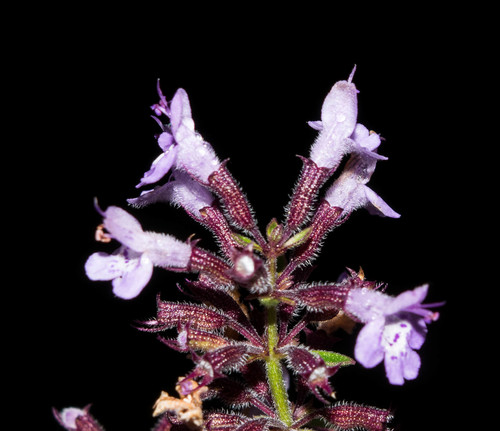
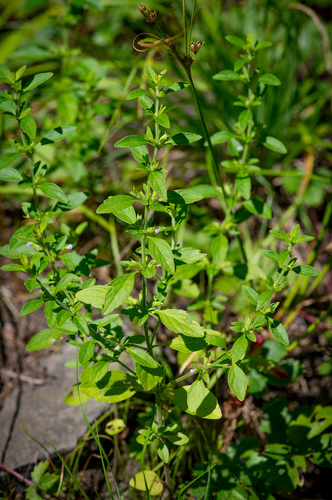
Source: WikipediaSideritis hyssopifolia, hyssop-leaved mountain ironwort. A 40 cm high shrublet with narrow pointed leaves. The flowers (1 cm) are borne in dense cylindrical clusters from broad spiny-toothed bracts. The calyx also has spiny teeth. Flowers June–August. Its IUCN Red List Category is least risk. The Latin word hyssopifolia (which also occurs in several other plant names, including that of Cuphea hyssopifolia) means "hyssop-leaved".
Description
An evergreen shrub growing to 0.4 m (1ft 4in) tall and wide at a fast rate, hardy to UK zone 7. Flowers attract bees and insects. Adapts to light sandy, medium loamy, or heavy clay soils with good drainage and tolerates poor soil nutrition. Grows in mildly acid through very alkaline pH ranges. Requires full sun and prefers dry or moist soil with good drought tolerance.
Edible Uses
Sideritis hyssopifolia is traditionally used in Spain and features prominently in local gastronomy. It is commonly prepared as an herbal tea served in tourist areas such as Serranía de Cuenca and Picos de Europa, and it is also used to flavour both homemade and commercial herbal liqueurs. The plant has seen renewed interest from avant-garde restaurants and the gastronomic elite seeking new culinary experiences and health benefits.
Traditional Uses
The flowers are used for herbal tea.
This uses section is brief — help expand it
Medicinal Uses
A popular medicinal plant in the peaks of Europe and the Pyrenees, Sideritis hyssopifolia is traditionally valued for its digestive benefits and use in treating peptic ulcers. An infusion of the inflorescence, known for its antioxidant properties, is commonly consumed as an herbal tea at breakfast or after meals. It is also used to flavour herbal liqueurs and digestives and is popular for both social and medicinal purposes in Cantabria. The aerial parts contain three flavone glycosides, phenolic acids including chlorogenic acid, flavonoids such as hypoxanthine and isoscutellarein, and essential oils rich in hydroxycinnamic derivatives. These compounds give the plant pharmacological interest, particularly for treating gastric ulcers and diarrhoea, with its flavonoids considered responsible for its digestive properties.
Distribution
It is a Mediterranean climate plant.
Where It Grows
Europe, Slovenia, Spain,
Cultivation
A clump-forming wild shrub. It grows at high altitudes (1500–1800m) in the Spanish and Italian mountains. A perennial aromatic herb with a woody base, it is found in rocky places on stony limestone substrates, mountain pastureland, scrub, and open woodland. It can grow in various soil types. It is a subshrub that grows primarily in the temperate biome. It flowers (yellow) from June to August (Northern hemisphere).
Propagation
Seed
Other Uses
Attractive flowers and foliage. Aromatic. Honey-bee food plant.
Synonyms
Also Known As
Te de lastra
References (5)
- http://www.botanic-gardens-ljubljana.com/en/plants
- Pardo-de-Santayana et al, 2006, Diversity and selection of wild food plants. Proceedings of the IVth International Congress of Ethnobotany (ICEB) 2005) p 53
- Pardo-de-Santayana, M., et al, 2005, The gathering and consumption of wild edible plants in the Campoo (Cantabria, Spain). International Journal of Food Sciences and Nutrition. 56(7): 529-542
- Pardo-de-Santayana, M., et al, 2007, Traditional knowledge of wild edible plants used in the northwest of the Iberian Peninsula (Spain and Portugal): a comparative study. Journal of Ethnobiology and Ethnomedicine 2007, 3:27
- Tardio, J., et al, Ethnobotanical review of wild edible plants in Spain. Botanical J. Linnean Soc. 152 (2006), 27-71